

 Subscribe
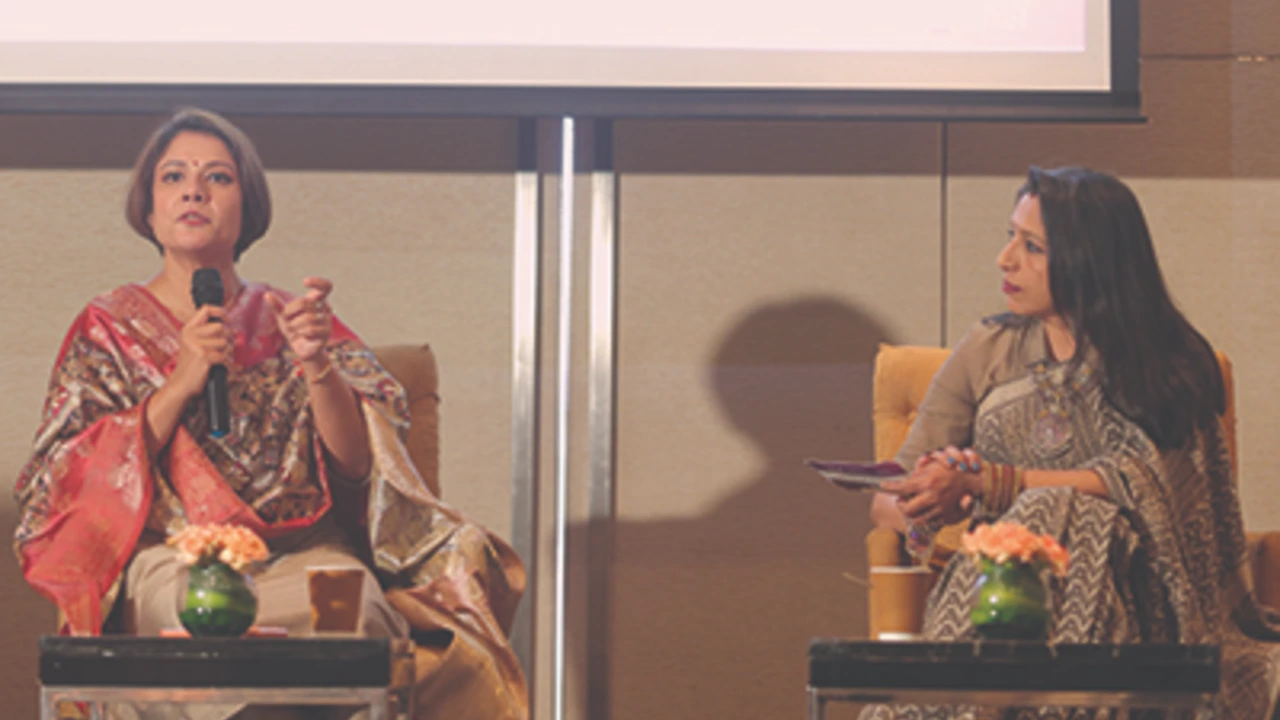
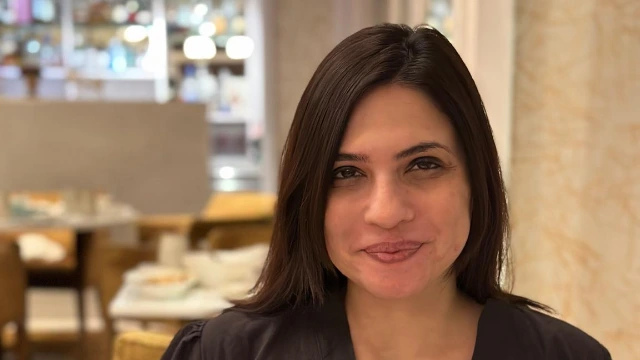
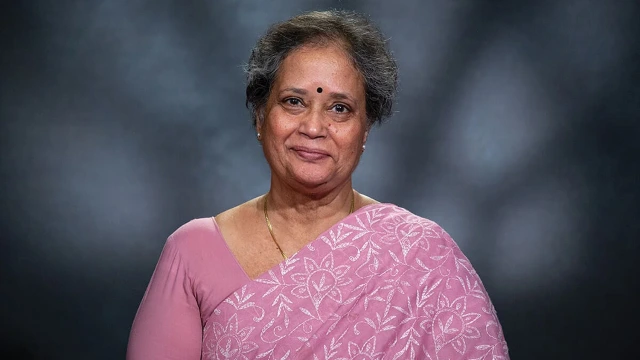
 Padmaja Joshi (left) and Megha Tata
At a time when conversations around representation can sometimes become exercises in ticking boxes, Padmaja Joshi, managing editor, NDTV, stated that more meaningful change is happening organically in newsrooms - in the stories being told and in the way audiences are beginning to see women.
In a fireside chat on ‘Beyond the Headline: Challenging Bias in Representation,’ Megha Tata, co-chairperson, women empowerment committee, IAA India Chapter, questioned Joshi about the shift taking place in newsrooms in the way women are represented. The latter contended that representation cannot simply mean placing a woman in a room or assigning a story a gender label. It has to mean giving people the freedom to participate, speak and be represented without being reduced to stereotypes.
“The change is driven from the bottom,” Joshi said, warning against what she described as ‘performative tokenism’. According to her, having one or two women in a boardroom or newsroom without giving them a meaningful voice can become little more than a checkbox exercise.
She believes the news industry has changed significantly from a time when women were often associated with being the face of a programme, while editorial decisions were predominantly made by men.
“Earlier, if there was an anchoring job, one assumption was that the person was reading from a teleprompter and the content is written for a pretty face with makeup on. “That doesn’t happen anymore,” she said.
That change, she added, also influences which stories get told and how they are interpreted.
To better understand what the news fraternity can do to break these stereotypes, Tata asked Joshi how a journalist within a newsroom set-up can play a critical role in a way that impacts women sitting in places like Jaunpur or Bihar.
Joshi cited her experience while travelling to Bihar during the elections as an example. Much of the conversation she said, was centred on the idea of government handouts. But speaking to women who had received INR 2,000 revealed another dimension to the story. “I wondered what they would do with just INR 2,000. But they stated that they didn’t get money otherwise at all,” she said.
She explained, “A large proportion of men migrate for work, leaving women living with their in-laws. Money earned by husbands is often sent back to their parents, meaning the women may not necessarily have direct access to it. For the woman who got the money, the INR 2,000 is kept aside for her children and herself. That woman is thinking for herself.”
Joshi also challenged the idea that empowerment has a prescribed appearance. She recalled a colleague who normally wore a pantsuit to work but one evening left the office wearing a sari. Joshi initially wondered why someone who was ‘liberating’ would choose to dress traditionally, before recognising the flaw in her own assumption.
“Representation comes in many forms. And should be her choice,” she said.
The same principle, she argued, applies to the representation of women in advertising and popular culture.
Referring to the controversy around the Giva advertisement featuring actor Kriti Sanon, in which some people objected to her attire during Rakhi, Joshi said the important point was to recognise that one person’s preferred way of dressing cannot become a universal standard.
“Some women may dress like that and it’s okay. I’m usually in shorts when I tie my brother Rakhi because it’s so early in the morning and one cannot dress up,” she said.
Joshi drew a parallel with the way women are represented in professional spaces.
“She can wear whatever she wants as long as she’s doing her job right,” she said.
She recalled a colleague who, around a decade ago, went backstage after a conclave with a male colleague to meet three well-known cricketers. While the male colleague was readily included in the conversation, her colleague’s contributions were effectively ignored.
“That was just 10 years ago,” Joshi said. “They didn’t think the girl was worthy of the attention, let alone the conversation.”
The difference today, she argued, is that women are increasingly present every day, speaking on television and participating in conversations that were once overwhelmingly male.
“Change and representation happens when one doesn’t have any option left,” she said.
That change has also altered the way newsrooms themselves function. Joshi said women are now part of newsrooms not merely because organisations want to achieve a particular gender ratio, but because their perspectives and contributions are needed.
Tata then veered the discussion to women journalists being asked to cover beats that are considered ‘soft’ or typically women’s issues, as against covering beats which are mainstream.
Joshi cautioned against treating every issue involving women as a ‘women’s issue’. That philosophy extends to the distinction traditionally made between ‘hard’ and ‘soft’ stories.
“It’s not hard or soft. It’s about bringing out a story,” Joshi said.
“If it was a soft story, don’t do it. If it’s not worth the time of a man doing it, don’t do the story,” she said. “If something is worthy of a man’s time, it’s worth my time too,” she added.
She argued that women should not automatically be assigned stories considered softer, while men are given subjects deemed more serious or important. She recalled an experience from earlier in her career when she was asked to step in for a female anchor on an entertainment programme, despite a male anchor being available. She questioned why the male anchor could not have taken the programme if the task was simply to read and manage the show. At the same time, she believes women should not be restricted to subjects directly associated with them.
“Every story is a woman or man’s story and everyone can feel empowered to tell that story and participate in it,” she said.
For Joshi, this is ultimately where meaningful representation lies: not in forcing a progressive image, but in reaching a point where the presence of women becomes so normal that the industry no longer has to consciously think about it.