

 Subscribe
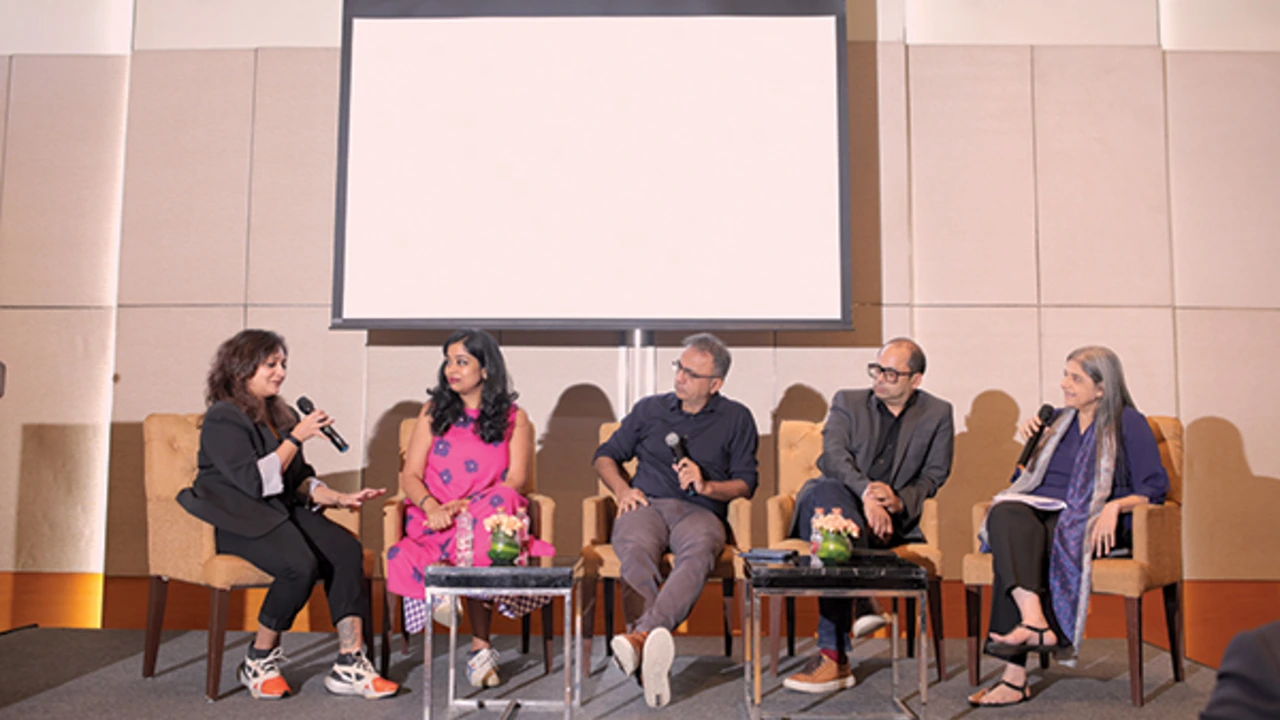
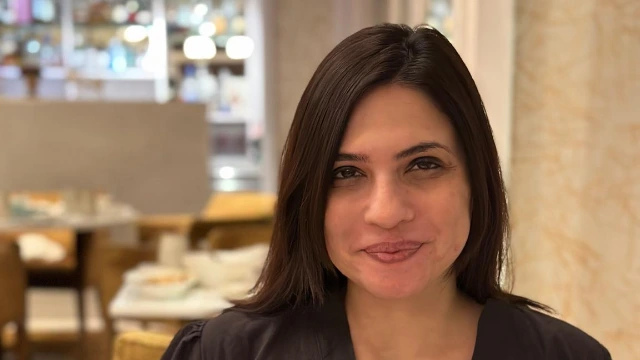
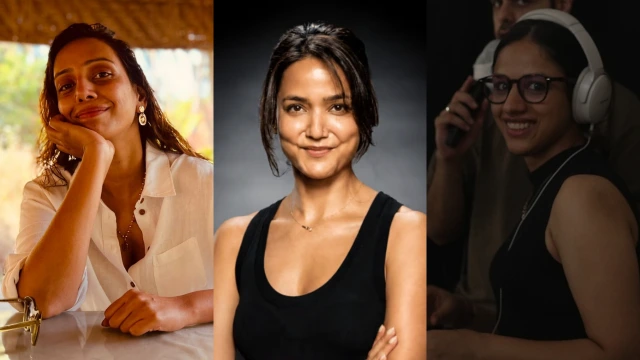
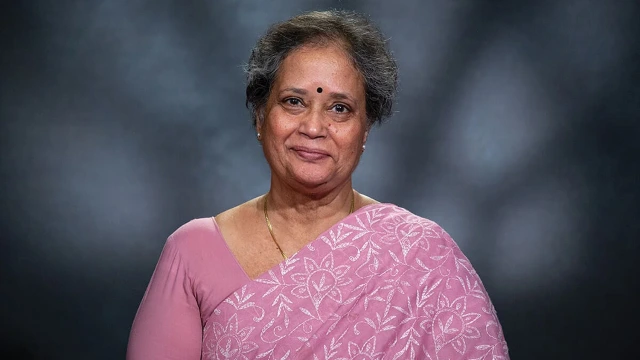
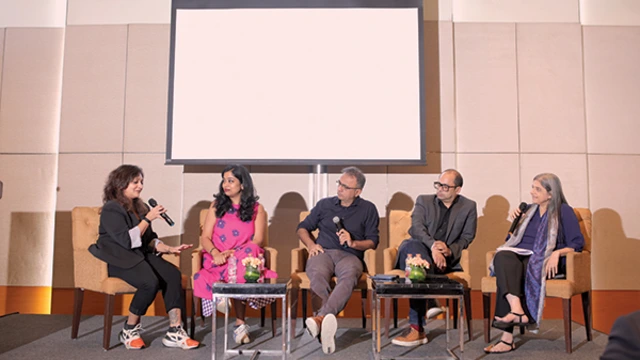
 From left: Ayshwarya Sharma, Akanksha Jain Bahl, Jitender Dabas, Virat Khullar and Nina Elavia Jaipuria
At the IAA Voice of Change Roundtable in Gurugram, industry leaders gathered to examine a question at the heart of advertising’s relationship with culture: should advertising simply reflect a changing society, or actively move it forward?
Organised by the India Chapter of the International Advertising Association (IAA), the roundtable brought together voices from advertising, marketing and media to discuss the findings of the IAA’s Midline Study, conducted with the Geena Davis Institute.
The study highlights visible progress on gender representation in advertising, yet some of the most persistent stereotypes remain. These findings were the starting point for a candid panel discussion moderated by Nina Elavia Jaipuria, chairperson, women empowerment committee, IAA India Chapter. Titled ‘Shaping the Future of Inclusive Advertising,’ the panel featured Ayshwarya Sharma, executive creative director - innovations, Leo India; Virat Khullar, head - marketing, Hyundai Motor India; Akanksha Jain Bahl, global associate director, PepsiCo; and Jitender Dabas, CEO, BBDO Group India.
The needle is moving, but unevenly
Setting the context for the discussion, Jaipuria noted that while progress has been made in narrowing the parenting gender gap and reducing sexual objectification of women in advertisements, women are still frequently depicted in domestic or caregiving roles, while men continue to be shown in workplaces.
Addressing the stakeholders of advertising, Jaipuria asked at which stage of the creative process there is a tendency for teams to ‘drop the ball’, and where a gender check should be implemented to foster more inclusive representation.
She also put forth the question of how much responsibility advertising should take for moving the needle in society.
Weighing in, Dabas explained that responsibility becomes particularly important because advertising does not simply document the world around it. The people creating it bring their own lived experiences to the stories they tell, he pointed out. “The person writing a story will write from lived experience.”
He argued that this makes the familiar defence that advertising merely mirrors society increasingly inadequate. “Often a poor defence of bad creativity or regressive gender norms is that it’s a reflection of the world we live in. Then when one hears about the power and influence advertising has, we understand that what one is about to write can influence people.”
On whether it was prudent to wait for society to evolve before advertising changed, Dabas noted that if change is left entirely to society’s evolution, it would only happen at that pace. “Often, one needs an external force to change that, which is where we need a process,” he said.
Representation - a business decision too
The challenge, however, is not simply philosophical. For brands, progressive representation still has to work within commercial realities.
The automobile category offers a telling example. Jaipuria pointed to the industry’s long history of placing glamorous women in passenger seats, even as Hyundai increasingly put women at the centre of its communication.
Speaking about the brand’s launch commercial for the Venue in November last year with Deepika Padukone, Khullar said the intention was not to create a stereotypical ‘female’ protagonist. “It’s not the portrayal of a stereotypical ‘boss lady’. She’s a wing commander and represents society.”
For him, the responsibility is straightforward: advertising should not fall behind the society it seeks to represent. “Advertising should never lag behind society,” he said. “A lot of ‘safe advertising’ lags behind society. Advertising can represent society as it is. And then, some advertising can be ahead of society.”
That philosophy has driven Hyundai’s broader approach. The brand, which has also featured women cricketers in its communication, currently has four female and two male brand ambassadors. The thinking, Khullar stressed, is not driven by statistics of how many women drive cars. “I don’t want to get into an echo chamber to see how many women drive cars between my home and office. That’s a bad echo chamber,” he said.
Instead, he argued, brands need to recognise women as consumers in their own right. Additionally, Khullar pointed out, progressive representation does not necessarily have to come at the expense of business performance, citing the Venue’s performance after its launch as evidence that commercial and cultural objectives need not be mutually exclusive.
India’s changing hinterland
The discussion also challenged another assumption: that progressive advertising is primarily an urban phenomenon.
“We somehow believe the likes of Gurugram are different from smaller cities, but India has progressed so fast that the smaller cities are almost mirrors of the bigger ones,” Khullar said.
In some cases, he added, smaller cities can be faster adopters of technology because consumers there are keen to demonstrate that they have reached an aspirational status.
That changes the commercial argument for brands that worry about being seen as ‘too progressive’. “Forward-looking or progressive advertising sometimes does very well in these places. One can drive aspirations, progressiveness and realism,” he added.
Audience expectations from advertising are also changing, with today’s consumer increasingly expecting brands to feel real, according to Khullar.
“Movies can be fantasies, but advertising can’t be. Whether it’s Gen Z or any other generation, consumers want realness and so advertising should follow that,” he stated.
Inclusion - an innovation challenge
For Sharma, the next step is to move beyond seeing inclusion only as a representation issue.
“When we think of solutions, we always keep the person we are designing it for in mind, which is key,” she said.
That means moving beyond demographic labels and understanding the different people who might influence or be affected by a problem. “We are not an individualistic society. We do everything in groups and need each other’s assistance.”
Her experience on Whisper’s Missing Chapter campaign illustrated that approach. Sharma recalled growing up in a household where menstruation was openly discussed, only to realise at college that many women did not share that experience. “When I went to college, I could say that word out loud, and it didn’t feel uncomfortable. But not everyone is talking about menstruation openly,” she said.
The evolution of sanitary-pad advertising, from blue liquid to more realistic portrayals, shows how representation has changed.
Nevertheless, Sharma argued that changing attitudes is only part of the challenge. Education and access continue to shape how menstruation is understood, particularly in rural India.
“The rural population doesn’t understand the need for a sanitary pad. The opportunity cost in the mind of a mother is whether to buy a lipstick for her daughter or a sanitary pad,” she said.
That understanding pushed Missing Chapter beyond advertising and into textbooks and schools. It also challenged the assumption that conversations around menstruation necessarily need to be led by women.
Consumer attention – a marketer problem
For Bahl, inclusion has another obstacle to overcome before it even reaches the audience: attention.
“The biggest challenge we face when we look at any form of content is consumers’ attention,” she said.
As formats shrink and consumers move quickly from one piece of content to another, nuance becomes harder to sustain. “Earlier, we had these long-form formats, but now consumers have such a deficit of attention that it’s viewed once and it’s gone.”
But the pressure to win attention cannot mean reverting to familiar stereotypes simply because they are easier to communicate. “If we go by the pace society is moving in terms of representation, it might not be the right thing,” Bahl said.
Making inclusion part of the process
The discussion then veered to whether agencies have a gender or inclusion check, and how these considerations can become part of the creative process without turning inclusion into just another checklist.
Dabas suggested making representation as routine a consideration as other creative measures. “We have a creativity scale for clutter-breaking film. If we can have a gender representation scale to agencies, that can help make it a conscious habit.”
The idea, however, is not to bolt inclusion onto an idea after it has already been made.
Dabas offered an analogy. “Sometimes the acts of balancing come in after the work. When one cooks, first one cooks nicely. After that, the topping and balancing can be done,” he said.
The bigger question, he said, is when the consideration enters the process.
Bahl agreed that the answer lies in the brief.
“It’s about an instigation at the start of the brief. Be conscious about balancing and representing women or being more inclusive. There are a lot of opportunities for sure, and it’s time for us to share these learnings with young brand managers. They love frameworks in any case, so it’s important to inculcate this too.”
Sharma suggested another test: bring different generations into the room before an idea leaves it. “The first check should be to get the youngest on the floor when we are discussing the idea. If they cringe, we know we are going wrong. Then bring in the oldest. If either of them feels it’s wrong, we need to figure it out.”
From tokenism to business impact
The final question is whether inclusion can become meaningful without becoming tokenism.
For Khullar, the commercial imperative itself should make tokenism difficult to justify. “Nobody has extra bucks to spend. We all feel our budgets are less. So we don’t have budgets for tokenism.”
Representation, he argued, ultimately has to serve a purpose. “It needs to represent something and
deliver work,” he said. “It needs to deliver real business growth.”
For Dabas, the point is not to constrain creativity, but to make conscious consideration of representation part of the creative habit.
And for brands, the strongest argument may ultimately be the one Khullar returned to: the work has to move the business as well as the culture.
“A campaign that does both - brand objectives and business objectives - is wow.”