

 Subscribe
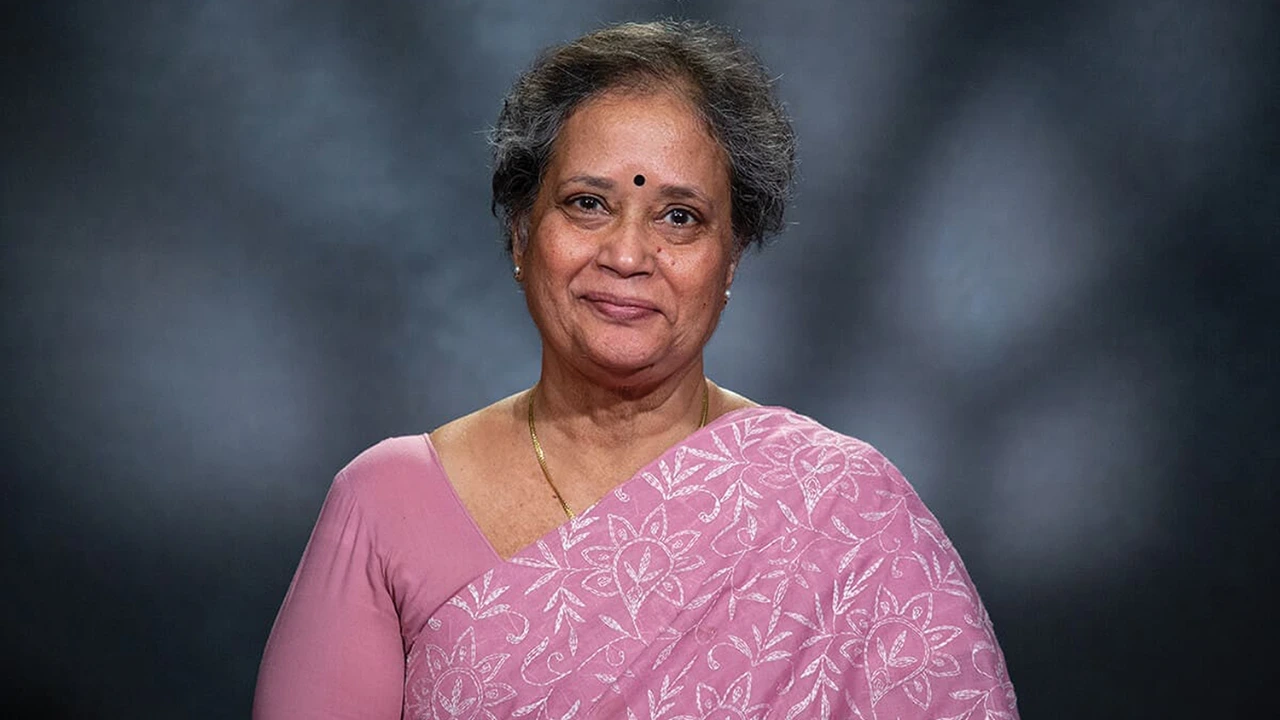
 Dr AL Sharada
Over more than 18 years of reviewing entries for the Laadli Media and Advertising Awards and evaluating advertisements for gender sensitivity in Campaign magazine for 13 years, I have watched hundreds of advertisements that challenge gender stereotypes. Some have moved me, some have made me think, and quite a few have left me disappointed. But there are a handful that have made me burst out laughing, and whose humour and message have stayed with me long after I first watched them.
I have picked nine advertisements that, for me, stand out for their wit, irreverence and sheer creativity. These are not necessarily the nine best gender-sensitive advertisements, but my personal favourites. They challenge conventional gender roles, puncture prejudices and, quite often, deflate bloated male egos without delivering a sermon on gender equality. They are simple, sharp and have great recall value.
Imagine a training programme designed to turn women into obedient, well-behaved creatures. They must learn to stay, obey commands, fetch things and generally know their place. Sounds outrageous? That is precisely the point of Blissclub's brilliantly irreverent 'How to Train a Bitch' advertisement.
Borrowing the familiar language and format of dog-training videos, the advertisement exposes the many ways women are conditioned to be submissive. It makes us feel uncomfortable, is wickedly funny yet so very disturbingly familiar. The exaggeration is not entirely an exaggeration. Behind the absurdity are expectations that women encounter in everyday life.
Advertising has often been criticised, and rightly so, for perpetuating gender stereotypes. We have seen enough women worrying about sparkling floors, spotless clothes, perfect complexions and the happiness of everyone in the family. Men, meanwhile, have traditionally been busy making important decisions, driving powerful cars and demonstrating their superior intelligence.
But advertising has another side that deserves appreciation. Some wonderfully imaginative campaigns have challenged these assumptions, not through solemn messages about equality, but through humour, irony and clever twists.
Consider Biba's 'Change Is Beautiful' campaign. The familiar arranged-marriage ritual is underway. The prospective bride is being assessed for her suitability. Everything proceeds as expected until her father turns the tables and asks whether the prospective groom knows how to cook. Suddenly, the unquestioned privilege of evaluating a woman's domestic capabilities looks rather ridiculous.
No speeches about equality, no lectures on sharing domestic responsibilities. Just one unexpected question that exposes the double standard. Why should a woman be expected to know how to cook while a man is under no such obligation?
Titan Raga's 'Break the Bias' is another clever example. At a corporate meeting, senior executives discuss an employee, Kiran, recommended for promotion. The employee's close working relationship with the boss prompts knowing smiles and insinuations. We are led to believe that a woman's professional success has something to do with personal favours rather than competence. The final revelation turns those assumptions upside down.
What I particularly like is that we, the viewers, are drawn into making the very assumption the advertisement seeks to challenge. By the time the truth is revealed, we have already exposed our own prejudices. The joke, in a sense, is on us.
Franklin Templeton's #ChangeTheSoch campaign uses an equally clever device to expose the dominance of the male voice in financial matters. A woman offers perfectly sensible investment advice, but nobody pays much attention. The moment the same advice is delivered in a man's voice, everyone listens! Nothing about the advice has changed, only the gender of the person delivering it. What a wonderfully simple way of exposing our deeply ingrained belief that men know more about money and investments than women. The absurdity is unmistakable.
Ceat's 'Things That Happen at Work' uses workplace satire to question gender bias. The situations are familiar, the attitudes recognisable. I remember bursting out laughing when I first watched it. The humour is sharp because it takes attitudes we have encountered so often and makes them look utterly ridiculous.
I particularly enjoy advertisements that don't portray women as helpless victims waiting to be rescued. Instead, they expose the foolishness of the prejudices and, sometimes, of the people who hold them.
And then there are those delightful advertisements in which women simply refuse to behave as expected.
The Tata Tetley train advertisement holds a special place in my memory. It was among the earliest winners of our Laadli Media and Advertising Awards, and even today I remember it with a smile. A woman travelling with an unpleasant, overbearing male companion finds an ingenious way of getting rid of him after a refreshing cup of tea. Instead of quietly enduring his behaviour, she takes matters into her own hands. The unexpected twist is mischievous, satisfying and thoroughly entertaining.
One can almost imagine generations of long-suffering women watching the advertisement and wishing they had thought of something similar!
I remember laughing just as heartily at the Bank of India vehicle loan advertisement. Cars and driving have traditionally been associated with male authority and expertise, an association advertising itself has done much to reinforce. The advertisement cleverly plays with those assumptions and punctures the bloated male ego without making a great fuss about it.
Chutney Nahi Patni is another advertisement that had me laughing aloud and watching it again and again. It takes the familiar world of marriage and domestic expectations and uses humour to question the casual manner in which women are treated and taken for granted. The situations are instantly recognisable, and the humour works precisely because we have encountered such attitudes so often.
What strikes me about these advertisements is how little they need to make their point. No elaborate storytelling, no lengthy explanations, no earnest appeals to change our thinking. Years later, I still remember the situations and the laughter they provoked.
But humour can also be used to address issues that are anything but funny.
Astral Pipes' Every Woman's Right is a striking example. A group of men setting out to defecate in the open suddenly find themselves surrounded by women banging utensils and publicly confronting them. The men, accustomed to enjoying a freedom denied to women, are visibly uncomfortable.
The scene is amusing, the picturisation is beautiful, the lyrics are hilarious and the music is amazing, but the issue is serious. Women who routinely face indignity, embarrassment and threats to their safety while relieving themselves outdoors turn the tables on men. For once, it is the men who experience the discomfort of being watched and publicly embarrassed.
What I particularly like is that the women are not pleading for toilets or appealing to anyone's sense of compassion. They are demanding their right to dignity, with a good deal of noise and righteous anger thrown in.
However, when we watched the advertisements discussed above, were we laughing at the women who challenged convention? Or were we laughing at the conventions themselves?
That, to me, is the crucial difference. These advertisements turn the joke on the prejudice rather than on the person experiencing it.
There is also the question of creative freedom. Gender sensitivity is sometimes treated as though it comes with a long list of restrictions, leaving little room for irreverence, exaggeration or mischief. As though being socially responsible means being perpetually serious!
I have never quite understood that assumption. Why should challenging stereotypes restrict creativity? If anything, deeply entrenched prejudices offer wonderful opportunities for humour. All it takes is an unexpected twist or a reversal of roles to expose how absurd some of our supposedly normal practices are.
Does a humorous advertisement change attitudes? That is difficult to establish. A clever commercial cannot dismantle generations of social conditioning. Nor should we expect every advertisement to carry the burden of social reform. But it can make us pause, question an unquestioned belief or start a conversation.
Having spent years advocating gender-sensitive communication, I have come to appreciate advertisements that make their point without sounding like lessons in gender equality. They don't underestimate the intelligence of their audiences. Creativity is balanced with social responsibility.
Perhaps we should stop assuming that gender-sensitive advertising has to be serious. A little irreverence, a clever twist and a good laugh can sometimes do more to expose prejudice than a dozen earnest messages about equality.
And surely, there is something rather satisfying about making prejudice look ridiculous!
The author is former director, Population First.