
 Subscribe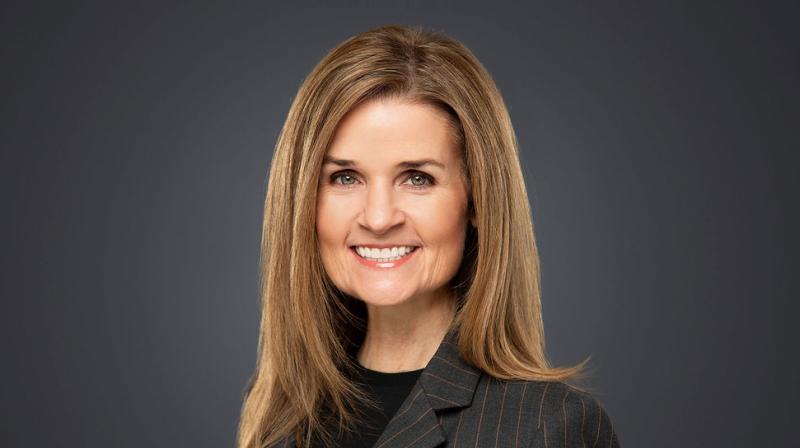
 Jacquie Matthews
With consumer behaviour constantly evolving, understanding people in all their complexity has become more important than ever. For brands, this becomes even more critical as they navigate the landscape where speed and scale often compete with depth and authenticity.
In the light of this, we caught up with Jacquie Matthews, Global CEO, Ipsos UU (qualitative research), to discuss this evolving consumer behaviour, balancing artificial intelligence with human intelligence and more, while she was in India last week.
Having spent decades studying people, how has your understanding of 'the consumer' changed over time? What’s one misconception brands still have about their consumers today?
The objective of qualitative research has been the same over time: to get an in-depth understanding of human behaviour/human experience, emotions, perceptions. Usually done in-context, in natural settings to understand the whole influencing eco-system. The goal is to create hypotheses to understand the meaning behind actions. We are often trying to understand that one person’s story that is unique and that can be a spark for disruptive thinking. What has changed is how we can do that. With more and more technology, there is ability to understand people in many different ways now. And with time, we have developed even more gamified techniques to help identify ‘the fringes within people’. Misconception: Sometimes brands oversimplify segments and perhaps over-segment people. For example, men appearing stupid/absent-minded or GenZ simply represented as lazy. Brands have to work harder to show real people in authentic settings. One individual can act/show up very differently across varied contexts/ settings.
In one of your recent interviews you mentioned AI tends to hallucinate - how should brands rethink their trust in AI-generated insights?
Just to correct the interpretation of what was said. Indeed, AI can hallucinate, but AI-driven research should not hallucinate if human eyes are applied at appropriate steps during the research process. Ipsos believes in AI from the perspective of 'Augmented Ipsos' – AI helping to make the human faster and smarter. The ultimate combination is HI (Human Intelligence) and AI and Ipsos has conducted a lot of research to understand when to deploy each. So AI can hallucinate, AI-driven research, done properly, should not.
Technology has forced marketers to retreat behind the screen and view life through a set of lenses which could lead to a rather erroneous perception of the world - what they need to do is step out into the real world, spend time with consumers and understand them in-context, and that's where they would be able to overcome the biases that exist. Marketers also need to work with a set of agencies that are able to talk about AI - the positives and the negatives. They need to be able to represent the core pillars of truth, transparency and trust - Truth: accuracy and validation and have regular processes by human experts to ensure relevance and accuracy; Transparency where they would look at avoiding black box algorithms by ensuring AI reasoning is clear and understandable; and Trust is about prioritising data security, compliance and legal regulations.
You have also talked about 'humanising research with AI' - how do you think AI can help the way we connect with consumers?
AI should be used in situations where one cannot connect with consumers. Do not use AI to outsource your sense of empathy - that would leave you feeling empty. A scenario where you cannot speak to a consumer because it is 3 am - that's when you could use AI - it could be used to amplify your abilities rather than to outsource your humanity. AI can also help us analyse huge amounts of data to find insights that we couldn't normally find. For example, it can analyse tens of thousands of photos to help us find things that we didn't know we were looking for, that enable us to create close connections with consumers.
You’ve described AI’s tendency to 'vanillify' ideas by pushing them toward the centre - does this put the brands at risk of designing campaigns that feel increasingly safe and indistinguishable?
These days there is a temptation to shortcut to average simply because one can. AI tools allow us to go supersonic but the need for speed pushes us into using AI where it shouldn't be used. Sometimes it's better to go slow than to go faster to keep one's mind open to expect the unexpected, to embrace serendipity. Think of chimpanzees - they are 99% human but they're still living in the jungle and humans are flying to the moon - that one percent difference gives you the edge. All these brands playing in the middle ground, they're never going to find that distinctive voice that gives them an authentic edge in today's increasingly flattened world.
If you had to give one piece of advice to brands trying to stay relevant today, what would it be?
It's increasingly common to find brands jumping onto the latest bandwagon simply because it's the loudest voice in the room. The brands that truly resonate most effectively today are the ones that retain their authentic voice. It's so important for brands to speak with an authentic voice that embodies their brand equity that they have nurtured over the years and that links both to them as a brand and a consumer insight that can last a lifetime.