

 Subscribe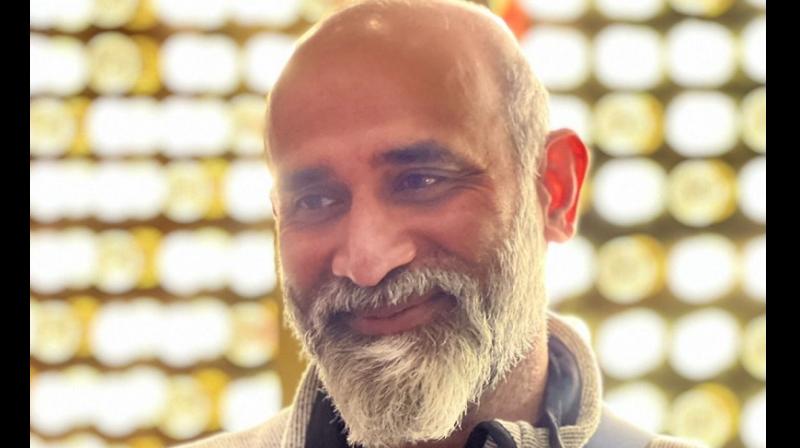
 Shabbir Motiwala
Over the years I've come to accept that procurement is no longer a back-end function. It's in the room. It's in the brief. And more often than not, it is in the decisions that shape the work itself.
While this shift isn't inherently problematic. In fact in a market like India where scale, speed and efficiency are non-negotiable, procurement has started to play a vital role. But, and it’s a big BUT, from what I see, the friction begins when the language of costs starts to override the language of ideas.
The disconnect
Most of my interactions with procurement don't begin with a conversation.
They begin with a document.
A detailed questionnaire, a capability matrix, a request for rates, benchmarks and breakdowns, and mostly without any real context of the brief or the ambition behind the work.
The promise is usually inclusion in a panel or a roster but with little clarity on what that actually means in terms of long-term opportunity.
From a content perspective, that's a strange place to start. Because the value we bring isn't static, it changes with the idea, the audience, the platform, and the cultural moment were responding to. Trying to standardise that upfront, without context, is like costing for a film before you've read the script.
Reduced to numbers
The bigger challenge, however, is what happens downstream.
Increasingly, what seems to happen is that decisions are being driven by cost comparisons that don't fully account for creative nuances.
The choice of director, a production partner or even a post-production approach isn't just an operational call.. Its a creative one. Its shapes tone, storytelling and ultimately how the audience will finally experience the brand.
And yet these decisions are sometimes evaluated in isolation, as if they are interchangeable.
In India, this becomes even more layered. We've not just producing content, we're navigating language, culture, and micro audiences. The difference between good and great often lies in understanding those subtleties and something that doesn't always show up in a cost sheet.
The Indian context
The most concerning shift is the increasing push towards price led decision making.
Reverse bidding, cost undercutting and 'L1 vendor' thinking, something that is prevalent in other industries is now creeping into advertising and production. The idea that the lowest bidder wins may work in infrastructure but it sits uneasily in a business driven by creativity.
Do we really need a complex process to tell us that shooting in smaller town is cheaper than Mumbai? Or that a less experienced team will cost less than a seasoned one?
That’s not insight that’s arithmetic.
The real question is whether those savings enhance or dilute the final output. From the content stand point that trade off is really neutral.
Procurement misses
Yes agreed, procurement operates under its own pressures, cost targets, compliance, and accountability.
But what often gets missed is how content actually works.
An idea isn't just executed... it's interpreted. The people you choose to bring it to life matter. Their perspective, their craft, their instincts.. these are not interchangeable variables.They're the difference between work that blends in and work that stands out
And in today's landscape where content is competing not just with ads but with culture itself standing out is everything.
Middle ground
This isn't about pushing back against procurement. Its about bringing it closer to the process.
As content leaders, we need to do a better job of articulating where value comes from, why certain choices matter, and how they impact effectiveness. And procurement teams need deeper visibility in the creative process, not just the outputs but the thinking behind them.
Because right now were often solving for the same goal - business impact but through completely different lens.
Closing the loop
Instead of asking 'what does this cost?' The more useful questions are: 'What does this choice enable?' Does it elevate the idea?
Does it make the work more distinctive? Does it improve the likelihood of effectiveness?
If we have the answer in a yes, then the conversation shifts. It's no longer about spending more or less - it's about spending right.
The opportunity, therefore, is not to push procurement out of the conversation but to bring it deeper into it... and the need to evolve from cost control to value optimisation.
Closing thought
If procurement isn't the problem, what is?
Misalignment.
We need more dialogue between procurement teams, marketers, agencies, and production partners. Conversations that go beyond numbers and into how value is actually created A better understanding of why certain creative choices cost more and how they contribute to effectiveness.
Because in the end content isn't only about production but how brands earn attention, relevance, and memory. Some of India's most iconic brands, whether its legacy players or new age disruptors have been shaped by powerful creative work.
Think of the storytelling that has defined categories, the cultural moments advertising has created, the long-term brand building that has driven both recall and loyalty. That didn't come from choosing the cheapest option, it came from choosing the right one.
When procurement led decisions begin to override creative judgment for marginal savings, it creates a contradiction. The same brands that invest crores in media amplification start optimising lakhs in production, often at the cost of the idea itself.
We need to shift the conversation from cost-cutting to value building.
From what I see, the opportunity is to move from a transactional relationship to a collaborative one, where cost and creativity are not at odds but in balance.
And honestly that’s for too important to be decided by numbers alone.
The author is chief content officer, Infectious Advertising and Epidemik Production.