

 Subscribe
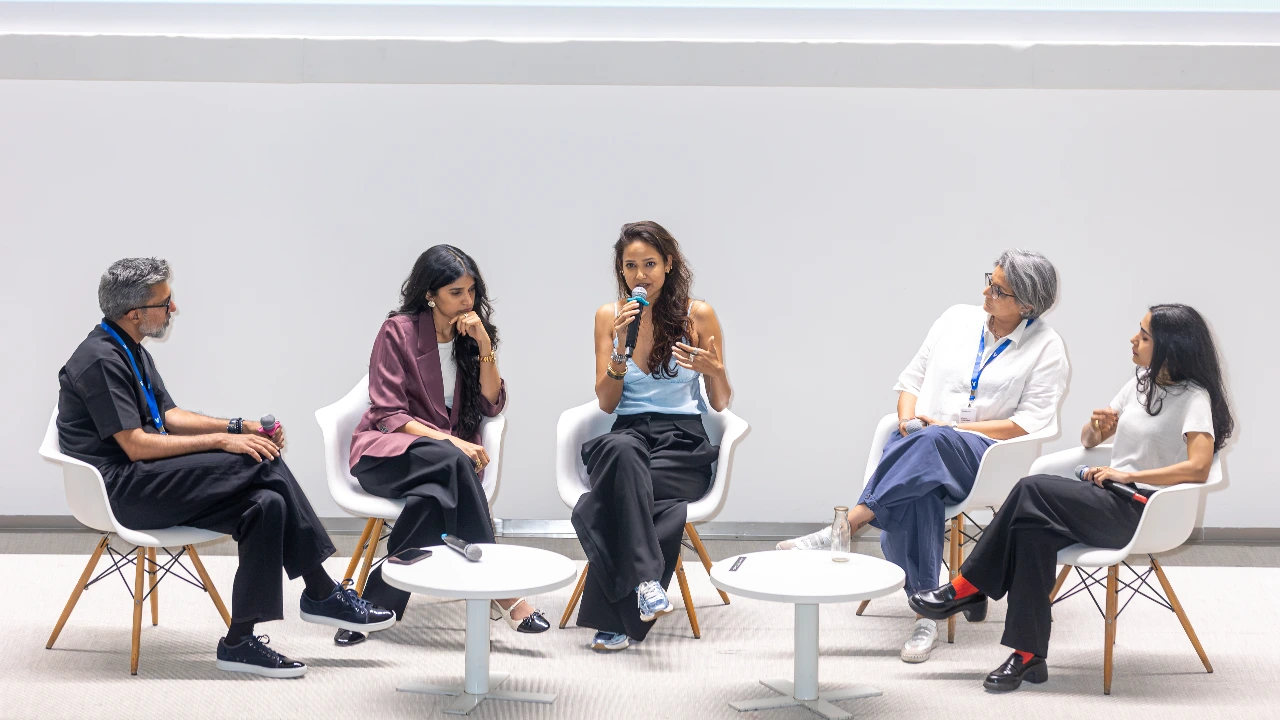
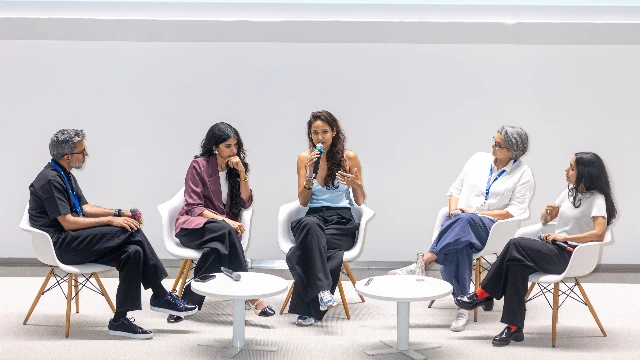
 From left: Khalil Bachooali, Roopali Singhal, Akanksha Seda, Priya Seth and Ria Singh
At the second Indian edition of Cannes Lions International Festival of Creativity's 'See It Be It Connects', organised by Indian Creative Women and Manifest in partnership with Godrej Industries on 19 November, a discussion titled ‘The Power of Perspective’, explored how women are represented in advertising and entertainment, and the role of creative professionals in challenging conventional portrayals.
Moderated by Khalil Bachooali, founder and CEO, Offroad Films, the panel consisted of Akanksha Seda, director, Good Morning films; Ria Singh, independent filmmaker; Roopali Singhal, independent filmmaker; and Priya Seth, cinematographer.
On what defines the female gaze
Ria Singh: When it comes to creating anything, whether films, books or art, women inevitably bring a lot of history and experiences with them. We carry trauma, good and bad experiences, suppression and liberation. It's impossible to create anything without all of these experiences influencing it.
Sometimes, I feel the female gaze is interpreted negatively, but it isn't necessarily attached only to women. For the longest time, we consumed and understood the world through a man's perspective because we didn't have a platform to express our own. Now, when we get that opportunity, we bring a different perspective to the table.
For instance, when we receive a script and see the sexualisation or objectification of women, we will question it, step back or change things to ensure it doesn't happen. That's the female gaze. The female gaze is about looking at things with tenderness and emotion, not objectively but subjectively. It is something that can be shared and not something that belongs exclusively to me. But it's also something I cannot let go of because of my experiences.
For me, the female gaze is about making that world a little more tender. Sometimes, even a small representation can allow a woman watching to see herself portrayed in a way that feels protected. That's what matters.
On the next frontier of representation: moving from the female gaze to the human and cultural gaze
Akanksha Seda: What's entered the room now is the human gaze. If we move beyond the binaries of male and female, what has emerged is a deeper understanding of not just women, but also men, family units, workplaces and everything else, with far more complexity, nuance, colour and texture.
We've moved beyond where we were. I like to call it the 'yes, and' brigade. I don't want to sound as though everything has changed or that we've arrived at some perfect place. What has happened is that we've added the 'yes, and'. ‘She's a dutiful, wise and doting mother. Yes, and she's also a marketing head. She's gorgeous and beautiful. Yes, and she's a truck driver.’ We've added so many more possibilities, and we need to continue doing that.
I think that's where the female gaze has gradually become a human gaze because we're also looking at men and everyone else with the same complexity. There's something else that has entered the conversation, perhaps without us fully realising it. Maybe that's the next frontier, not just for advertising but for mass media - 'cultural gaze'. Advertising, mass media and entertainment are all connected. We're comfortable with unconventional women as long as they're conventionally Indian, and that's something we need to question.
Why else would a woman's outfit in a Raksha Bandhan ad throw us into a tizzy? Why would one shade of orange in a Bollywood music video create such an uproar? Why would a wife sitting on her husband's lap and writing about it in a memoir make people so angry?
It's because we have perhaps stopped telling women where they belong, but we're now telling them how they ought to behave once they get there. We need to sit with that for a while. The 'yes, and' has now become: She's bold, yes, but not too bold. She's independent, brave and strong, yes, but also palatable. Why are we constantly putting these guardrails around the kind of women we are willing to portray? That's something I'm questioning with every brief and every casting decision. It’s the next frontier we need to explore, even if it makes us uncomfortable.
On where the cultural guardrails come from and the role of patriarchy in shaping representation
Priya Seth: I think the answer is patriarchy. And patriarchy isn't limited to men. Women can be patriarchal too because it's a system and a construct. It isn't the responsibility of just one section of society. When it comes to the film world, since I straddle both industries, the question becomes: Does film influence culture, or does culture influence film? Are we simply reflecting the state of society as it exists today? To some extent, I believe we are. I don't think films can necessarily convince society to change. And that's quite worrying when you look at the kind of films being made today.
In advertising, I feel more hopeful about the opportunities we have and our ability to effect change at some level. But when you look at mainstream cinema, the situation is quite alarming. The problem lies in the kind of films we want to make and the people making them. Ultimately, the responsibility lies with the makers. Women have very little opportunity to influence these narratives because they're often not being hired in the various roles involved in making these films. That's not the way these stories are intended to be told. It's an out-and-out male gaze. And even if women are hired, they may be women who are willing to tell stories from a male gaze.
On calling out problematic behaviour and challenging decisions during production
Roopali Singhal: Having assisted for two or three years, I've often had to point out how a woman is being dressed, whether she's speaking or not, and how she's reacting to something happening in the film. I've had to tell directors that I don't think something is right from a woman's perspective. And when it comes to behaviour, I've also walked out as an assistant when I felt that the conduct was not acceptable. There have been times when I've simply said that my brain has shut down and I cannot continue to participate in something that feels wrong.
Partners for the event included Adfactors PR, First December Films, Kulfi Collective, and Chrome Pictures. Jack Daniel's Merchandise was the 'Experience Partner' for the event.
Catch updates from See It Be It Connects through the week on Manifest.
Also read:
See It Be It Connects 2026: ‘Ambition is not a personality flaw that needs to be fixed'
See It Be It Connects 2026: 'We're not here to win an election or a popularity contest'
See It Be It Connects 2026: ‘Without a design story, the idea can die a premature death'