

 Subscribe
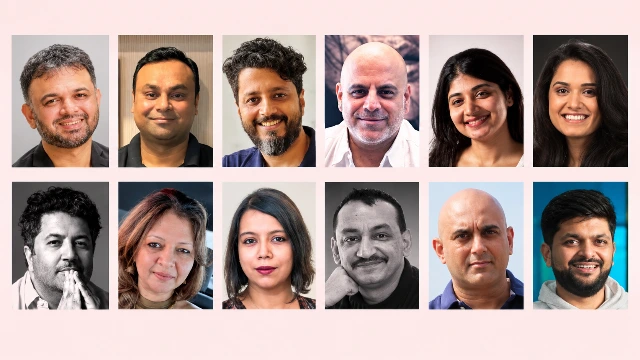
 From left: Ramesh Krishnamurthy, Siddharth Shankar, Geetanjali Bhattacharji and Anil Nair.
For decades, marketing has operated as a series of connected but ultimately fragmented functions: strategy, creativity, media, commerce and distribution. These are rarely owned end-to-end and almost never accountable as one.
When Komerz, the fast-growing global commerce and distribution platform, acquired Glassbox earlier this month, it did not read like a routine bolt-on acquisition.
It marked a deliberate consolidation of power and influence, bringing brand narrative, tech platform play and commercial execution into a single system.
Glassbox, founded by Geetanjali Bhattacharji and Anil Nair, has typically operated upstream, defining brands, shaping experience and positioning businesses in culture and markets. Its integration places Komerz firmly into terrain usually occupied by consultancies and agency networks, albeit with a distinctly different model.
The move also follows the recent acquisition of Pathformance, a US-based retail measurement player that strengthens Komerz’s ability to link omnichannel marketing activity directly to revenue using AI and attribution modelling.
Taken together, these moves are structural. Komerz, operating at the intersection of marketing, commerce, and distribution, is collapsing the distance between strategy, demand and execution into a single, AI-led operating system tied to measurable outcomes.
The question is no longer whether such a system can unify what has long remained fragmented, but what it takes to operate it at scale.
We put these questions to Komerz.
Why Glassbox and why now?
We’ve had strong depth in distribution and measurement for some time, so we’ve been comfortable with how brands perform once they’re in market. What we didn’t control was the starting point: how those brands are defined before they enter the system.
That’s where Glassbox comes in.
Geetanjali brings a consulting-led perspective where brand is treated as a core business lever, not just a marketing output. Anil, meanwhile, has spent years building digital and creative ecosystems, where scale and performance work together.
Bringing that capability in-house allows us to shape both ends of the equation: how a brand is built and how it performs.
What is Komerz trying to achieve?
At its core, Komerz is building an integrated go-to-market system that removes the friction between brand, demand and distribution.
Most organisations still operate across three separate layers: strategy, marketing and execution.
These are managed independently. What we’re doing is bringing those layers together into a single operating model.
Komerz OS (KOS) sits at the centre of that effort. It’s an AI-led architecture built around the 3C framework: category, consumer and channel, that continuously ingests live signals and translates them into decisions tied directly to revenue.
The shift is not about adding capability; it is about redefining the Where2Play/How2Win equation: strategy becomes continuous, creative connects directly to outcomes, and execution happens without delay.
Who is this built for?
We’re seeing the strongest relevance across three segments.
First, large multinational consumer companies with long-tail brand portfolios that often don’t receive sustained focus despite their growth potential.
Second, D2C businesses that have already built demand but lack the infrastructure to scale globally.
And third, Global South companies expanding into the West, and Western firms entering emerging markets, with need for greater speed and precision.
Across all three, the constraint isn’t demand. It’s the ability to coordinate multiple moving parts effectively.
What is the strategic advantage?
Though marketing itself has become more accountable over time, the system around it hasn’t evolved at the same pace.
You still have strategy, creative, media, commerce and logistics handled by different partners, each optimising for their own piece. That fragmentation is where value leaks out.
What we’re focused on is closing that gap between intent and transaction.
By bringing creativity, activation, attribution modelling and distribution into one system, we make outcomes predictable and tightly linked to growth.
Where does Pathformance fit in?
Pathformance makes the system measurable in a meaningful way.
With its proprietary PathX technology, it connects marketing activity—across retail, marketplaces and D2C ecosystems—directly to revenue outcomes, at scale across hundreds of brands and significant media investments.
Within Komerz, it is the measurement backbone, ensuring every decision is grounded in what is actually driving performance.
And Glassbox?
If you optimise purely for short-term conversion, you erode long-term brand value.
Glassbox balances that.
It brings depth in BX and CX, defining what a brand stands for and how it behaves consistently across markets, so that performance is anchored in a strong, coherent foundation.
Can commerce-led marketing still be creative?
There’s a long-standing assumption that bringing commerce into the equation limits creativity.
Our experience shows the opposite.
The real issue is that commerce comes in too late. When it is integrated from the beginning, it sharpens creative thinking, making it more relevant, more contextual and more effective.
Over time, the distinction between brand and performance narrows.
From enabling brands to running them?
Yes, that’s a deliberate shift.
The acquisition of Great Wines Direct, one of UK’s leading Beer, Wines & Spirits (BWS) retailers, reflects a move from enabling brands to operating them directly and scaling them globally.
Once you do that, you’re dealing with real-world constraints: inventory volatility, pricing pressure, supply chain complexity and that changes the nature of the system. It has to perform under live conditions.
We think of this as a continuous validation environment, where strategies are tested, refined and scaled based on actual outcomes.
Why move into that?
Because systems become robust when they are tested in the real world.
Operating our own brands allows us to continuously validate what works, scale it and move quickly away from what doesn’t.
It also defines the next phase clearly. Komerz will deepen this model, both by acquiring and operating more D2C brands and by opening the same infrastructure to challenger brands that do not have access to these growth levers in-house.
This is not just about ownership. It is about building a system others can plug into and scale with.
What comes next?
If you look at the trajectory, the direction is defined.
We’ve built measurement through Pathformance, strategy, content and creative through Glassbox and execution through our distribution and operating capabilities. The next phase is about extending that system, expanding into adjacent demand ecosystems such as cultural/sporting platforms and large-scale activations and deepening our portfolio of owned and operated brands.
Over time, the model evolves from a set of capabilities into a compounding model, where brands are not only supported, but built, scaled and owned within the same ecosystem.
Leadership sits with Ramesh Krishnamurthy (Global CEO) and Siddharth Shankar (Global COO), a London-based pairing focused on translating architecture into operating reality.
Ramesh defines the system, bringing together consulting depth, marketing intelligence, and commerce infrastructure into a unified, revenue-accountable model designed for scale.
“The future of brand building is creative, data-led and commerce-native. The advantage lies in controlling the system end-to-end.”
Siddharth builds it on scale. A proven entrepreneur behind a $500 million exit at Tails Trading Group, where he scaled a multi-billion-dollar portfolio, he brings deep expertise across distribution, trade finance and cross-border operations. His focus is execution at a global scale, integrating logistics, inventory, sales and marketing into a single, coordinated engine.
“Most companies don’t struggle because there’s no demand. They struggle because they can’t operationalise it consistently. That’s the gap Commerce-as-a-Service solves.”
Together, they are building a system designed not just to generate demand, but to convert it, at scale and with precision.
Can marketing finally become a system of record for growth?
Komerz positions itself as a creative commerce engine, a single window system for growth-hungry clients.
With operations across the UK, Europe, Asia, and North America, and an estimated enterprise value of around £500 million, it is building a unified model for commercial success.
The ambition is clear: to turn marketing into a system that is measurable, controllable and directly accountable to revenue, at scale and speed.
And in doing so, define the future shape of the category itself.
This article was first published in our April issue. Buy a copy here!