
 Subscribe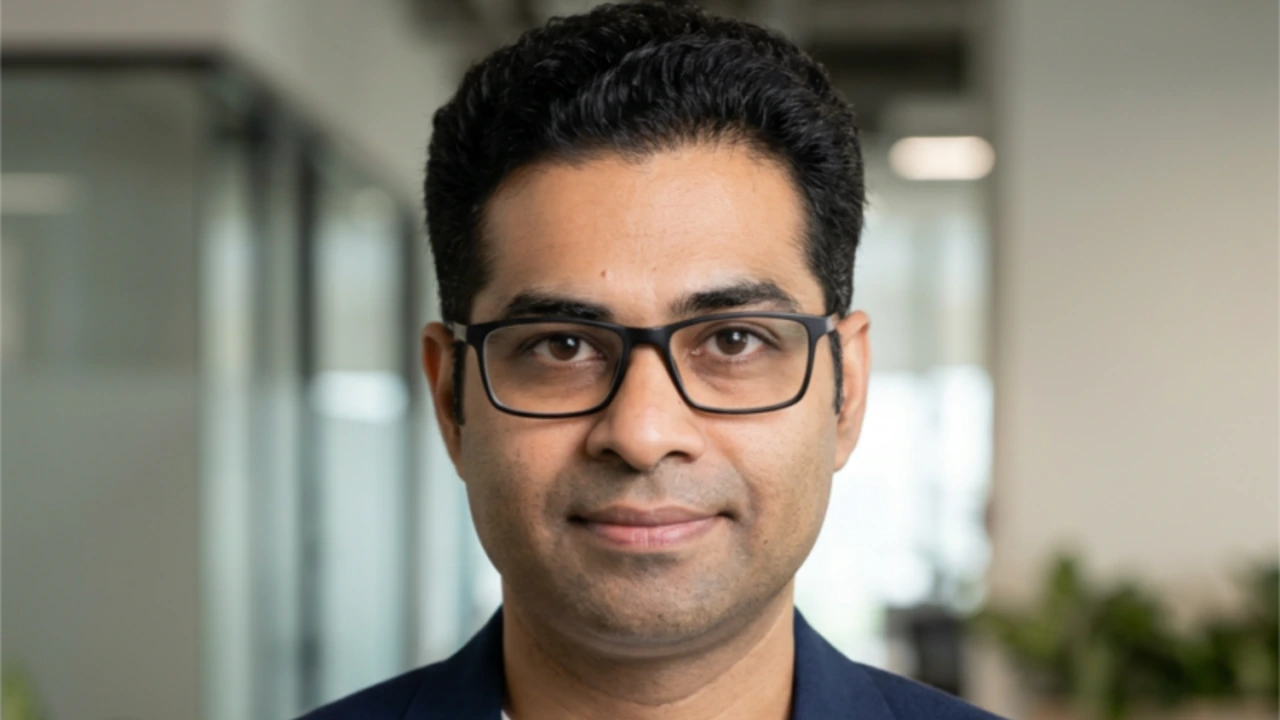
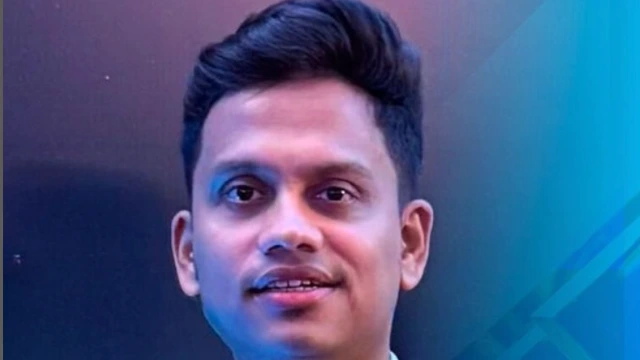
 Gaurav Sharma
For two decades, Campus Activewear has built its business around sports and athleisure, while focusing on comfort as its USP. But as India’s footwear market evolves, the brand believes the next growth opportunity lies beyond sneakers. This is based on an insight that consumers are increasingly dressing for fluid lifestyles rather than rigid occasions, blurring the lines between formal, casual and everyday wear.
That shift has created a white space for footwear that delivers the sophistication of formal shoes without sacrificing the comfort people have come to expect from sneakers.
This is what led to Campus entering the neo-casual segment with the launch of Élan by Campus, a premium portfolio designed for consumers seeking understated elegance, versatility and all-day comfort.
Actor Jim Sarbh fronts the launch campaign as Campus looks to build stronger emotional resonance through fashion-first storytelling.
The launch follows Campus Activewear’s larger brand evolution, marked by the unveiling of a new brand identity at Shoecase 2026 earlier this year, signalling its ambition to become a more culture-led, future-facing brand for a generation driven by individuality and self-expression.
Manifest caught up with Gaurav Sharma, CMO, Campus Activewear, to pick his brains on the consumer insight behind Élan, the company’s premiumisation strategy, why Sarbh emerged as the perfect fit, the growing role of AI and social commerce in shaping modern marketing, and what success will ultimately look like for the brand.
Edited excerpts:
Campus has built its reputation in sports and athleisure. What consumer insight convinced you that now was the right time to enter the neo-casual category, and how large do you see this opportunity becoming over the next three to five years?
Consumers don't really see categories like formal shoes, casual shoes or open footwear. They see their life first, and then the different occasions within it.
Over the past four years, 'sneakerisation' has grown significantly. People have become accustomed to sneakers, so they now expect a certain level of comfort from every shoe. At the same time, workspaces have become more hybrid, open and fluid. Going back to the formal shoe category is no longer obvious because consumers have a choice.
That's where we realised there was a white space where the look and feel of a formal shoe, without compromising on the comfort of sneakers, could actually be delivered.
Campus has been selling sports and athleisure shoes for the past 20 years, so we understand the size, silhouette and form factor of Indian feet. Seeing that consumers are no longer buying through categories while comfort has become a table stake, we thought this was the right time to enter the neo-casual or formal sneaker segment, where consumers don't have to compromise on comfort to get stylish, work-first shoes.
That's where Élan was born. Specifically, it's Élan and not Campus because we wanted consumers to take note that it comes from the same house as Campus but is something new. That's why we've adopted an endorsed brand strategy with Élan by Campus.
Is Élan positioned more premium?
Premiumisation is not only about increasing pricing. It's about offering better value in terms of design, silhouette, quality and brand signalling. Consumers reward you through improved pricing.
We'll offer better silhouettes, relevant subcategories and won't compromise on comfort. Pricing will go up because consumers will see the value and be willing to pay for it. Our input metrics are not simply about increasing prices. They're about offering value first and then extracting pricing from it.
You have appointed Jim Sarbh for this new line. What made him the perfect brand fit for this segment?
When I first held the sample shoe, it felt effortless and understated in terms of quality, design and silhouette. I felt it deserved the right kind of partnership.
Our current brand ambassadors are very well-suited for Campus Activewear, while many new-age fashion influencers are often trying too hard to establish themselves. Jim comes with his own old-world charm. He's not trying too hard and is everyone's darling. He's effortlessly charming.
That's exactly what Élan stands for: effortless elegance. We felt Jim Sarbh could do complete justice by being the most authentic and natural celebrity partner. We never did any research or dipstick study. We simply went with our gut, and so far it has worked beautifully.
Can you explain the campaign strategy for Élan? What is the strategy to make it top of mind for the consumers?
Élan will have a slightly different approach. Since we're bringing more premium consumers into the brand ecosystem, the media channels will also be more premium.
We haven't traditionally done CTV, but it's now part of the plan. Our partnership with the ‘Made in India’ show was also part of the overall media mix. We'll also go heavy on Amazon, Myntra, our website and exclusive brand stores. From a media perspective, we'll focus on channels that help us acquire incremental, new-to-brand consumers rather than relying on plain vanilla TV or print advertising.
Overall, for Campus Activewear, from a brand-building perspective, what sort of strategies are you using?
The brand doesn't need any introduction. Top-of-the-funnel awareness is already there. The challenge comes lower in the funnel when we ask consumers whether they'd be comfortable flaunting Campus.
Over the past four years, relevance and consideration have been the two core brand objectives against which all our media, creative and marketing efforts have been directed. Élan is also part of that larger objective.
How do I make Campus a brand that new-age consumers proudly flaunt? Can I make a customer naturally wear Campus without thinking, "What am I wearing?" That's the objective.
Rather than chasing very high reach, we're investing in highly relevant partnerships and strong storytelling. If one looks at our last campaign with actor Vicky Kaushal, 'Move Your Way', it followed a nuanced storytelling approach. Feature-led storytelling is important, but our primary objective is to solve for relevance and consideration.
When it comes to campaigns, do you have an agency on board or do you do everything in-house?
It's a mix. For larger campaigns, we work with agency partners, while regular BAU (business as usual) campaigns are largely handled in-house.
Élan is a good example. There was no agency involved. Our in-house creative team handled it end to end, from campaign development to working with the director, producer, and even composing the music internally.
It's still too early to say whether in-house or agency works best. The best work happens when both teams collaborate so seamlessly that nobody can tell who's in-house and who's from the agency.
When it comes to social media marketing, where do you see Campus organically reaching consumers today?
Over the past six to eight months, we've built dedicated social media teams. Earlier, social media was simply an extension of our trade partner amplification channel. Now we take it very seriously.
While nearly 50% of our sales still come through the trade B2C channel, a strong D2C presence makes social media extremely important. Today, a single Reel can collapse the entire funnel. Awareness, consideration and conversion can all happen within one piece of content.
We're optimising our content strategy on social media for conversion. If I can show a product through storytelling, I should be able to convert the consumer right there, or at least get an add-to-cart. We're leveraging AI to understand trends across social, create content with external partners and distribute it more effectively.
Many brands are now ensuring their content is visible across AI platforms. Are you also working towards that from an SEO perspective?
We've already started with GEO. We're already ranking higher on Perplexity and ChatGPT.
Our in-house performance marketer is writing blogs where it matters. Not blogs for humans, but blogs for AI. At the same time, we're working with partners who help us understand what people are searching for and how to rank higher for those queries across platforms.
To give you a very honest answer, we received three-digit orders on our website last month from AI searches.
Looking ahead, what will success for Élan and Campus Activewear look like over the coming years?
The objective is to improve relevance and consideration. For me as a marketer, success would be when a consumer buys Campus without any hesitation or judgment, and then recommends it to four of his/her friends by saying, ‘I bought this. You should try it too. They've got a superb collection.’
Market share and revenue are outcomes of what first happens in the consumer's mind. If I'm able to achieve that, that's what success would mean for me.