

 Subscribe
 Karan Tacker
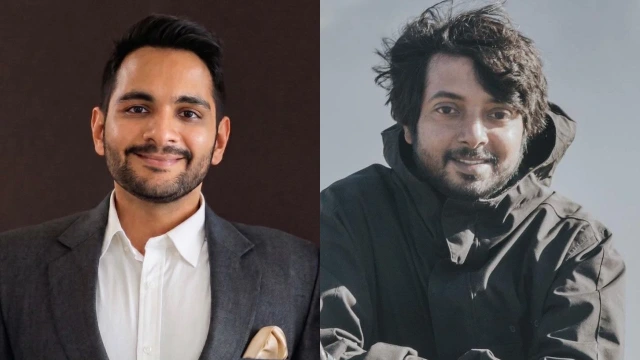
Indian consumer brands are thinking about themselves differently now, as in, they aren’t wanting to borrow aspiration, and instead want more ownership of their identities. In a category like alcohol, where global cues have long dictated taste, storytelling and even naming, that shift feels sharper. That’s what actor-turned-entrepreneur Karan Tacker aims to do with Goonda.
In a conversation with Manifest, in our April issue, Tacker, the co-founder, explains how he wants to create a brand that doesn’t just want to participate in the alcobev conversation but reshape how an Indian spirit shows up within it.
Tacker traces the origins of Goonda back to the pandemic, when the idea of building something distinctly Indian began to take shape. He shared, “This journey started about two years ago. It’s something Ashish Jasuja and a bunch of us came up with during Covid. The idea was to create a very unique, brash Indian brand. When you look at Indian brands versus international ones, there’s always been this tendency to lean towards the West, assuming that’s where aspiration lies. I wanted to challenge that and build something that feels unapologetically Indian, both in the liquid and in the brand identity.”
What he’s pointing to here is a deeper shift in mindset. Instead of borrowing global cues, Goonda is rooted in local sourcing and production, using agave grown in India, distilled in Andhra Pradesh, and aged and bottled in Goa. That decision, he said, was intentional, even if it wasn’t the easiest route. “We could have imported tequila from Mexico and simply bottled it here, which would have been cheaper and faster. But the intent was always to build something from the ground up in India, using what we have. That’s what makes it meaningful," Tacker voiced.
At its core, the ambition stretches beyond domestic success. He added, “The goal is simple: one day we’re sitting at a bar in the UK, and we see a non-Indian picking up a bottle of Goonda. That’s the story we want to create. Why should we always import from the West and sell it back to ourselves? Why can’t we export our own narrative?”
Interestingly, Tacker insists the timing of the brand wasn’t driven by market trends as much as by personal intent. “We didn’t wait for a cultural shift. The shift was internal. All of us wanted to build something of our own. We come from completely different backgrounds, and this was about coming together to create something meaningful," Tacker explained.
That said, choosing tequila was a strategic call. Tacker pointed out, “Tequila is having a moment globally and in India. It’s also perceived as a relatively healthier option, lower in calories and easier on hangovers. With people becoming more conscious about what they consume, it felt like the right category to build in.”
When it comes to scaling the brand, the approach is measured. The focus, for now, is on India before taking the story outward. “We want to kick off locally because this is home turf. There’s a lot to learn here. But the larger ambition is always global. That’s also why the name is deliberately desi. Why should an Indian tequila have a Western name? The idea from day one was to own that identity," he shared.
Operating within the restrictions of alcohol advertising has meant leaning heavily into digital and on-ground experiences. Tacker said, “We’ve built a strong online presence and complemented that with events where people can actually engage with the product. Those real-world interactions help us build a community.”
That emphasis on experience extends to pop-ups and tastings, which Tacker sees as crucial for a young brand. “We launched with a soft launch at All You Can Street in Mumbai and have since done multiple pop-ups, especially in Goa. It’s been incredibly valuable because you get direct consumer feedback. You see how people react, what they like, what they don’t. That’s the best way to understand your audience," Tacker voiced.
Rather than rushing into influencer marketing, the brand has taken a slower route. “We haven’t done paid influencer posts yet. Everything you see online is organic. We want to first understand how the brand grows naturally, and then build from there.”
Design, meanwhile, plays a central role in shaping recall. Tacker described the thought behind the distinctive 180 ml bottle. “We started with smaller bottles designed like hip flasks, with a slight bend so they fit comfortably into your pocket. It almost feels like holding a perfume bottle. Even though the cap is intentional, it has that old-school opening sound, which adds to the experience," Tacker added.
What he’s getting at is that packaging isn’t just functional, it’s part of the storytelling. The graffiti elements, skull motifs and the name itself all contribute to a brand that feels playful yet deliberate.
Looking ahead, the roadmap includes expanding both geographically and across formats. He expressed, “We’ve launched a catalogue of five variants and also created ready-to-drink cocktails like picante, café and strawberry. The idea is to simplify cocktails for people at home. You just pour over ice, and you’re done.”
Despite being a celebrity-backed venture, Tacker is clear about where the spotlight should be. “For me, the brand is the hero, not me. If my association helps bring attention, that’s great, but the focus remains on the product. I’m deeply involved in everything, from the blends to the packaging to meeting retailers. I’m all in. What I sell is what I genuinely enjoy and stand by," he added.
And for anyone looking to enter the space, his advice is blunt. Tacker signed off, “They shouldn’t. It’s an incredibly tough and highly regulated industry. You have to be ready to get into the nitty-gritty. It’s exciting, yes, but it’s far from easy. You really need to understand the market before stepping in.”
Read the full interview in the April issue of Manifest, which can be purchased here.