

 Subscribe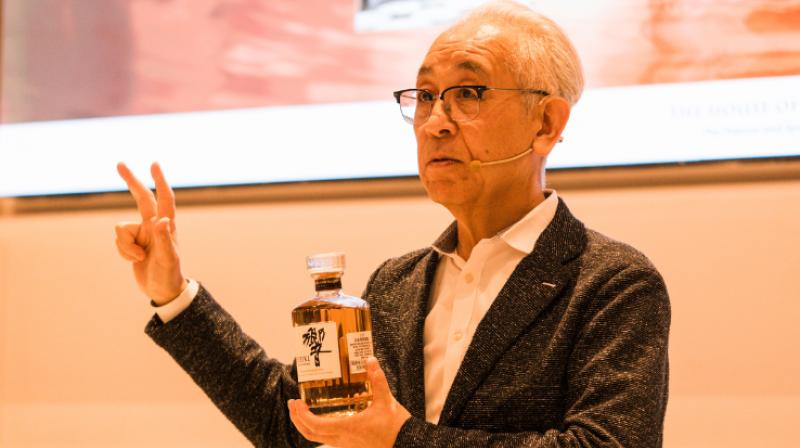
 Shinji Fukuyo
In whisky, the most influential voice is rarely the loudest. It sits quietly behind the scenes, shaping character, balance and identity long before a bottle reaches the shelf. And that's what Shinji Fukuyo, the fifth chief blender at Suntory Global Spirits, is aiming to do. His approach has remained rooted in a singular idea: harmony over hype.
Fukuyo's recent visit to India on 31 March, centred around Hibiki, comes at a moment when the country’s whisky narrative is shifting. Hibiki is a harmonious blend of malt and grain whiskies from the Yamazaki, Hakushu and Chita distilleries, orchestrated for depth, complexity and balance. Rooted in the Japanese philosophy of Wa (harmony) and brought to life through Monozukuri, it reflects an approach where every detail is purposefully considered, celebrating the art of blending alongside the harmony of Japanese nature and craftsmanship. A new generation of consumers is moving beyond habitual drinking, showing a growing appetite for exploration, premiumisation and global styles. In India, social drinking rituals continue to shape whisky. It’s within this interplay of evolving aspiration and deeply embedded habits that global brands are being forced to rethink both product and positioning.
As global palates shift and markets like India become more influential, the conversation around whisky is no longer just about provenance or price. It’s about experience, storytelling and cultural context, layered as carefully as the liquid itself.
Manifest sat down with Fukuyo to discuss evolving consumer behaviour, the philosophy behind Japanese whisky, and what defines success in a rapidly changing global spirits landscape.
Edited excerpts:
What shifts are you seeing in how younger consumers are approaching whisky today, particularly based on your observations from visits to India and this market?
To be honest, I don’t know all the details of the Indian market, but from my experience, when I developed Oaksmith, I visited restaurants, pubs, and even homes. I found that people often drink whisky with soda or water, usually with snacks.
In particular, the younger generation is becoming more exploratory.
They’re showing interest in more premium segments like scotch whisky and single malts. When we launched in 2019, alongside Oaksmith, we also introduced products like Yamazaki within the House of Suntory portfolio. That, in a way, reflects the growing enthusiasm for whisky in India.
You spoke about Oaksmith, which has found strong resonance in India. How would you recommend consumers here enjoy it, especially given its versatility and the way it’s been crafted for the Indian palate?
When developing a product like Oaksmith, we try to understand local culture and preferences.
I first came to India over 26 years ago, and the market has changed significantly since then. We studied Indian preferences and used whisky stocks from places like Kentucky to create a blend that is soft, approachable, and easy to drink, while still retaining a certain character. That balance is key to Oaksmith.
You’ve also spent time educating consumers about pairing Japanese whisky with local cuisines. What have those cross-cultural experiences taught you about how whisky is perceived?
In India, Scotch whisky has been very popular, and Japanese whisky-making is rooted in that tradition. However, the quality and character of the liquid are different.
We often need to explain why the aroma and flavour differ. A big part of that comes from nature and craftsmanship. For example, in Japan, we use very pure, soft water; in scotch whisky, the water can be richer in organic compounds. That gives our spirit a softer, more delicate profile.
The climate also plays a role. Japan has hot, humid summers and cold, dry winters. This dynamic accelerates maturation and creates a strong interaction with the wood, resulting in unique flavours.
And then there’s Japanese craftsmanship. It’s about precision, balance, and harmony. Similar to how Japanese cars are known for being high quality and reliable, that philosophy carries into whisky-making as well.
Unlike traditional Scotch practices that preserve recipes, Suntory Global Spirits allows for evolution, which drives that difference in philosophy. How does your global collaboration feed into it?
At Suntory Global Spirits, we try to have a synergy effect. We bring together blenders and distillers from across regions like Japan, Scotland, Ireland, and Kentucky. We meet regularly to exchange ideas and improve quality together.
Traditionally, Scotch blenders tend to preserve recipes over time. However, we are different from them in that manner; we aim to maintain a consistent style and quality, even if that means occasionally adjusting the recipe. So the philosophy is different, we prioritise consistency in experience over rigid adherence to formulation.
Do you think global palates are changing? Are they being influenced by trends and social media?
Yes, palates do change, especially in everyday or standard whisky categories. These are more influenced by lifestyle, culture, and information.
However, in the premium and luxury brands, nothing has changed. I believe great whisky remains universally appreciated. High-quality whisky can be accepted globally without needing to adapt too much.
That said, for more accessible or daily-drinking whiskies, we do consider local habits. For example, in India, whisky is not typically consumed with meals like curry or naan (Indian flat bread), but rather with snacks. That influences how we think about flavour balance.
So, we always consider market conditions and target consumers for certain products, while for others, we simply focus on pursuing the highest quality, not on innovation.
Looking ahead, what will define success for whisky brands globally, especially within Suntory Global Spirits?
First and foremost, liquid quality is critical. We aim to continuously improve by selecting the best materials, refining production processes, and achieving balance through blending.
At the same time, storytelling is important. Consumers should understand the cultural background, the craftsmanship, and the philosophy behind the brand. When the liquid, process, and story come together, that defines the House of Suntory.
If someone is trying Japanese whisky for the first time, what would you recommend?
Authentic Japanese whisky is not cheaper, so I hope consumers appreciate not just the quality, but also its sophistication and craftsmanship.
For example, Hibiki reflects Japanese aesthetics, the bottle has 24 facets representing the seasons in the Japanese calendar, and details like washi paper and calligraphy.
It’s not just about the liquid, but the overall experience, including the culture and craftsmanship behind it.