

 Subscribe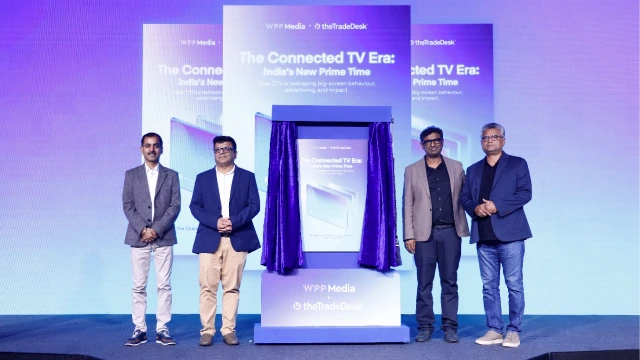
20 Aug 2026 11:15 AM
Gen Z spends 3.1 hours on CTV: WPP Media and The Trade Desk report
The report also revealed that CTV viewership has surged 3X since 2022.
Before the CTV report launch, Prasanth Kumar and Tejinder Gill discussed the shift from mobile-first consumption to connected households and why CTV planning needs to move beyond reach and impressions.
Aug 20, 2026, 11:08 am
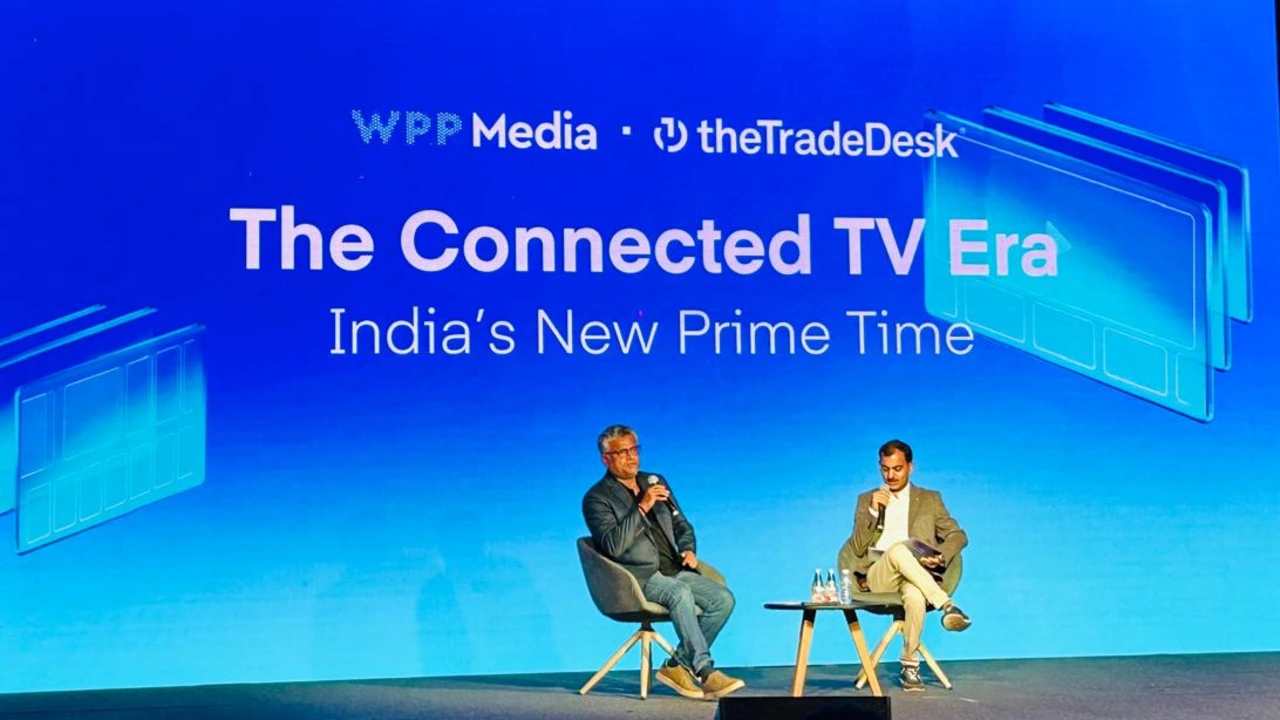
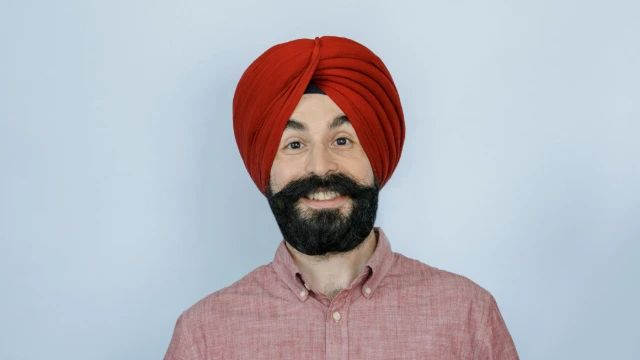
 Prasanth Kumar (left) and Tejinder Gill
As a precursor to the WPP Media and The Trade Desk’s report launch, in partnership with Ormax, Prasanth Kumar, CEO - South Asia, WPP Media, and Tejinder Gill, vice president - India and South East Asia, The Trade Desk, discussed what’s next for Connected TV (CTV) and how marketers can turn its growing scale into meaningful business outcomes.
The conversation began with Kumar reflecting on lessons from global markets that helped the company identify the potential of CTV in India early on. The country’s diverse audience base, he said, made it a market where the medium could develop significantly.
Kumar shared, “The insights on CTV we had made us believe that this can be a big trend for a market like ours, especially when we have so much diversity in audiences and many more future aspects. We also felt that this was a space for us to invest, a space for us to really learn more, and where we can prepare better solutions for our customers.”
From there, the discussion moved to a broader challenge facing marketers: more channels, more data and more technology, but increasingly fragmented consumer journeys.
Kumar said the focus needs to shift from channel planning and media buying to understanding audiences and business outcomes.
“There’s one paranoia that we have. It’s not about whether we are enlarging now, but how we are delivering customer solutions. Being a leader gives a lot of responsibility to shape the entire solution,” he expressed.
According to Kumar, data signals and technology need to be used to understand what brands can do, with audience orchestration becoming an important part of that process.
He said, “It starts from the initial context of not just channel planning or not just media buying, but more in the audience orchestration itself."
Kumar added that full-funnel outcomes are becoming increasingly important, particularly as CTV can play a role across different stages of the consumer journey.
“The last one, and we have been saying this quite consistently, is that it’s not just the media metrics. It’s also about the business outcomes of our customers. So how do we stitch all three together and find the right solution?," he shared.
India, Gill noted, is increasingly becoming a three-device household, with mobile, television and connected audio creating a three-by-three matrix for marketers across three generations.
He added, “The challenge is how to address all these touchpoints. It is clearly so fragmented.”
Gill said the focus needs to be on audience targeting, business outcomes and bringing connected screens together rather than treating them in isolation.
“It is no more about clicks and impressions; it’s about what happens next," he declared.
The conversation also turned to why understanding consumer behaviour has become more important as CTV expands. Kumar pointed to the growth of the market, which is approaching 65 million users and has the potential for three times the growth seen over the last two to three years.
More importantly, he said, the growth is no longer confined to urban India.
“This is not just an urban phenomenon. It’s growing into the entire rural phenomenon also. And that’s where the next 100 million may get activated," Kumar remarked.
The report, he said, looks at behavioural patterns including cord-cutting and the relationship between CTV and linear TV, as well as the medium’s role across the full funnel.
Gill conveyed that India’s transition from a mobile-first market towards a two-screen environment is one of the defining shifts in consumer behaviour.
He shared, “Mobile-first is now becoming a two-screen market, actually. If you look at our households today, our kids are watching CTV, and they are also scrolling on their phones.”
While metros remain important, he said the next wave of growth is expected from emerging India.
CTV’s fragmented ecosystem is another characteristic India shares with mature markets, according to Gill. No single CTV partner controls 80% of the market, giving marketers multiple choices. At the same time, audiences move between screens and premium content increasingly sits across the connected TV ecosystem.
The implication, he said, is that marketers need to plan at the household level. Gill added, “That means managing frequency across screens, moving from multichannel planning towards omnichannel planning, and finding ways to turn duplicated reach into incremental reach. The future is not just CTV. It’s connected households.”
Kumar said marketers also need to recognise that CTV is distinct from traditional television because of the multiple roles it can play.
“We should appreciate the fact that this is slightly distinct. Why? Because it is on the big screen, but it has got multiple utilities," Kumar shared.
Those utilities can span awareness, consideration and conversion. He said marketers should also consider how CTV can complement existing television activity, add reach and bring language and vernacular considerations into media planning.
Kumar added, “If one continues to leverage CTV as traditional TV and apply that, we may miss an opportunity to really take advantage of the power this medium actually provides.”
The final part of the discussion focused on attribution. Gill compared the industry’s traditional reliance on last-click attribution to a football match where credit goes only to the player who touches the ball last.
“There are 10 other players. There’s a coach. There’s support staff. And I think that is what marketers are realising. They need to attribute equally to all the people who influence goal scored," he remarked.
He said CTV is also moving beyond its perception as a top-of-funnel medium, with performance metrics such as add-to-cart and QR-code interactions beginning to connect big-screen exposure with action.
“Interestingly, marketers initially thought that CTV is just a top-of-the-funnel phenomenon, but I feel it’s still full-funnel," Gill added.
For Gill, the ability to connect these actions with the wider consumer journey will be important as the medium develops.
“As new technology is coming up, I think all the partners in the supply chain need their fair share,” he summarised.
Source: MANIFEST MEDIA