

 Subscribe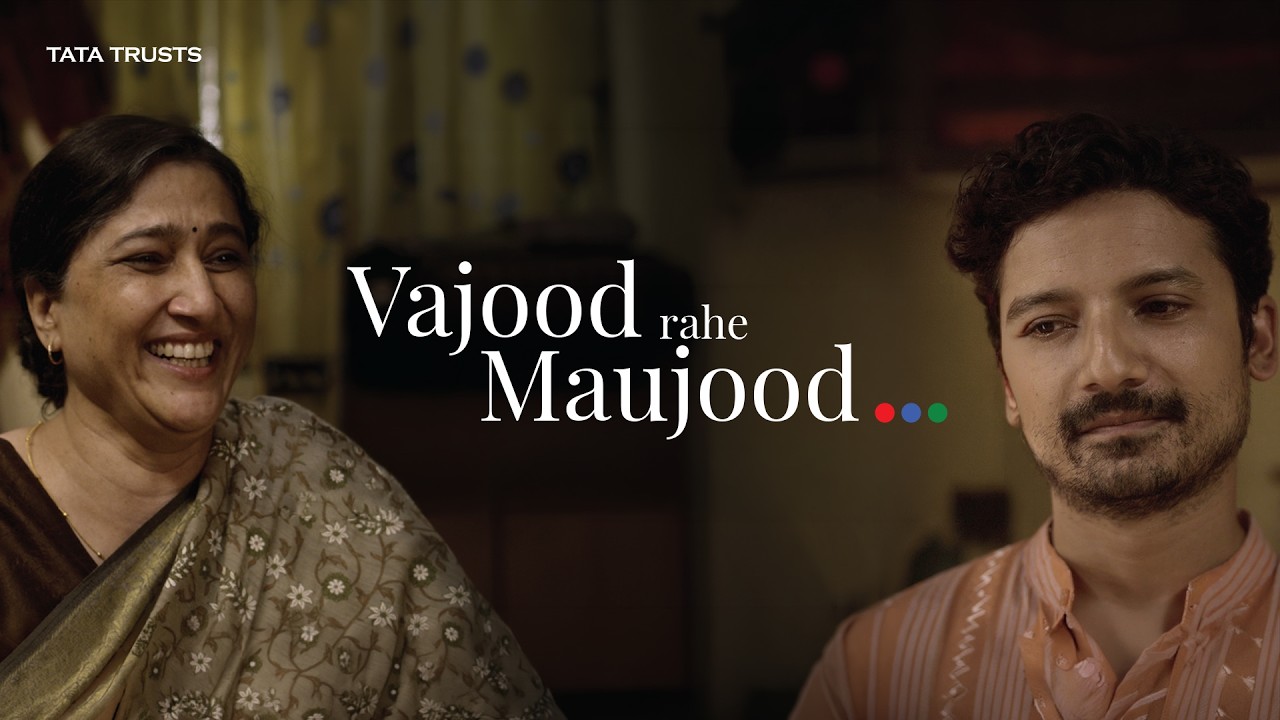
 Tatat Trusts' ‘Vajood Rahe Maujood' campaign
This World Alzheimer’s Month, the Tata Trusts have rolled out ‘Vajood Rahe Maujood’, (identity must remain intact), a campaign on awareness of dementia that seeks to shift the conversation around the condition from memory loss to the gradual loss of identity.
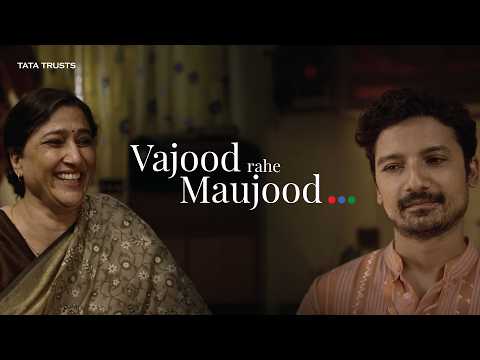
The campaign is built around an evocative short film that explores how dementia can progressively alter the roles, relationships and everyday abilities that define a person by focusing on a less visible but profound consequence of the condition: the gradual erosion of identity.
The campaign uses an intimate mother-son relationship to encourage families to notice subtle changes, begin difficult conversations and act before the condition advances. At the heart of the film is a birthday poem written by the son for his mother. As the story unfolds, the poem becomes the vehicle for a difficult but empathetic conversation about the changes he has begun noticing in her.
The campaign draws on insights from people living with early-stage dementia, caregivers and medical experts. Its central thought challenges the tendency in India to dismiss early signs with phrases such as ‘Budhapa aa gaya!’ or ‘Bhulne ki bimari’, reinforcing the idea that forgetfulness is simply part of growing old.
The film features actor Geeta Agarwal Sharma as a mother showing early signs of dementia, and actor Priyanshu Painyuli, as her son and primary caregiver.
The campaign makes a deliberate choice in its casting and caregiving dynamic. By making a woman the protagonist and placing her son in the role of primary caregiver, it highlights the disproportionate impact of dementia on women while challenging the assumption that caregiving within families is primarily a woman’s responsibility. The campaign seeks to encourage more men to participate actively in caring for loved ones and in initiating conversations about dementia.
The absence of accessible regional-language vocabulary around dementia and its early signs also emerged as a barrier, making the condition easier to dismiss or misunderstand. The campaign therefore attempts to give families a more relatable language with which to recognise and discuss dementia, taking the conversation beyond the clinic and into homes and communities.
The urgency is underscored by India’s rapidly ageing population. By 2050, more than 347 million Indians are projected to be aged 60 and above, making awareness and early intervention increasingly important. The campaign also points to evidence suggesting that a significant proportion of dementia cases may be preventable or delayable, while changes associated with the condition can begin years before symptoms become apparent.
With ‘Vajood Rahe Maujood’, Tata Trusts is ultimately asking families to look beyond the obvious signs of memory loss and pay attention to the smaller changes that can signal something more serious — while there is still an opportunity to act.
What we think about it: The campaign’s strong point is its creative device that allows the film to communicate the message through an emotional relationship rather than through conventional public-service messaging, giving the heavy subject an intimate, human entry point without becoming overly clinical or preachy. The mother-son dynamic also makes caregiving feel like a shared family responsibility rather than a gendered role.
Shilpi Ghosh, head, brand & marketing communications, Tata Trusts, said, “ Of the various barriers that Dementia faces in India, the biggest is a lack of awareness - the misestimation, the misattribution, the dismissal. Addressing patients exhibiting mild symptoms was therefore a conscious choice of audience for nudging behavior change. And when "loss of identity" and its various dimensions across the stages of the disease, were uncovered as an insight, we knew we had something powerful to work with, that would lead to captivating communication that was persuasive and not preachy. Communication that was not just empathetic but also encouraged action, so caregivers and their loved ones could have an improved quality of life. We're hopeful that the campaign will be able to move the needle on dementia from ignorance to awareness.”
Kalyan Challapalli, founder and chief of strategy, Wolfzhowl, the agency that developed the strategic communications for the campaign, added, “Our qualitative research showed us that dementia cannot be addressed as a health issue alone. Its impact ripples through caregivers, families, the healthcare ecosystem, and even the economy. We capture this interconnected impact through what we describe as ‘The Butterfly Effect’, highlighting why dementia requires a concerted response across the ecosystem. An interesting insight that emerged from our interactions was the absence of regional-language vocabulary to describe the diseases and its early changes. This makes the disease easier for people to dismiss. Because you cannot ask people to recognise what they do not have the language to describe. The campaign thus, offers a common ground that hopefully makes the condition easier to decipher, talk about and act on, in homes and communities, not just in clinics.”
Keigan Pinto, creative chief, writer and director, shared, “The creative challenge was to make something as invisible as identity loss felt without reducing dementia to a list of symptoms. That is why we chose to make this a short film rather than a conventional public service announcement. We wanted to give the audience enough time to inhabit an everyday relationship and notice the small shifts that can otherwise be overlooked. The poem which the son wrote for his mother on her birthday is a creative device used to carry the message of care as the greatest gift. Through the poem, the son has a difficult conversation with his mother, while empathising with her. Vajood Rahe Maujood, the tagline sums up the vision of this campaign, to encourage more people to act towards preserving their identity for as long as possible.”