

 Subscribe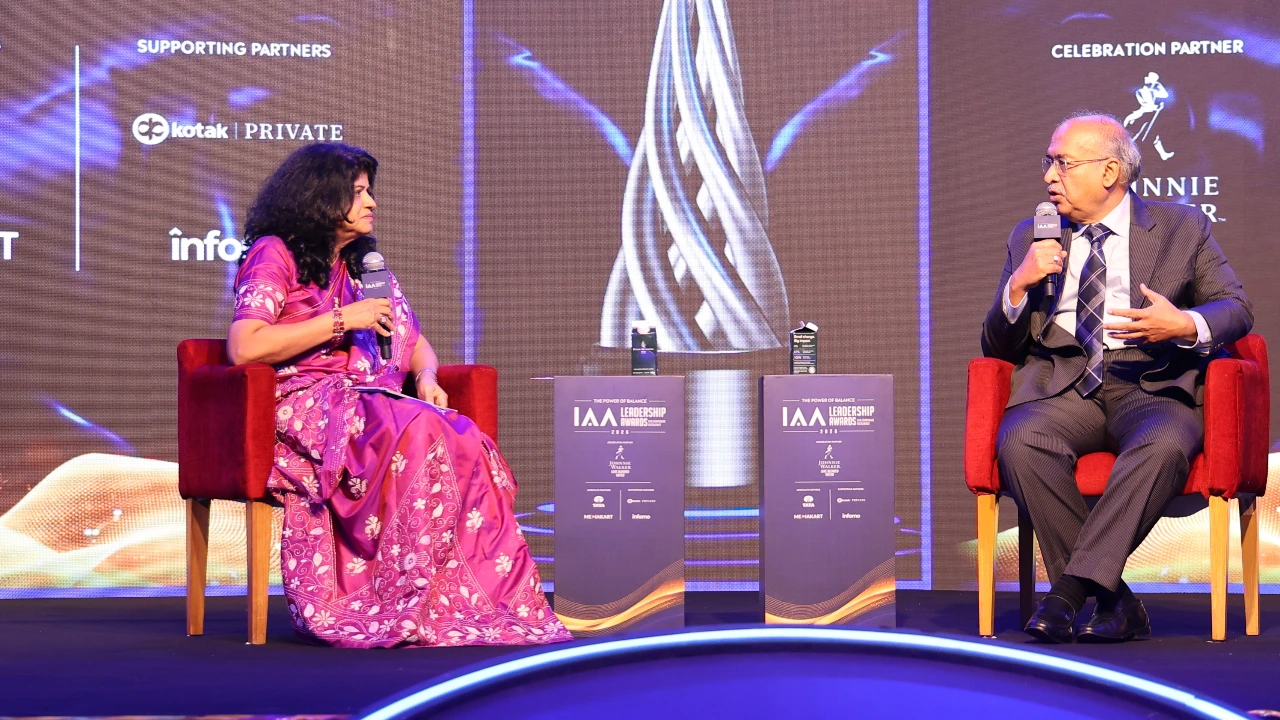
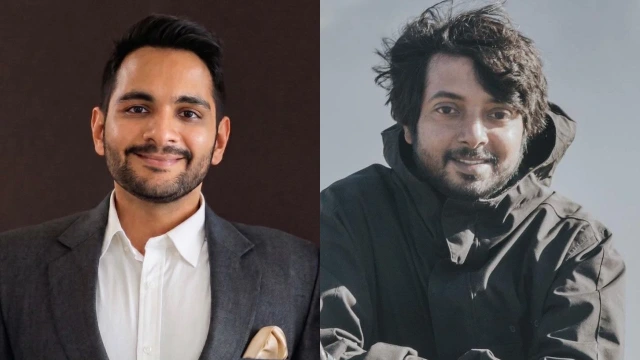
 Nandini Dias (left) and Dilip Shanghvi
Dilip Shanghvi, managing director, Sun Pharmaceutical Industries, was named ‘Business Leader of the Year’ at the 2026 edition of the IAA India Chapter's Leadership Awards.
After winning the accolade, Shangvi took to the stage to discuss his leadership style, the role of people and culture in integrating businesses, and the impact of AI on the pharmaceutical industry.
The conversation was moderated by Nandini Dias, chairperson, IAA Leadership Awards, and independent advisor.
Shanghvi began by addressing a common perception around Sun Pharma’s acquisition strategy that the company actively seeks out distressed businesses. “We don't buy distressed companies per se, but we buy companies which we think we can run better than the current owners. More importantly, I think we need to see whether it is strategically important for us to acquire that business. Each one of the acquisitions, in addition to its ability to create wealth and value for our shareholders, we also look at how it will advance our long-term business objective of making Sun Pharma a global company,” he stated.
He pointed to the acquisition of Ranbaxy as an example of this approach. According to Shanghvi, Sun Pharma understood Ranbaxy’s business, its key markets and its R&D capabilities before the acquisition, allowing it to identify and build on the company’s intrinsic strengths. “When we acquired Ranbaxy, at that point of time it was more or less the same size as that of Sun Pharma in terms of top line. In terms of the bottom line not as big, but it was 15% of Sun Pharma’s value, and we acquired it for equity. But we knew the business, we knew the markets in which they were present, and we knew what their R&D was capable of because we had seen them work in the past. So, we found ways to ensure that the intrinsic strengths of the company were given an opportunity to come through,” he added.
Drawing a comparison with its most recent acquisition, Organon, Shanghvi said the two businesses are broadly similar in terms of size and profitability, but differ significantly in valuation and growth. He explained, “Since they are less than 25% of Sun Pharma’s value, Sun Pharma is growing at close to 10%, whereas Organon’s growth is currently at 1–2%. If we are able to find a way to revive the growth in the business, to give it much more focus on R&D and strategic direction, I think we can create huge shareholder value for both the businesses.”
For Shanghvi, however, acquisitions are not simply about financial or strategic fit. He held the view that the integration of a business, particularly across different countries and cultures, depends heavily on how people are managed.
“I think first of all, recognise the importance of culture in making any business successful, because all businesses succeed because people work effectively as a team and they work with a view to growing the business. So, you need to create an environment where people feel wanted, respected and valued for what they can contribute,” he said.
Talking about the role of Indian pharma in global healthcare, Shanghvi disagreed with the characterisation of the sector as a form of ‘soft-power' for India. He said the country’s contribution lies in its role as an important supplier of high-quality, cost-effective medicines.
“I think India clearly contributes to working towards global health because it is an important supplier of high-quality, cost-effective medicines. What I think we are looking for as a country is how we can innovate in India? How can we solve problems of different diseases which current treatment options cannot? The government is working with the industry on this and has created two schemes encouraging research in the sector. They're also making changes in the regulatory framework which hinder innovation. I am reasonably sure that in the next few years we will have many products coming out of India which will globally help patients,” he observed.
On the role of AI in healthcare, he noted, “We clearly see AI strengthening our medical representatives' ability to build better relationships with doctors and also be truly helpful. But apart from medical representatives, I think the use of AI in research, strengthening manufacturing and regulatory capability is immense. I am looking forward to embracing AI so we can become a much better company.”
Reflecting on four decades of leadership, Shanghvi said the fundamental principle of his approach of helping people succeed has remained unchanged. What has changed, however, is the patience employees have for results. “I look at leadership more in terms of being able to help people succeed and strengthen their capability or the team's capability - that has not changed. However, when I started the business, the gratification window for people was high. People were prepared to wait, but in today's situation I think that patience is much shorter.”
When asked about the growing trend of CEOs becoming brands in their own right and whether leadership has become too performative, Shanghvi said he prefers to derive satisfaction from the success of his team. “As far as I am concerned, I take happiness from the successes of my team members, and I have a very long window of gratification. I can wait for performance to come after five to six years; it doesn't discourage me, I keep on trying,” he said.
With this year’s awards themed ‘The Power of Balance’, Shanghvi, on a concluding note, spoke about what balance means to him and identified two key areas of unfinished business. “One important unfinished business is to make Sun Pharma a global company because we are a large international company, but we are not truly a global company. The second important part of my unfinished business is to have a few innovative drugs developed in India, researched in India and launched globally. That's what I wish to do in the next few years,” he shared.
Also read:
IAA Leadership Awards: Babita Baruah and Kartik Sharma bag top creative and media honours
Advertising must uphold transparency and ethics, and not be misleading: Jishnu Dev Varma