
 Subscribe

 Adityan Kayalakal
Brand building rarely follows a single playbook. What works for a bank will not work for an entertainment platform. As competition for consumer attention intensifies, visibility alone is no longer enough. Brands must give audiences a reason to engage.
This is especially true in entertainment, where streaming platforms, short-form video, and social media compete for audiences' time. With consumers having greater control over what they watch, listen to, and engage with, familiarity no longer guarantees relevance. Brands must continually reassess how they communicate and what sets them apart.
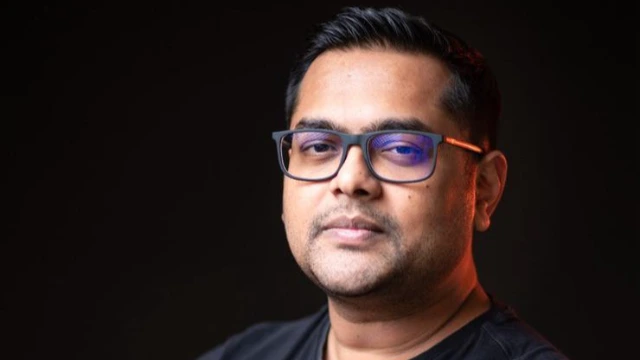
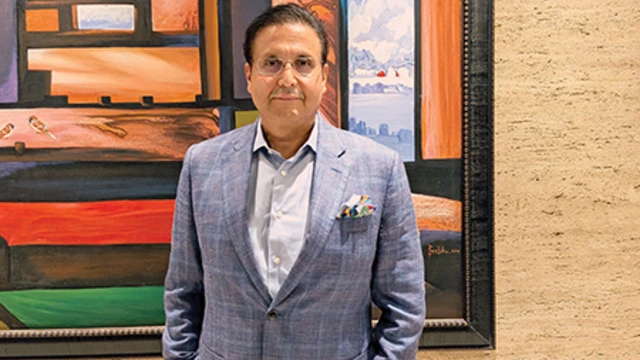
For Adityan Kayalakal, vice president – brand and strategy, Pocket FM, the lessons extend beyond entertainment. Having worked across sports, radio, television, streaming, education and fintech, his experience offers a cross-sector perspective on how consumer expectations shift and how marketers can adapt without losing a brand's identity.
During a chat with Manifest, Kayalakal shared a key learning from his career: brand building cannot be reduced to media spends or visibility. He shared, "The context in which a message appears, the story it tells and the experience it creates all influence whether it resonates. Established category conventions, meanwhile, need not dictate creative choices. In crowded markets, following familiar approaches may be easier, but it does not necessarily help a brand stand apart."
Kayalakal also shared lessons from his cross-sector career, the evolving demands of brand building, and why marketers must look beyond category conventions.
Edited excerpts:
Sherpa is Pocket FM’s new business bet, and its global campaign features co-founder and CEO Rohan Nayak alongside actor Chris Diamantopoulos. What was the thinking behind the campaign, and how are you adapting it for markets such as India and the US?
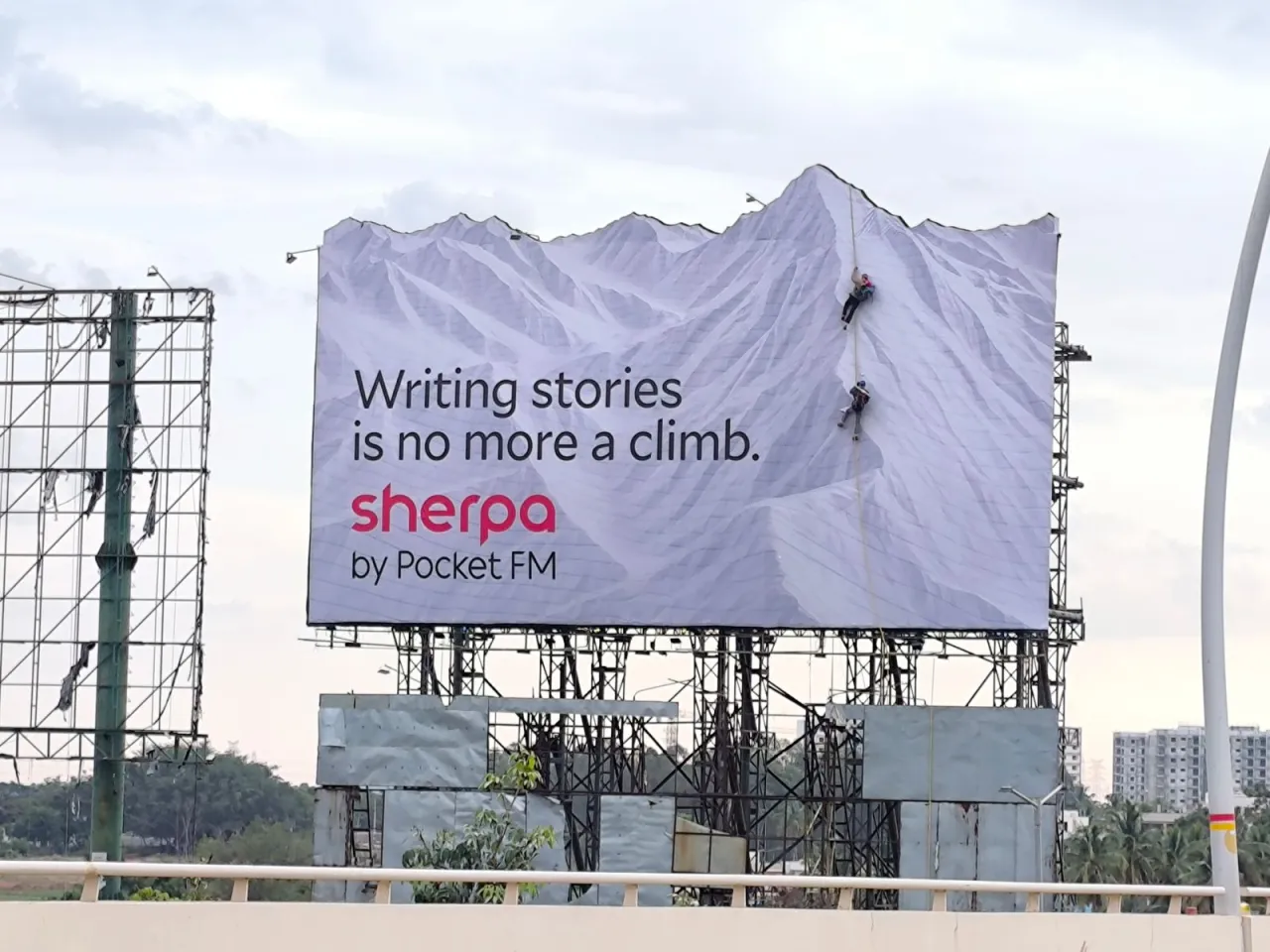
In the AI and engineering space, explaining what a product does can be challenging. We had an opportunity to establish Sherpa’s differentiation from the outset, starting with its name, while finding a way to stand out in a crowded AI market where competitors may have larger budgets.
The strategy was to take a disruptive approach. The creative used a familiar property and character in an abrasive, in-your-face way to attract attention and introduce the product.
Sherpa is purpose-built for fiction writing and cognitive predictions. Unlike general-purpose AI platforms, it focuses on memory and asking questions that help writers think ahead about their stories. I might be writing dialogue for one series while developing the storyboard for another, and Sherpa adapts to different stages of the creative process.
To get people to experience a brand, you need an idea that captures their attention and stays with them. That was the thinking behind the campaign.
How are you measuring the campaign’s effectiveness beyond reach and engagement, particularly in terms of product adoption?
We have more than 5.5 lakh writers on the platform, and we look beyond sign-ups or one-time trials, which can be vanity metrics. We want to understand how many new shows emerge, how many series are completed and how much long-form content is produced using the tool.
Getting existing writers to experiment with Sherpa is also important. The challenge is twofold: bringing new writers on board and helping existing ones become comfortable with the technology. Writers have responded to the way it simplifies parts of the process, and we continue to use their feedback to improve the product.
It is still early, and we're learning from its use across different series. One benefit is that it can reduce the intimidation associated with writing something long-form and help writers follow through on their ideas.
As AI becomes more involved in fiction writing, how are you ensuring Sherpa supports writers without compromising their creative ownership, recognition or monetisation?
We haven't received negative feedback from writers who have tried it, which is important given concerns about AI's impact on creative culture. The idea behind Sherpa is to support creative people. We're not trying to climb the mountain for them, but to help them get there.
Writing is similar. Many people can tell stories, but becoming a published writer is a much bigger challenge. If we can reduce that difficulty and intimidation and help more writers get to base camp, we've done 90% of the job.
With audiences choosing between short-form video, gaming, OTT and other entertainment, how do you get first-time listeners to try Pocket FM and turn that trial into sustained listening?
Audio has long been an underdog in the entertainment universe, but people consume it actively and passively throughout the day. Pocket FM recognised early that audio could meet consumer needs across different occasions.
As our lives get busier and commutes longer, there are fewer opportunities to sit in front of a screen. Audio allows people to consume content while driving, commuting or doing household chores. These consumption opportunities are growing, and our average consumption is now more than 150 minutes per consumer per day.
As Pocket FM expands across markets, how do you maintain a consistent global brand identity while adapting stories and marketing to local cultural nuances?
We operate in around 20 markets, with a focus on the US, Europe, Latin America and India. Our writer programme is global, with writers creating stories for different markets. We're also seeing how well some shows travel, with a number-one show in the US topping charts in European countries.
Storytelling is universal, much like telenovelas that have travelled globally. The stories people relate to and the languages they consume them in may vary across markets, so we work with storytellers to make content relevant to each audience.
How do you evaluate the contribution of brand building alongside performance marketing, and which metrics help you understand their impact on Pocket FM?
Marketing has become increasingly scientific, but not everything that determines brand strength is quantifiable. Consistent brand building, as seen with Fevicol, keeps a brand top of mind. That can make performance marketing more effective because consumers already recognise the brand.
Brand building can also influence organic search, consumption and top-of-mind recall. Spotify, for instance, benefits from strong brand recognition in music. At Pocket FM, we see brand building and performance marketing as complementary: brand building strengthens performance, while performance marketing keeps the brand visible.
Brand marketing also goes beyond large campaigns. Every interaction, from the Sherpa interface and Pocket FM app to the website, shapes how people perceive the brand. Ease of use and the overall experience matter just as much.
How do business development and brand partnership opportunities differ across markets such as the US and India?
I'd look at markets in terms of where the business stands rather than simply as opportunities or challenges. In some markets, we're new entrants; in others, we're established players with hit shows and millions of customers. Business teams need to be aligned with that reality because being an underdog versus an established player changes how you operate.
A strong umbrella brand helps, but expanding into a new market as an established brand is very different from entering as a new one. We have a strong presence in the US and want to keep building on it, but we don't think of ourselves as leaders. The hunger to become bigger and better is what keeps us going.
We've also seen progress in markets such as the EU. Even when a market performs well, we're already looking at the next one. That hunger continues to drive our expansion.
Beyond content creation and storytelling, how could AI help scale Pocket FM's business and brand partnerships?
We're still discovering how AI can affect our day-to-day work. We've introduced tools to improve measurement, analysis and marketing processes, while balancing human credibility with greater efficiency.
We're encouraging teams to experiment with AI across functions, from marketing to administration and internal communication, with guardrails around company data. As the company grows, sharing successful experiments internally becomes increasingly important, allowing teams to learn from one another and implement what works.
I don't think there's a finish line for AI adoption. Models keep evolving, creating new possibilities every week, from voice and video to editing and product design. The focus is on continuing to identify where these tools can be useful.
What are some of the big bets you're planning for the coming years across content creation, marketing and brand performance?
In December 2025, we decided to experiment in 2026 and double down on what works, using a 70-20-10 marketing mix. Seventy per cent goes towards proven strategies, 20% towards approaches showing promise, and 10% towards new bets that may succeed or fail but offer the potential for outsized returns.
We'll audit what worked this year and identify what needs tweaking before deciding where to invest further. In areas such as cricket and sports, the focus will be on making our efforts more relevant, distinctive and effective, rather than simply bigger. I don't want to get into a spending race with competitors. I'd rather focus on using every dollar more effectively.
Guerrilla marketing has worked well for us, so we'll continue investing in it. Experiences and outdoor advertising have also performed well, and we'll keep building on those efforts. We'll also look at deepening engagement with existing users and writers.
There's a lot on the plate, but the focus remains on doubling down on what works while finding the right ideas to take things forward.