

 Subscribe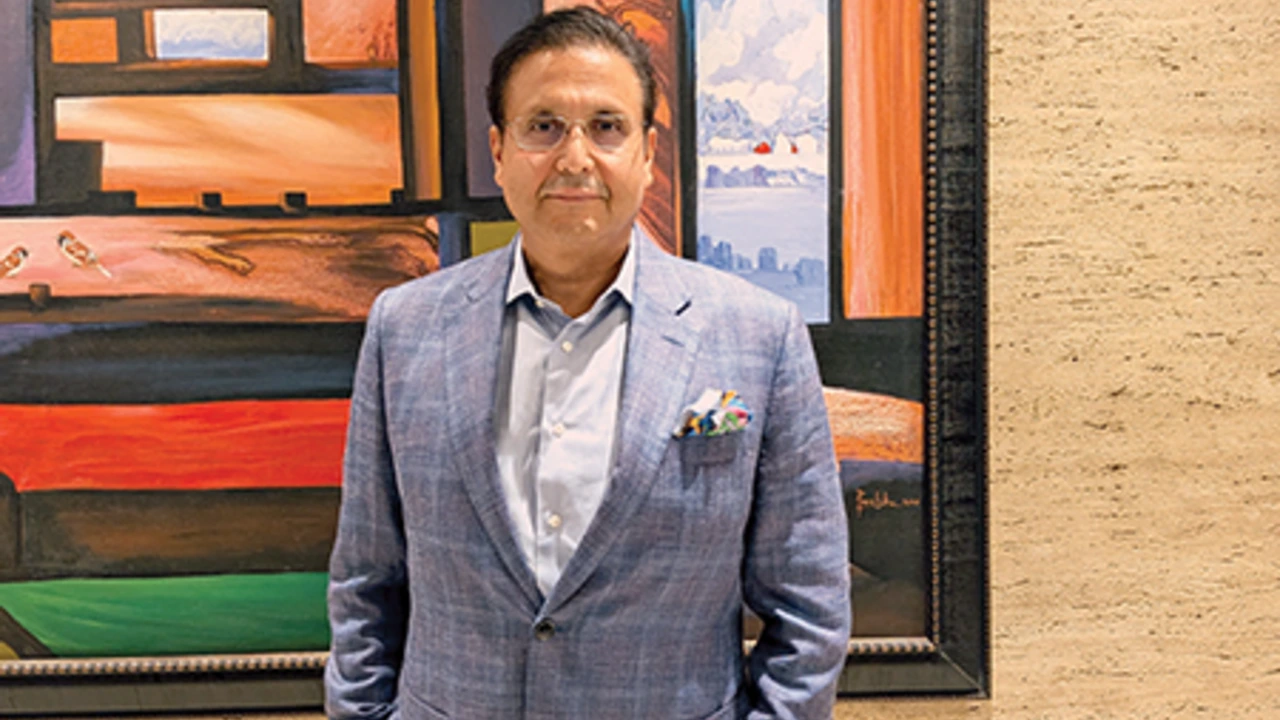
 Girish Agarwal
Even as print has had its naysayers for years, advertising on the medium continues to hold up, even if growth has slowed. The Dainik Bhaskar Group offers evidence of this resilience, with its print advertising business growing 6.3% on a like-for-like basis in FY2025-26.
So why does print continue to have its doubters?
Girish Agarwal, promoter director, Dainik Bhaskar Group, attributes this to human scepticism and a tendency to dismiss what may not fit conventional thinking.
“Humans create all sorts of doubts for themselves. When Blinkit and other quick-commerce apps launched, everyone dismissed them, stating that they didn’t need delivery in 10 minutes. But it has taken off, and other sorts of commerce also continue to co-exist,” he says.
“The unfortunate point with print is that it’s growing, but there are casual statements made, especially in places like Mumbai and Delhi NCR, that print is dying. But in our markets, which include the likes of Indore, Bhopal and Jaipur, there is a common consensus that print is growing.”
Agarwal believes the perception of print being in decline is partly rooted in the difficulties English newspapers faced during Covid. However, he argues that the subsequent recovery, coupled with growth in advertising, demonstrates that the medium continues to deliver value.
Regional penetration remains a key differentiator. “The kind of news any Indian-language newspaper provides is unmatchable. And that is not limited to Dainik Bhaskar. Whether it is Malayala Manorama, Thanthi, Eenadu or Lokmat, they are all doing a great job. The kind of ground reporting newspapers provide, nobody else can provide. The depth we have in our reports is certainly not available on social media or news apps.”
The growth of tier-two, tier-three and tier-four cities is another factor supporting print, he adds. Consumers in these markets increasingly have the purchasing power to buy the same products as their counterparts in metros, making them important audiences for advertisers.
A recent visit to Raigarh in Chhattisgarh reinforced this view.
“The city has a population of less than 3,00,000 people, and I saw five automobile company showrooms in it. The same cars are sold at the same price points, with sometimes better service for the consumer in these cities. We are seeing that in the premium automobile category too. Forty per cent of Mercedes-Benz’s sales are coming from beyond the metro cities,” he explained.
The case for print in a digital-first market
Agarwal also points to declining television viewership as a factor influencing the movement of advertising towards print and digital. While television consumption is shifting to connected TV and handheld devices, he questions the effectiveness of advertising on mobile screens, where consumers can skip ads or scroll past them.
He is equally sceptical of the returns being generated by digital performance marketing.
“Everybody is talking about digital growth and advertising. But if one talks about ROAS (return on advertising spend) on digital, it’s not great. People are talking about 1.5-2x returns, which means that the brand spending the money isn’t making profits through that. So, while digital is a charm for many brands in the initial stages, they see the lack of returns and head to print.”
For Agarwal, print offers an advantage that is difficult to replicate in a crowded digital environment: the opportunity to reach readers with their undivided attention.
“Print brings high impact to the table. The moment the ad appears in a paper, one knows that a particular segment has already seen it in an uncluttered environment with undivided attention.”
He has also noticed brands that initially invested heavily in digital performance marketing turning to print, sometimes using their print campaigns on social media to signal their growth. Ayurveda-focused FMCG brand Kapiva is one such example.
“Kapiva was spending heavily on digital. Now, they are spending with us big time because it’s making a positive impact on online and offline sales", said Agarwal before citing Pushp Masale, an Indore-based brand, as another example of a business that has invested heavily in print advertising. According to Agarwal, the company is considering an IPO at a valuation of INR 3,000-4,000 crore. The example, he argues, illustrates how regional brands can use print to build their businesses.
Making Urban Bharat count
The opportunity in emerging markets was also the motivation behind Dainik Bhaskar Group’s Urban Bharat report, developed with Kantar to examine consumption patterns across India's urban and emerging markets.
Agarwal says the report has received a strong response from marketers, with nearly 5,000 downloads, and has helped bring greater attention to a segment that often falls between the conventional definitions of urban India and rural Bharat.
“Between India and Bharat there is a segment called Urban Bharat. When one thinks of Bharat, one thinks of rural India. Urban Bharat changes that perception and is a huge market. Almost 35-40% of India’s sales are coming from Urban Bharat.”
He believes the challenge for marketers is not a lack of opportunity, but insufficient investment in understanding where that opportunity lies. While companies spend on product research and development, he says, they often lack the market intelligence needed to understand changing demographics, category consumption and emerging growth centres.
“Every marketer wants to have more information about it. Unfortunately, today most of the companies don’t want to spend much on R&D to gain market knowledge. Money is being spent on R&D for the product, but they don’t know which markets are growing, how the demographics are changing and how the markets are behaving for different categories.”
He points to Dainik Bhaskar’s network of almost 12,000 reporters as a significant advantage in gathering local intelligence and delivering relevant news.
“For a news organisation, the prime job is to engage with the reader. If the publication is engaging a reader for those 30-40 minutes daily, advertising will come as a by-product. Readers want news, and we end up placing advertising next to it, which benefits the latter,” said Agarwal.
Trust needs depth
For print to convert its credibility into greater advertising growth, Agarwal believes publishers must deliver more than trust alone.
“I have got an analogy for this. When one goes to a restaurant, a meal is ordered for satisfaction. This means a consumer is looking to solve for their hunger, the brain stimulation in terms of taste and the look and feel.”
Trust is essential to news, he says, but readers also expect substance and depth.
“Only trust without depth is of no use. It’s like going to a Michelin-star restaurant, and they give us a fancy-looking dish, but it’s like a taster. It needs to fulfil the hunger too.”
He sees this as an important responsibility for publishers as they navigate the impact of artificial intelligence. At Dainik Bhaskar, he believes AI can support journalists in gathering and filing news, particularly while they are on the move, but should not replace their reporting.
“AI can help the news-gathering team to file the story. It can support them on the go, but can’t write the report. If a journalist is using it to write a story, it could end up being a disaster.”
A call for closer collaboration
Agarwal wants media agencies and marketers to build stronger relationships with print publishers, arguing that a better understanding of the medium could lead to more relevant and innovative campaigns.
“Media buying agencies should understand that when it comes to the likes of Google or Meta, they don’t really need to invest too much time. The platform takes care of it. So agencies should be devoting large resources to print and television so that they can provide better results to the client in terms of engagement or response.”
The full version of the interview appeared in the October issue of Manifest, which can be bought here.