
 Subscribe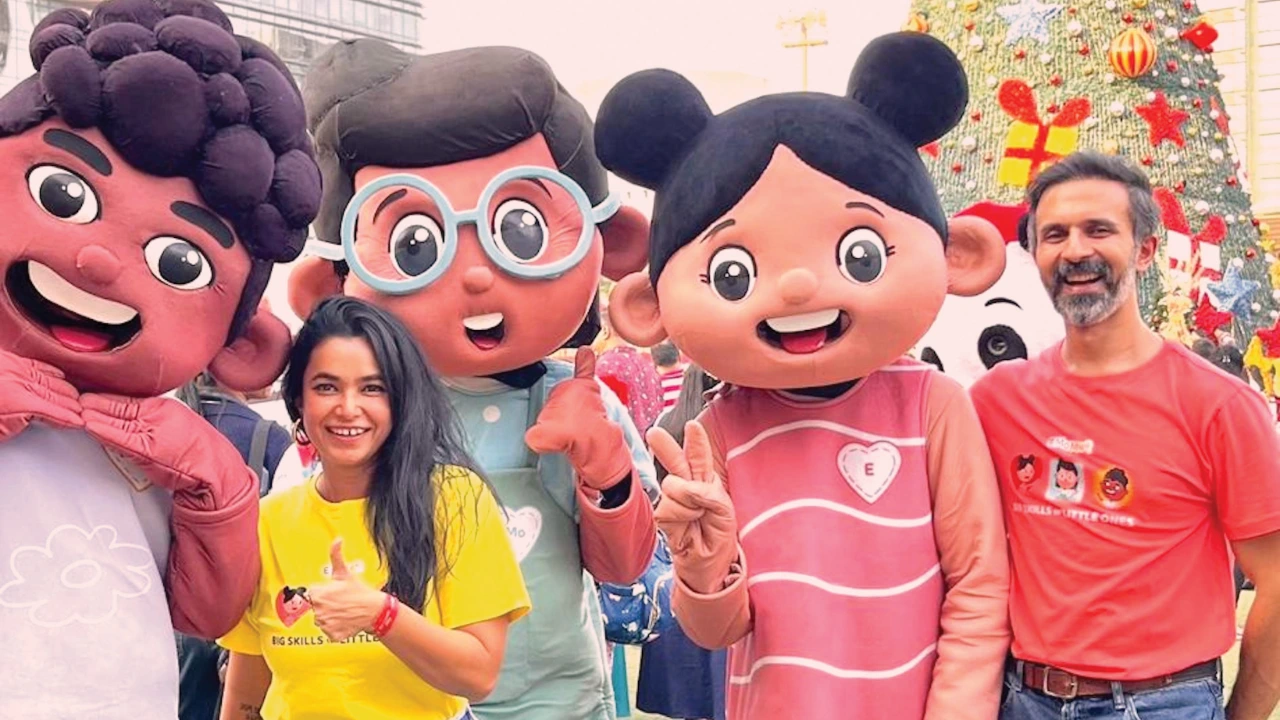
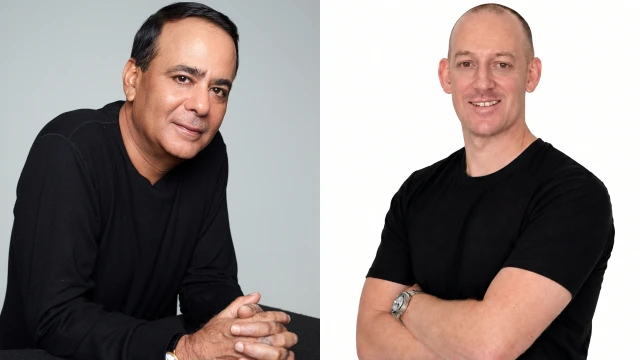
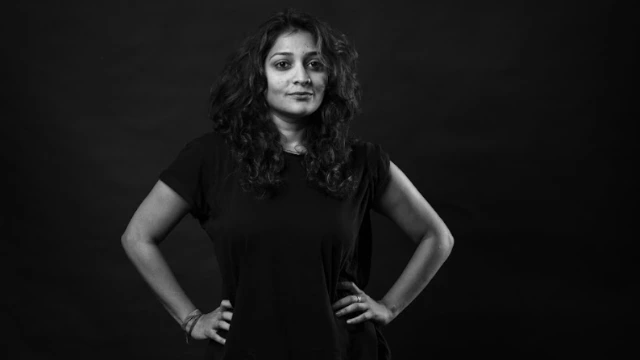
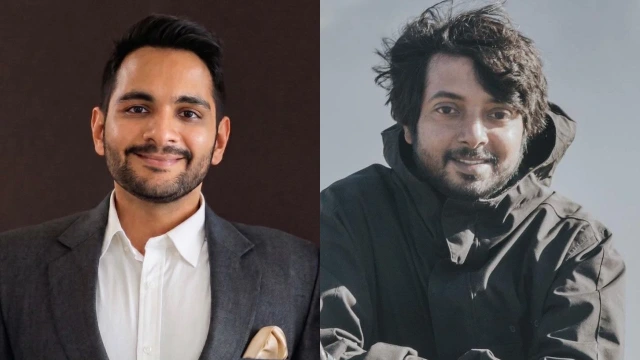
 Pooja Jauhari (left) and Varun Duggirala with EMoMee's E, Mo and Mee characters.
As parents increasingly question the impact of fast-paced, algorithm-led content on children, the ex-co-founders of the creative agency The Glitch are betting on a different model. Pooja Jauhari, founder and CEO, EMoMee and Varun Duggirala, co-founder and chief creative officer, EMoMee, founded EMoMee in 2023 as a ‘life-skills-first’ children’s entertainment brand designed around purposeful storytelling and parental trust.
At the heart of that ambition is a larger question: can India create a children’s property with the global cultural resonance of Peppa Pig or Bluey? In conversation with Manifest for our August issue, the duo discussed what Indian children’s content is missing, selective brand integrations, and their ambition to take its characters E, Mo and Mee from the screen into everyday culture.
Jauhari said the idea for EMoMee came from watching her own children consume content that she felt was “numbing their brains”. She and Duggirala began developing stories at home, eventually seeing their children’s friends and parents respond positively to the characters and their impact.
She shared, “The idea of EMoMee came from our children. We saw them sitting in front of the TV and iPads, behaving like zombies. We could see that the kind of content available to them was really numbing their brains. It was teaching them nothing. It was slop, and YouTube is full of that.”
The early response convinced the duo that the property could grow beyond a personal project. Jauhari stated that EMoMee is now present in 100 countries, less than a year and a half after launch.
Duggirala added the founders’ experience at The Glitch also influenced their decision to build EMoMee as an IP rather than simply a production or content studio. Their experience of watching content become central to how brands communicate, build communities and create long-term assets shaped the approach.
He expressed, “When we look at EMoMee, we don’t see ourselves as a production company or a studio. We see ourselves as an IP company because we’re building something that can truly scale.”
The founders are also using AI extensively in the production workflow, with the aim of helping experienced writers, animators and editors work faster rather than simply expanding teams. However, Jauhari makes a distinction between using AI as a production tool and using it to create the characters themselves.
“Our characters are not created using AI. They’ve been created with child development experts and really strong designers who helped shape the entire soul of E, Mo and Mee. We use AI tools to speed up the production process," she explained.
For Jauhari, the real measure of whether the characters have built a lasting connection with children is what happens when they leave the screen. She says EMoMee deliberately avoids fast-paced storytelling, neon-heavy visuals and repetitive rhymes, instead centring its stories on 21st-century life skills.
Jauhari voiced, “When characters come off the screen, that’s the true test of stickiness.”
She points to children lining up to meet E, Mo and Mee at play areas, Comic Con, malls and Jio World Garden’s Wonderland as early indicators of that connection.
The founders’ larger ambition is to create an Indian children’s IP with global appeal. Jauhari declared this was the central question behind the company from the beginning: why has India not produced a property with the cultural resonance of Peppa Pig, Bluey or Cocomelon?
“We’re building the next Peppa Pig from India. We’re building the next Cocomelon," she added.
Duggirala believes the answer lies in drawing from Indian values without making the characters culturally restrictive. The idea, he shared, is to create characters that can be understood by children and parents anywhere in the world. EMoMee stated it crossed a billion views within a year, with a YouTube watch ratio of more than 70%, and is now present in 100 countries.
The same selectivity applies to brand partnerships. Jauhari shared that advertisers need to have a meaningful role within the story rather than simply appearing alongside the characters. Previous partnerships have included a bank integrated into a financial literacy story and an FMCG brand used to educate children about dengue.
“EMoMee will never simply hold up a brand. If a brand doesn’t genuinely add value to a child’s life, it has no role in our videos," Jauhari remarked.
Beyond content, the company is building what Jauhari describes as a three-part flywheel: screen, shop and stage. Screen will remain the free content engine, while shop will eventually extend into toys, apparel, licensing, merchandising and children’s products. Stage will include live shows, performances, play areas and eventually theme parks.
Ultimately, the founders want EMoMee to become part of everyday culture rather than remain a digital children’s property. Duggirala uses Mickey Mouse as the benchmark for what that could look like.
“The most visual way to describe success is this: if you walk into an airport and see a parent and child both wearing Mickey Mouse T-shirts, that’s the benchmark. For us, it would be seeing them wearing EMoMee merchandise," he remarked.
This article appears in the August issue of Manifest. To read the whole conversation, purchase the issue by clicking here.