
 Subscribe
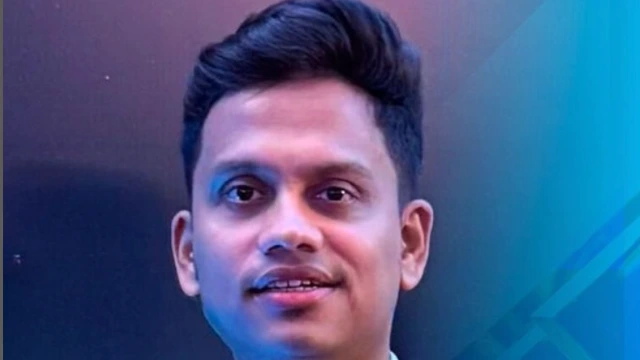
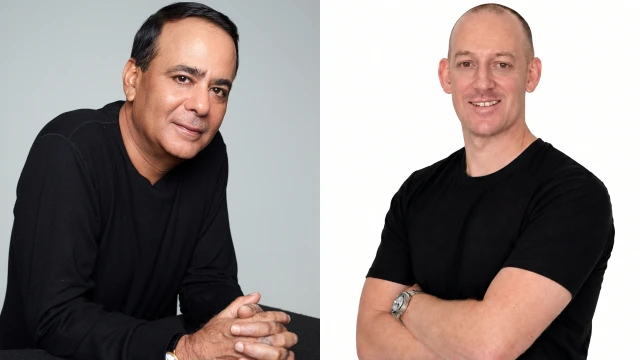
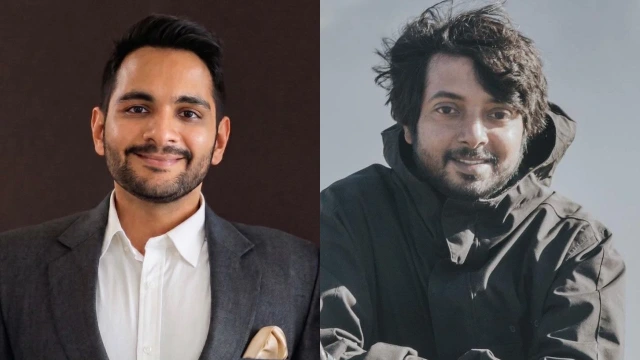
 Founder's of State Of Joy Dasari Raju Ramesh (left) and Bachi Pullela
State of Joy has launched in the sneaker market with a point of view that feels less reactive and more grounded. Founded by Bachi Pullela and Ramesh Raju (who together bring over decades of manufacturing expertise), the brand isn’t going the storytelling-first lens. It starts with the product.
For the founders, the opportunity isn’t in disrupting an overcrowded space, but in recognising that the segment they’re targeting, well-designed, high-quality sneakers at accessible price points, still has room to grow in India.
That belief shapes everything from how the shoes are made to how they’re positioned. State of Joy’s first collection focuses on comfort as a baseline built for 'everyday athletes': people who are on their feet all day, across professions like aviation staff, hospitality workers, delivery personnel, and consumers who don’t just wear sneakers for style, but rely on them through long, demanding hours.
Design, in this context, goes beyond surface aesthetics. It runs through the entire system, from material choices and construction to durability and wearability. It’s a manufacturing-led approach in a category often driven by hype. That same clarity carries into the brand’s marketing. While State of Joy will lean on social media, creators, and collaborations to build awareness, the founders are deliberate about keeping the messaging honest, with no inflated pricing, no artificial discounting, and no overpromising.
Visually and culturally, the brand positions itself as rooted in a distinctly Indian sensibility: 'real, raw, Indian,' as its campaign language puts it, drawing on the energy of the street and the communities that shape contemporary culture. It’s less about chasing global cues and more about building something that feels local and lived-in.
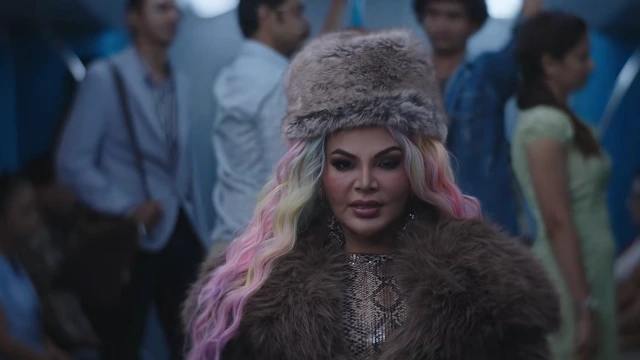
The brand has rolled out digital campaigns on Instagram to showcase this narrative through Indian athletes and actors.
The campaign, 'Not Just Sneakers. A State of Joy', also signals a natural evolution for State of Joy. While its early narrative has been rooted in product, pricing, and performance, this film expands that thinking into culture — using real people and lived environments to bring its idea of the “everyday athlete” to life. In doing so, the brand moves away from traditional sneaker marketing tropes and leans into a more grounded, relatable form of storytelling.
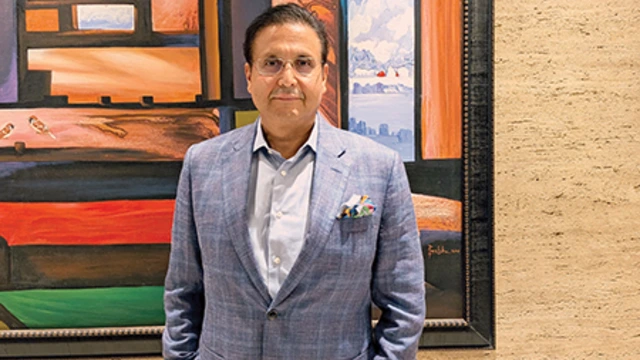
For the launch, they also collaborated with actor and video jockey Rahul Khanna.
With early retail presence across key stores in the city and plans to balance offline and online growth, State of Joy is betting on a straightforward idea: if the product holds up, everything else will follow.
Bachi Pullela, co-founder, State of Joy, spoke with Manifest at the brand’s Mumbai launch about building from a product-first mindset, keeping pricing honest, and designing performance footwear for people who are on their feet all day.
Edited excerpts:
Why did you feel it was the right market to launch the brand in what is considered a crowded market space? And what is the differentiating factor that you’re going to bring about?
I think it’s not crowded. Yes, there are a couple of brands coming in, a lot of brands being launched. Also, because I’m in the industry, when I open Instagram, I see the category magnified (because of the targeting of the social media app)
But I still think the category that we are going for, at the price points that we are going for, there aren’t many people there. That was one of the reasons we actually went for it. We felt there is a huge gap, there is great potential, and there is space for us and others as well.
And that has been proven by other countries. Globally, brands have come in, even in saturated spaces, and done very well. But in India, it’s still wide open.
What is your marketing strategy to garner more awareness? Since it’s a new brand, I’m assuming it’s going to be a social media approach. Are you employing influencers? What’s the strategy?
I’ll be really frank. We both come from a manufacturing background. While we’ve seen a lot of new brands come from the marketing, storytelling, narrative side, we come from the product side.
At the price we’re bringing it in, our products have superb value. I know the quality is good because between both of us, we have 75 years of experience in making. So when I say this, I’m not just talking; we can stand by it.
Everything can be made better, but at that price point, our product is fantastic.
So when we talk about marketing, we want to be real. Of course, we will use influencers, and we will tie up with celebrities. But we want it to be honest. We want to be truthful about our pricing and our product.
We don’t want to play the game of high pricing and then discounting to create the illusion of a deal. We’re not into that. Maybe it’s not the right strategy, I don’t know. But at this point in our lives, we want to be real.
We want to say: we’ve done our best, we have a great product, a great price, with fantastic aesthetics, and we hope that works, and people understand that.
Since you said you are more from the manufacturing side, can you speak about the design aspect and how valuable that is?
Everybody thinks design is purely about looks and aesthetics. But for us, design starts from the moment the product is conceptualised. It’s about the entire process, manufacturing, and the experience of wearing it.
If one doesn’t get the design right, the manufacturing gets messed up, as does the product experience.
It’s not just about saying, ‘Oh, it’s a nice red shoe with a nice logo.’ That’s not design, that’s surface-level aesthetics.
For us, design is everything, from the concept to the materials we use, to the reliability and durability of those materials, to wearing comfort. Of course, we want the product to look good, which converts into sales. But for us, it’s a complete system. Design encapsulates everything.
When it comes to availability, is it going to be retail-first, online, or a mix of both?
Retail is a very important part of our brand. We are very strong in our product and have been in the industry for a long time in different roles. We are going strongly through the brick-and-mortar route as well.
We will be available across many cities. For example, in Mumbai, we are already with IMC, Regal, and Tap Sports. We have a good distributor here who has placed us in many good stores.
At the same time, with State of Joy and our new website, digital is going to be a focus area this year. We hope to reach close to a 50:50 split as a brand, growing on all fronts.
When it comes to younger consumers, a lot of them want customisation in their shoes. Is that something you’re looking at, like initials or personalised elements?
I’ll be very frank, we don’t have it right now. In the future, when we open our own stores, which we are now looking at, that’s something we would definitely consider.
I think it gives individuality and something personal to the consumer. But while we are selling through other channels, it becomes very difficult to execute these offerings.
In terms of consumer feedback, since it’s a new brand and you’re working through distributors, how do you plan to gather insights, especially on comfort and product experience?
So what we do is, before launching any product, almost everybody in our team wears the shoe. From our manufacturing supervisor to our designer, to our finance head, to both of us (referring to the co-founder, Ramesh).
Our families wear the shoes too, and we take honest feedback from all of them, because they’re the only ones who will tell me if something is not comfortable. Then we put it out in the market.
As product people, we can foresee a lot of issues before they happen. We’re not learning on the fly; we’ve already learned, and now we’re applying that learning to the product.
But even then, if anything comes up from anywhere, we act immediately. There are phone calls, checks, and corrections; we fix things right away. We’re very agile like that because we’re constantly involved in the product.
What does success look like for you in the coming year?
More sales. But beyond that, also recognition. We want to build a name for something we’ve created, something that lasts.
State of Joy has great potential. And as I said, I still don’t think the space is crowded. There aren’t many people doing what we’re doing.
We’re not a fashion brand made just for casual looks. We’re a performance brand for the everyday athlete, for the person on their feet all day.
Someone like a pilot, a stewardess, someone in the food industry, delivery workers, or people who spend their entire day in their shoes. We want them to be comfortable, and we want them to be able to afford our shoes.
We’re not about just looking nice, walking around, and then taking the shoes off at home. I want people to wear our shoes on a flight and not even think about them. You see people constantly taking their shoes off because they’re uncomfortable. I don’t want that. I want people to forget they’re even wearing our shoes, and that ease. That’s the goal.
Yes, we want to look good, we want to be fashionable, but that’s not the priority.