
 Subscribe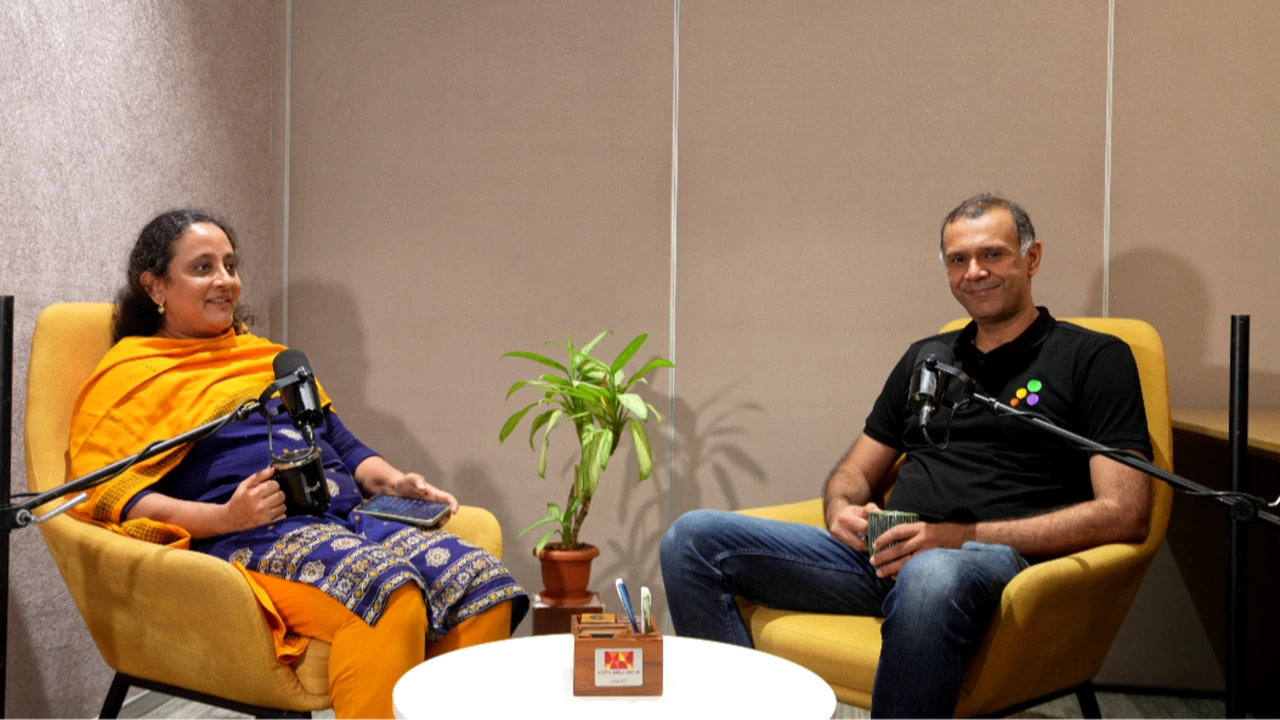
 Manasi Narasimhan (left) and Inderpreet Singh
In this episode of Marketing Manifest Stations, host Manasi Narsimhan, head - brand and communications, Accelerate Indian Philanthropy and SCALE, chats with Inderpreet Singh, head - marketing, Birla Paints, Aditya Birla Group, about the challenges of entering an established category such as paints within a large conglomerate.
Attributing his growth to working in organisations where marketing functioned as a primary business driver, not a back-office support unit, Singh said, “I have been fortunate in the ways that I started my career - in setups where marketing had a seat at the table, where marketing was at the centre of the plate. It was not just about communication; it wasn't a support function, but the driving function,” he said. “Those experiences of managing P&L in some way or the other, and understanding how every action led to an impact, both on net revenue as well as EBITDA, kind of shaped me over the years and gave me a good understanding of how each action led to what kind of results.”
Singh’s move into Birla Paints had presented a different challenge, he revealed. While the business entered the market a little over two years earlier, the groundwork began four to five years prior. The mandate had been to build an entirely new company, from its business model and product portfolio to manufacturing, investments, distribution and organisational structure.
The groundwork extended from strategic decisions such as defining the company’s ‘right to win’ to granular operational choices, including budget approvals and the ERP system. “All the components were constructed, we went live in the marketplace, and we tasted success. So it's been exciting, enriching, but very taxing.”
Building the brand had also required insights from a wider ecosystem than a conventional consumer goods business. Consumers, applicators, contractors, dealers, architects and interior designers had all formed part of the insight-gathering process, with the latter also providing foresight into emerging trends.
This informed Birla Paints’ emphasis on localisation. “There is no one India. All of us intuitively know it. We know it's a subcontinent, not a country,” Singh said. “There are, of course, efficiencies at play when you treat India as one. But it is never going to be as effective as something which is much more personal and local.”
Differentiation had been another priority in a category led by a dominant incumbent. The market leader could easily replicate conventional product or emotional claims. Instead, the brand had turned its biggest perceived weakness, being new, into a proposition.
“The only thing that the market leader can't say is that ‘I'm new,’ right? So we said, why don't we do that?” he explained. “If I am new, perhaps new is equal to modern, technologically more advanced, and progressive. Let's define new like that.”
This thinking had shaped the “Naye Zamane Ka Naya Paint” (New paint for the new era) campaign, supported by propositions around warranties, EMIs and service guarantees.

The brand had extended that differentiation into the category through ‘painting as a service’. Singh said consumer research had indicated that people were not necessarily interested in buying paint; they wanted the painting job completed with greater transparency and convenience.
“We endeavoured to make it a more organised, transparent system. Put a system behind it. Treat it more like a service industry,” he said. The service had included measurement, transparent pricing, product options, progress reports and quality checks.
Watch the entire conversation here:
Tune into the conversation on Spotify: