
 Subscribe
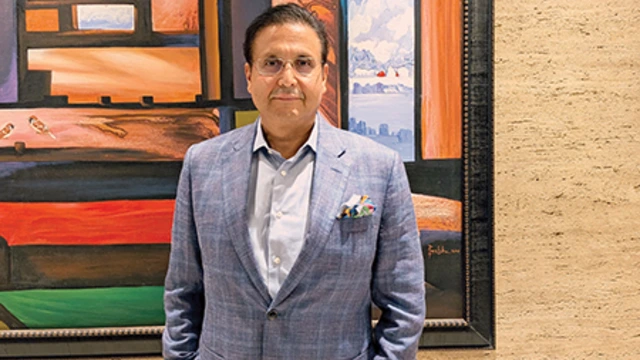
 Aurafest co-founders Manojkumar Sharma (left) and Sumit Govind Sharma at the launch of an art biography book showcasing the artwork of Prachi Sharma, Sumit's late daughter.
Some brands are built for profit, while others are built for optics. Then there are brands driven by a purpose far greater than their founders or bottom line — brands that leave a lasting impact on everyone they touch. Aurafest positions itself in that space, even as it aspires to take on the rapidly expanding premium artisanal gifting market in India.
Founded by Sumit Govind Sharma, the name behind hospitality ventures such as Eve, Que Sera Sera and Tat under Monarch Liberty Hospitality, Aurafest marks a shift from dining experiences to creating a purpose-led consumer brand.
Sumit is joined by founder Manojkumar Sharma, a home décor expert, art curator and strategic investor.
At its core, Aurafest is built around the idea of bridging Indian craftsmanship with contemporary consumption. Through its flagship brand Pranom (launched in 2025), the company is attempting to carve out a space in the premium segment by focusing on artisanal quality, cultural storytelling, and a more intentional approach to product creation.
The larger ambition is not just to participate in the gifting economy but to shape how Indian art and craft are perceived in modern retail environments.
The brand also reflects a deeply personal foundation shaped by loss, memory, and a conscious decision to turn both into something enduring. With its identity and direction shaped by the memories of their loved ones' legacies (for Sumit, his late daughter, Prachi; for Manoj, his late wife), this brand is a conscious effort to channel into something enduring. In a market increasingly crowded with commodified 'artisanal' offerings, Aurafest is positioning itself around authenticity, both in product and in intent.
On what would have been Prachi’s 23rd birthday (on 16 April) — marked by the release of a collector’s book documenting her life and over 200 artworks, Manifest caught up with Sumit to discuss building a purpose-led brand, preserving Indian art and craft, and the emotional legacy shaping Aurafest’s journey.
Edited excerpts:
You’ve built well-known brands in the city (Mumbai) and been part of the hospitality sector. What did that journey teach you about consumer behaviour over the years, and how are you applying those learnings to Aurafest?
Hospitality is purely a business venture. But I’m a very emotional person, so for me, the most important thing is to keep the guest happy.
At all our restaurants, the kind of customer experience we’ve created is what I’ve learned through my journey. If a guest comes in and is not happy with something, maybe they do not like a certain dish or whatever their issue is, the direction to the team is: don’t argue and don’t let them pay.
But when it comes to Aurafest, that is completely different and is built on emotions. So our late daughter’s name is Prachi. Today (16 April), we are launching her biography on her birthday. She was an artist, and in a short span of life, she created more than 200 paintings.
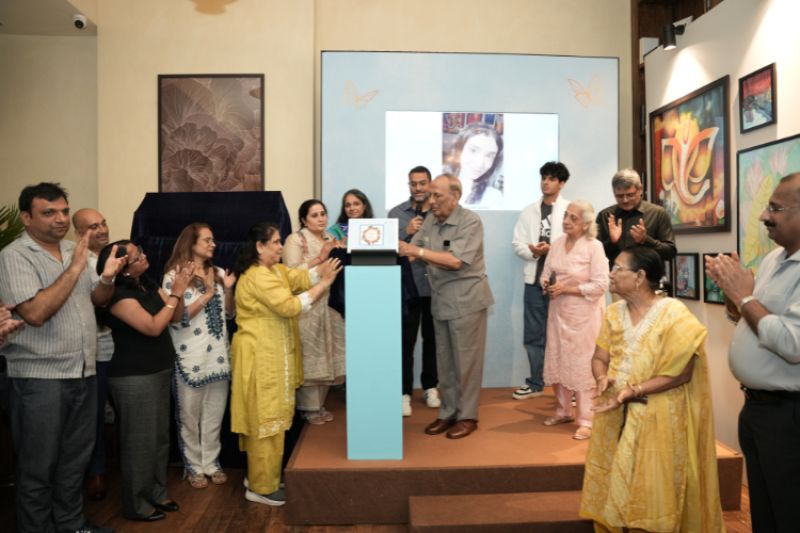
Prachi's family unveiling the book with Aurafest's founders.
So we wanted the whole world to see her work and create a legacy for her. That’s why we’ve curated all her paintings into a very beautiful book that we’re launching today.
The brand Aurafest came into existence with the two of us—me and my very dear friend Manojkumar Sharma. We are the founders. This is an emotional project for both of us. I lost my daughter, and Manojkumar unfortunately lost his wife during Covid.
This entire project is dedicated to Prachi. She was a painter, an artist. Manojkumar’s wife was an architect, again, in the realm of art.
The idea behind Aurafest is to promote art in all forms. That’s what we are doing. And we’ve committed that most of the money Aurafest makes will go to a foundation, ‘Tvastra By Prachi’, for underprivileged children, because we already have multiple businesses. However, this business is not for monetary gain, but it’s about emotions.
The foundation’s name was registered by Prachi at the age of 15. ‘Tvastra’ means 'ancient creativity' in Sanskrit, and that’s the legacy we want to build as she continues to own the brand in spirit.
Through Tvastra, we’ve partnered with BMC schools to encourage children to pursue art as a profession. Today, most parents push for conventional careers, but we want to shift that mindset.
We’ve already started conducting classes where we provide art supplies, teachers, and structured training. We work with batches of 30 children at a time, grooming them until they are exhibition-ready.
Once they’re ready, we showcase their work, and the proceeds go directly towards the child’s education. Our promise to our daughter is to create 100 Prachis.
Also, under Aurafest, you have a brand called Pranom, which was launched last year, which sits at the intersection of artisanal luxury, cultural storytelling, and contemporary design. How are you positioning it within India’s fast-growing premium gifting market?
The name of the brand Pranom is a culmination of my daughter’s name, Prachi’s (Pr) and Manoj’s wife’s name, Mona, which we rearranged backwards. It’s not a brand name. For us, it’s them.
So when we talk about competition, we have two differentiators. One is emotion; we are completely driven by it. Second, we aim to promote art.
Everything we do in Pranom and Aurafest is created by artisans. For example, on the occasion of my daughter’s birthday and in her memory, we’re launching a range of incense sticks. These are hand-rolled by tribal women.
I have visited the factory myself. These women have been doing this for 40 years. Each one rolls around 10,000 sticks a day. That itself is an art.
Unfortunately, that art is disappearing because machines have taken over. We want to revive it. We’ve created multiple artefacts that are handmade and hand-curated. That’s the whole idea behind our company, Aurafest.
On that note, coming to sustainability, your brand seems deeply rooted in that space. Where do you see challenges in scaling, and why aren’t more brands moving in this direction?
When Manojkumar and I started Aurafest, our first goal was to build a 100% sustainable brand.
For example, our incense sticks are completely natural, with no chemicals. So when you light them at home, you don’t get that harmful smoke or chemicals, which a lot of people are allergic to. And that’s why we are not cheap. The process to create these products itself is expensive.
We are targeting an audience that understands value. For instance, if one wants to sell a Mercedes-Benz, that brand has a high net value, and customers know why they’re paying that price.
Our idea is to build a sustainable brand and revive Indian art forms that are disappearing. It’s a long journey. We’ve just taken a small step, but we have confidence that we will get there as we are going in the direction of right intentions.
You’ve said the brand is rooted in emotion. When did you feel ready to share something so personal with the world, especially given how long it can take to process such a loss?
Yes, it was. It took us more than a year to curate everything, and finally, we found the courage to put it out. All our packaging features my daughter’s paintings. Across all brands. Anything Aurafest does uses elements of her work. The idea is that the whole world sees her art. If we’re present in 100-plus stores and reach millions of customers, every household will have a piece of Prachi’s work; that is the goal.
It’s completely emotional. It took us over a year to decide to move forward. And we’ve done it without compromising. We’re okay going slow, taking time, but getting it right is important, and sometimes doing less is more.
Also, your products are placed in premium locations like airports. How are you approaching that from a business standpoint?
Today, our products are expensive because they are handmade and hand-curated. But there is an audience for that.
Just like there’s a Mercedes that sells and a Maruti that sells side by side —we’ve chosen to be on the Mercedes-Benz side.
There are over 300 outlets where our products can be sold. We’re in talks with ArtPort stores. We are already partnered with The Bombay Store, At Home, Maison Home, and so many others.
The goal is to reach 300 plus outlets in India within a year. We’ve also started exploring exports, though products like incense require certifications depending on the country and its policies. We have close friends in Sydney and see real potential there as well as elsewhere internationally. They are all open to joining us because they believe in the cause—but we’ll move when the timing feels right.
And in terms of communication, are you using social media to amplify your brand's message?
Yes, currently it’s all in-house. We have someone handling communication and marketing.
Our focus is clear: we want to promote Indian culture and art. Everything we communicate will revolve around that.
We’re also working on poetry-led storytelling to express the essence of Pranom.
Is there anything you’d like to see change in the Indian artisan ecosystem—policy, manufacturing, or execution?
Fortunately, the government is now supporting this space through various schemes and rebates to revive Indian art.
But the challenge is survival for artisans. And the younger generation is moving away from these crafts. That’s the real gap.
We need to find ways to bridge it.
Lastly, what impact do you want to create apart from the legacy you want to build, and are you planning to expand into other categories?
As of now, we have actually identified seven segments. Wellness is one, where we are doing incense, candles, aroma oils, soaps—all 100% natural.
Another is inspired by my daughter’s work, especially her butterfly paintings, and she was very fond of it. Hence, we want to curate a range of her products, such as a display plate and so on and aim to call that Patangi (kite).
Wellness and artefact products are what we have started with, and we will branch out. But right now, we want to grow slowly and focus on doing things right before expanding.