
 Subscribe
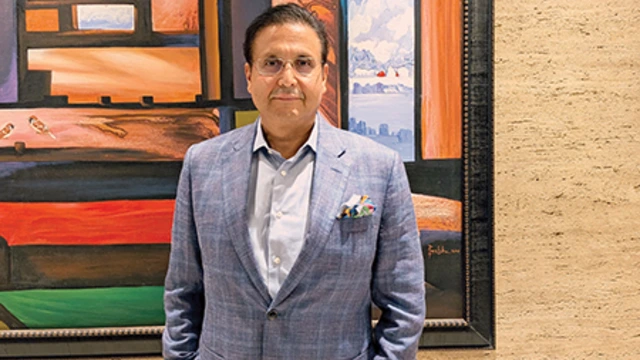
 Shweta Bajpai
As short-form video reshapes how audiences consume content on smartphones, micro-dramas are rapidly emerging as a new storytelling format and a growing business vertical in India.
To capture how this category is evolving and how viewers are discovering and engaging with it, Meta unveiled an audience research report developed in collaboration with media insights firm Ormax Media.
Titled ‘Micro Dramas: The India Story,’ the report was launched at its inaugural Meta Marketing Summit: Micro-Drama Edition. The summit also highlighted the rise of micro-drama platforms that are now actively using Meta to reach relevant audiences, launch new shows, and build their businesses.
Key highlights from the report:
- Audiences spend a median of 3.5 hours per week watching micro dramas, typically spread across seven to eight short sessions rather than long viewing windows
- 57% of viewing happens in ambient mode, meaning audiences often watch micro-dramas while doing something else
- Consumption peaks during commutes, work breaks, and late-night scrolling
- Nearly 47% of viewers say they find AI-generated micro-dramas unique and creative, while 38% prefer real actors, reflecting familiarity rather than resistance
Ahead of the report launch, we caught up with Shweta Bajpai, director - media & entertainment (India), Meta, to discuss how the category is evolving, opportunities in the segment, and more.
Edited excerpts:
The report suggests that 65% of viewers discovered micro-dramas in the past year. From Meta’s vantage point, what factors have accelerated the category’s adoption so rapidly in India?
We are a short-form social platform. Reels is our primary consumption surface, which is inherently short-form in nature. In that sense, there is a huge affinity and alignment with this category. The report also highlights where users discover micro-dramas, and most of it is on social platforms.
For instance, while browsing Reels, a user may come across content that hooks them, prompting them to install the app and start watching. Because the content is discovery-led, users don't know what to search for; it's purely meant for discovery. Its short-form nature is why Meta plays such an important role. The other big factor is that most of these platforms are producing content that goes beyond boundaries. It goes beyond regional and national boundaries in India, so it's also meant for an international audience. And Meta becomes the best surface to do that, where one can put content out there, which goes ahead and finds its audience.
Lastly, there is strong alignment with creators. Many Instagram creators are already producing micro-drama-like, episodic content. This often evolves into a full-fledged series that platforms later pick up and develop.
There are so many reasons that this is interesting as a space to us because this is where primary user time is coming from. It has a lot of affiliation with what we do on our platform already. We believe we are the primary source through which these platforms find their audience and take the content beyond boundaries.
With 89% of viewers discovering micro-dramas via social platforms, what does this say about the evolving role of platforms like Meta in content discovery versus distribution?
Distribution plays a big role for us. That's what we do for a living in some sense. But I think this phenomenon has also changed the way brands create content for social media. It's also changed the way creators find their audience on social media and how audiences consume content. Since micro-drama is a major area of interest for Indians, we currently see a lot of ad–like content on social media. It is very bite-sized, small, and serialised also. That’s one change that is happening.
A lot of creators are creating episodic content, and now one has the ability on Instagram to actually find the next episode or sequel. Since attention spans are decreasing for audiences like us, we are also seeing how the audience itself is changing. There are people who are happy with consuming Reels and user-generated content (UGC). However, a large proportion of digital users in India use UPI, but their content choice isn't necessarily the UGC content found on social media. They are looking for something far closer to what they've grown up with, which is basically the linear TV kind of serialised content. This is where their affinity becomes true because they get the same kind of platform, but they also get content and themes that they can relate to. So that's why it's a big moment for us because it helps bring more users into the digital content ecosystem.
It was mentioned that the majority of the audience for micro-drama is male. What do you think is the reason for that?
One, it's to do with the content genres that each of these platforms picked. For example, there is a huge content genre around billionaire romance. If we look at some of those plot lines, they would appeal far more to men than to women. Also, this category targets a very different strata - tier two and smaller markets - where device ownership and access to digital payments can still be skewed between men and women, unlike a tier one city. So, obviously, that has a role to play.
The third big one is how it's marketed. Currently, the content is often promoted using sensationalism and cliffhangers, which tend to appeal more to men. But if you look at it globally, it's absolutely the other way round: 80-85% of consumers are female. And one of the big questions I get asked for the platform is what can be done differently in terms of audience targeting, in terms of opening up the different types of audience to get better female targeting - this is actually one of our bigger marketing problems to solve. But that’s how the trend has played out for now.
With 90% of viewing happening solo, does this point to a more personalised entertainment experience, and how might that influence future storytelling formats?
It is actually a very revealing trend compared to the other forms of media and entertainment. Theatricals were supposed to be watched with family, and OTT is more often consumed by couples. Micro-drama, however, is largely a solo experience. I think that's where a lot of the platforms actually see the opportunity for the category, which is its ability to give tailored content that is meant for the audience to be watched as they like, when they have the time, and pay for what they like. All these choices get fairly confusing in the other two formats, because someone is paying for a subscription, and they don’t even know what they will watch throughout the year. In theatricals, in particular, people always worry about the ROI they will get for the amount of money they spend. But, in micro-drama, the transaction is very clear - one pays the money, consumes the content there and then, and they decide if they want to come back. Micro-drama is a very solitary form of merchant. Another insight we came across was that there is a lot of night binge-watching. There are feeds during the day, but night is a big part of it. So it feels like the chosen form of entertainment for binge-watching, but people want to experience it alone. In that way, it is very similar to social media usage.
Any particular insight from the study that surprised you?
All of us live in a brand world, and given that we work so closely with the platforms, my assumption would have been that there would be some kind of brand recall that would get created. The most exciting thing for me was that people remember the storyline they watched, they remember the actors, but they actually don't remember the platform. This signals a huge opportunity for the industry and really surprised me. It's not happened before in any of the categories that I worked on.
Feed-led discovery seems central to the growth of micro-dramas. How are recommendation systems and short-form video formats shaping how audiences find serialised storytelling today?
One of the reasons why Meta works really well is because of how targeting really happens. People are consuming reels, and there are reels of a certain kind they consume. For instance, let's take one of the Oscar movies right now - Sinners - if there’s a reel on my Instagram feed about the movie and I love it, I go ahead and heart it or share it. It'll then show me four movies of exactly that same genre. And therefore, the system actually has very good knowledge - not just of the fact that I'm a strong anime consumer, but I'm also somebody who likes the horror genre. So, it's highly probable that on day three or four, it can show me a horror micro-drama. So, I am exactly the right audience that will get hooked. That's how discovery really works and is beautifully micro-targeted.
How do micro-dramas offer new storytelling opportunities for advertisers compared to traditional digital video?
It is too early to say that marketing or advertising is evolving to become microdrama-friendly. I think the industry is progressing much faster. Yes, there have been a few experiments done. Instagram did its campaign of sorts on micro-drama sometime back. There were one or two brands that also experimented with this type of storytelling. But I wouldn’t say it’s like a huge change that’s already happened. That said, most platforms distributing short dramas have been approached by brands for tie-ups, sponsorships, and product placements. There’s a clear line of monetisation that they are following with advertising-based video-on-demand. For now, everyone’s closely watching the space and seeing how it evolves.