
 Subscribe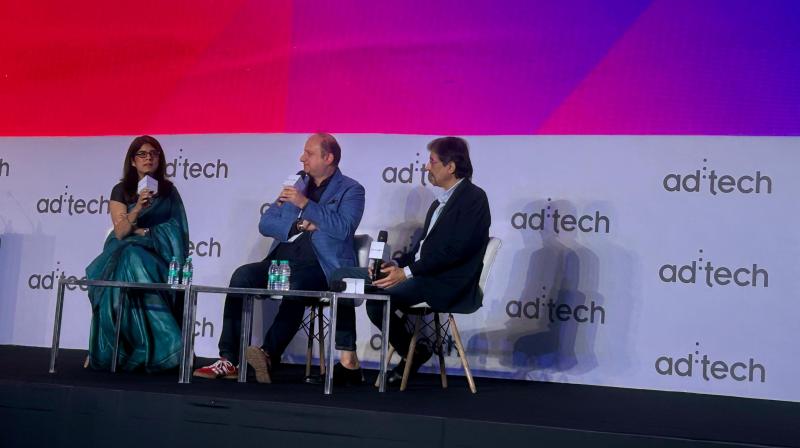
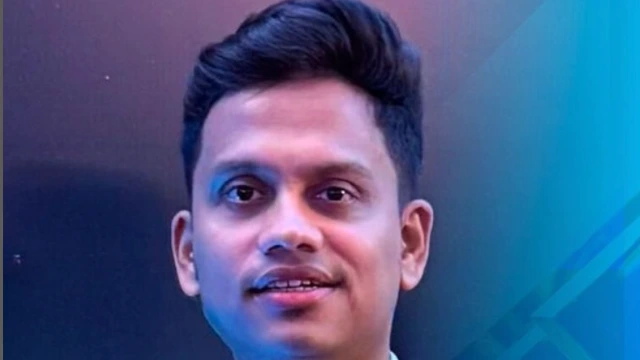
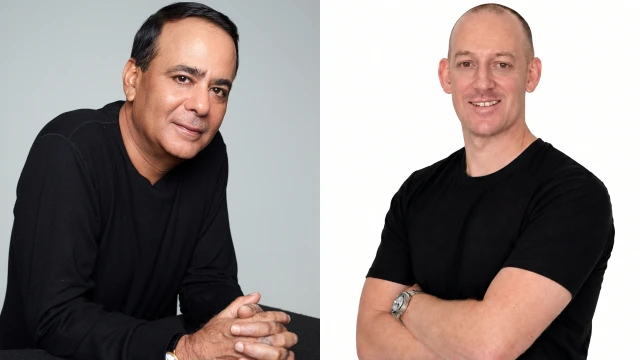
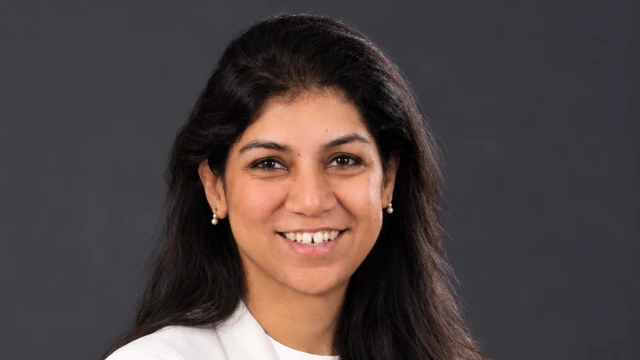
 From left: Saakshi Verma Menon, Kushal Sanghvi and Ajay Kakar.
The final session of ad:tech 2026 brought the two-day summit to a close on a note that cut through the noise.
The panel brought together top marketing leaders to unpack what ‘courage meets intelligence’ really means in a world increasingly shaped by AI, data and constant disruption.
Moderated by Kushal Sanghvi, advisor and director, Animmoov Digital Media, the panel featured Saakshi Verma Menon, chief marketing officer - India Foods, PepsiCo India, and Ajay Kakar, head – corporate branding, Adani Group.
If earlier sessions spoke about technology, this one brought the conversation back to the fundamentals of marketing: people, instinct, and the enduring role of emotion in building brands.
Marketing is still rooted in people, not platforms
Kicking off the discussion, Menon grounded the conversation in what continues to drive marketers despite rapid change.
“What really drives me to work every day is how intrinsically what we do is linked to people,” she said. “Everything in marketing is rooted in human motivations, in what people believe, in what they feel and that’s where the joy of this profession comes from.”
For her, despite the rise of tools and technologies, the core hasn’t shifted.
“You can have all the data, all the tools, all the access to information,” she said. “But at the end of the day, what we do is still about understanding people at a very human level.”
Kakar echoed this, but pushed it further.
“The day a marketer thinks that observing the consumer is enough, that day the marketer is dead,” he said. “What matters is not what the consumer says or does but what they don’t say and don’t do.”
He argued that true insight lies in reading between the lines.
“The most exciting part of marketing is to interpret what the consumer themselves may not even be able to articulate,” he added.
Brands are built on empathy, not algorithms
As the conversation moved to AI and data, Menon drew a clear line.
“I’m not going to fight the battle on efficiency, AI, data and technology will win that,” she said. “But brands are not built on algorithms. Brands are built on empathy. Brands are built on emotion.”
She stressed that no amount of data can fully replace human understanding.
“You can’t rely on an Excel sheet or an algorithm to tell you what a consumer truly wants,” she said. “That comes from meeting consumers, observing them, understanding what they need, and sometimes even what they don’t yet know they need.”
What differentiates marketers today, she argued, is judgment.
“The real difference is knowing when to let the algorithm work and when to step in with intuition,” she said. “That balance is what defines great marketing.”
The balance sheet vs the P&L of marketing
Kakar broke down marketing into two distinct but interconnected parts: performance and brand.
“If you think of it like financial services, performance marketing is your P&L,” he said. “It’s about sales, numbers, what you deliver today.”
But brand, he argued, plays a longer game.
“The brand is your balance sheet,” he said. “It’s what carries you through good times and bad.”
And that requires consistent investment.
“If you’re not adding to your brand year after year, you’re weakening your foundation,” he said. “At some point, your product will be tested, and without a strong brand, you won’t survive that.”
He also highlighted the need for courage in brand-building.
“I’ve rarely seen corporate campaigns that don’t rely on numbers, scale or size,” he said. “But it takes courage to step away from that and build something from the heart.”
Why AI cannot replace emotional connection
One of the most striking moments of the session came when Kakar addressed the growing obsession with AI.
“I think we should avoid getting carried away by this two-letter word: AI,” he said. “It immediately brings the conversation to cost efficiency.”
But for him, the real question is deeper.
“Can AI create love for your brand? Can it create an emotional connection?” he asked. “I’m not sure it can.”
And then came the line that defined the session.
“AI still cannot make that drop of tear fall from your eyes,” he said. “That is something uniquely human.”
For Kakar, AI remains a tool, not a replacement.
“It’s like fire,” he said. “You can use it to warm, to build or to destroy. But its impact depends entirely on the person using it.”
The danger of chasing every new trend
Both speakers also cautioned against blindly following industry buzzwords.
“We are living in very dangerous times,” Kakar said. “Every few years, there’s a new trend: TV, digital, meta, AI and suddenly everyone feels the pressure to adopt it.”
He warned against confusing trend-chasing with strategy.
“If being influenced by every new fad is considered taking a risk, then I would rather have zero budget,” he said. “You don’t need to be the first at everything.”
Instead, he stressed clarity of purpose.
“Just because something works for one brand doesn’t mean it works for you,” he said. “You have to stay anchored to your own strategy.”
Strategy should follow the consumer, not the medium
Kakar also aimed to show how the industry frames strategy itself.
“We keep asking: what’s your digital strategy, what’s your AI strategy,” he said. “But strategy is not about the medium.”
For him, the focus should be elsewhere.
“Strategy is about how you connect your brand to the consumer in a relevant way,” he said. “The medium is just a vehicle.”
He questioned the industry’s obsession with siloed thinking.
“Do we have separate strategies for TV, radio, digital?” he asked. “No. The strategy should be for the consumer.”
Kakar then questioned specific AI roles. He remarked boldly, "Artificial intelligence has given many organisations the chance to create what feels like a ‘lovely’ designation today, the 'chief AI officer'. But does that really fit into the long-term scheme of things, or is it something that may not even last? Personally, I almost wish it never happens, given the irony of the situation. We’ve seen this before, media agencies once rushed to appoint chief digital officers and heads of digital, and we know how that played out.”
The evolving consumer and rising expectations
Menon brought the discussion back to the changing consumer landscape.
“The consumer today is very different from what they were even five or ten years ago,” she said. “They are more demanding, more aware and far more diverse in their interests.”
For brands, this means constant evolution.
“It’s not just about who represents your brand,” she said. “It’s about how your brand shows up, where it shows up and how relevant it feels in that moment.”
She pointed to Gen Z as a key example.
“They don’t just follow one interest or one format,” she said. “They engage with multiple passions, multiple platforms and expect brands to keep up.”
There is no ‘silver bullet’ in modern marketing
Menon also pushed back against the idea of one big campaign solving everything.
“I don’t think there is a silver bullet anymore,” she said. “There is no one campaign, one film or one idea that will solve all your problems.”
She highlighted how the landscape has fragmented.
“The idea that you can create one big film and put all your money behind it that time is over,” she said. “Today, marketing is far more complex and far more continuous.”
What defines a bold marketer today
As the session moved towards leadership, Menon reflected on what she looks for in the next generation of marketers.
“For me, the most important thing is that spark - the ability to stay connected to the consumer,” she said. “That instinct still matters.”
She also emphasised the importance of courage.
“Being bold today is about knowing when to trust your intuition,” she said. “Especially in a world where data can sometimes overwhelm you.”
And she was clear about the stakes.
“If marketers are not willing to take risks today, they’re losing the battle,” she said.
Agility, conviction and ideas that can stand scrutiny
Kakar closed with a reminder of what ultimately matters.
“At the end of the day, ideas are everything,” he said. “But not just any idea. You need the conviction to stand by it.”
He stressed that every idea must answer one key question.
“Don’t just present an idea,” he said. “Start with what it will achieve, why it matters and why it will work.”
In a fast-moving, complex environment, he pointed to agility as a critical skill.
“You’re dealing with multiple audiences, multiple businesses and multiple contexts,” he said. “What matters is your ability to adapt while staying clear on your core.”
As Kakar summed it up, “AI is only as intelligent as the person using it.”
And as Menon reinforced, “The heart and soul of marketing will always remain the consumer.”