
 Subscribe
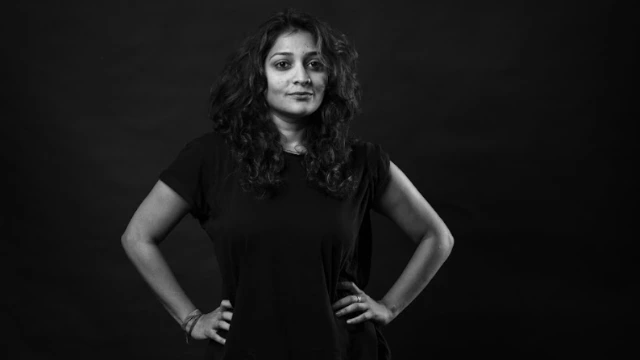
 Aarthy Sridhar
Gulf Oil Lubricants India is looking to rethink how a lubricant brand can build relevance in a market where product performance has traditionally dominated the conversation.
With its platform, Kuch Behad Kar (Do Something Extraordinary), the company is looking to push the brand into a broader space, where marketing is not simply about communicating what the product does, but about giving consumers a reason to care about the brand behind it.
The brand has rolled out the campaign featuring long-standing ambassador, cricketer MS Dhoni, conceptualised by Curativity. Built around the thought ‘Sapna CC Dekh Kar Nahi Aata’, the campaign marks a new chapter in Gulf Pride’s consumer-facing communication.
Manifest spoke with Aarthy Sridhar, CMO, Gulf Oil Lubricants India, about the thinking behind the new platform and how the brand is evolving its marketing playbook.
Edited excerpts:
The ‘Sapna CC Dekh Kar Nahi Aata’ campaign moves Gulf Pride from a functional oil conversation to an aspirational one. What changed in the brand’s understanding of the consumer that made you believe Gulf had earned the right to talk about ambition, rather than just performance?
Gulf has had a very good journey over the last decade. We’ve created a strong Gulf master brand and, in awareness and consideration, we’re clearly number two in the category.
What we realised, especially in B2C, is that while we have high brand awareness, we need to convert that into consideration and preference. Even in a functional category, consumers always choose brands with some layer of emotion.
When we spoke with Gen Z and young consumers, one insight stood out: it’s a generation for whom ambition is greater than resources. We see it in Shark Tank, with entrepreneurs from tier two cities starting with very little, or in influencer culture, where people create so much with just themselves and a phone.
In two-wheelers, whether consumers have a 100cc (cubic capacity), 125cc or 150cc bike, the way they use it often goes far beyond its specifications. That’s where Sapna CC Dekh Kar Nahi Aata came from. Whatever the CC of one’s bike, their ambition for what they want to do with it is much higher.
In rural India, people run businesses through their bikes, and we see the same in the gig economy.
Internally, the insight was: duniya had batati hai, har sapna had nahi hota (the world sets limits, but not every dream has a limit). That was the spark. We said this is a product that helps you push your bike to its limits, so you yourself can also go beyond limits. That’s what comes through in Kuch Behad Kar.
As more brands build creative capabilities in-house, where do you see the right balance between internal teams and agencies for Gulf?
We work with an agency team as an extension of ourselves. We are working with Curativity, which we recently gave the mandate to, and they are looking after both our B2B and B2C businesses.
Given the size of the company and the team we have, it makes more sense for us to collaborate with external creative partners.
Much bigger, multi-category and multi-brand companies have created creative teams in-house and almost built an agency setup within the organisation. Ultimately, we are a single master brand company, so it makes more sense for us to have multiple creative partners. It gives us different perspectives and, hopefully, better creatives.
We’re seeing brands such as Bata build AI capabilities in-house to support campaign development and creative production. As Gulf explores AI, how is the brand thinking about the capabilities it wants to build internally versus the work you’ll continue to entrust to agencies?
Today, we are a very insight-and idea-first thinking company. For us, the first question is: have we captured the right human insight?
As far as creation from scratch is concerned, I have seen very little evidence of AI doing that effectively. It needs to be given insight and a lot of context. At that first leg of creativity, we still see the need for humans because we need to understand the human on the other end.
But look at our Gulf B2B Solutions campaign, 'Dream Beyond, Do Beyond'. Once we had the idea, which came from a human insight and deep understanding of the brand, we wanted to show different B2B industries in a larger-than-life way. We used forced perspective, and AI worked very well as a medium to bring that idea to life.
Shooting something like that would take a lot of time and cost a lot of money. We can’t exactly go to a mining setup and shoot there. So from a production and cost perspective, AI made a lot of sense.
We recently had a new head of IT or chief digital officer join us, and one of his mandates is to look at where it makes sense for AI to become part of the process. But at the idea and first level of creativity, we still see the human as being very important.
You’re trying to make Gulf more relevant to a younger generation without losing the credibility built over decades. How do you modernise a legacy brand without becoming so culturally relevant that you lose the product truth at its core?
While the brand has a legacy, Gulf has always been a brand close to culture, whether globally or in India.
Whether it’s motorsports globally, with F1 and Trackhouse, or here in India, when we got into the IPL around 10–15 years ago, that was the young format in cricket. So I would say we are not a 125-year-old brand; we are a 125-year-young brand.
We are trying to stay relevant with culture, and that’s why we’ve looked for an insight that speaks to the youth of today.
We see Kuch Behad Kar as a brand platform that allows us to stay connected with that culture. It is our proposition across all our verticals, and we’ll be rolling out more campaigns in the coming months.
Gulf has historically had a strong B2B and OEM presence, and now we’re seeing a much more deliberate B2C brand-building push. Is this simply an evolution in communication, or is the role you want Gulf to play in consumers’ lives fundamentally changing?
Kuch Behad Kar is a new B2C platform across brands. In the past, the messaging has always been around performance. What we’re now trying to do is bring nuance to that performance. It’s about performance beyond limits, marrying it with a human insight and making it more emotionally relevant.
The second shift is in how we execute. More and more brands are not built only through advertising, but also through the spaces in which the customer is seen.
We’re increasingly trying to be seen in or associated with spaces relevant to our consumers. For example, MTV Hustle. This latest season, our brand is associated with it, and we’re doing things that we feel will resonate with the audience and fit the proposition.
Sport has been central to Gulf’s brand-building, from MS Dhoni and Chennai Super Kings to Hardik Pandya and Smriti Mandhana. What does sports give you that conventional advertising cannot?
Globally, Gulf has always been associated with performance sports, particularly motorsports. In India, we chose cricket for its mass visibility and built long-term associations with the IPL, Chennai Super Kings and MS Dhoni.
Kuch Behad Kar is about crossing limits, and our brand ambassadors embody that. MS has gone from Ranchi to the world stage, while Smriti and Hardik continue to break records. We consciously choose ambassadors who reflect the brand’s DNA.
While the expression changes, the DNA remains the same. Kuch Behad Kar is a fresh articulation of Gulf’s challenger spirit. We push limits, and so do our ambassadors.
As you evolve the brand messaging, will influencers and auto content creators also play a bigger role in taking Kuch Behad Kar forward?
Influencers are part of our always-on strategy and another media vehicle. We use them selectively based on brand and audience fit, with Gulf Syntrac using them more because its audience actively seeks information and is receptive to influencer recommendations.
Lastly, with AI reshaping how brands create, communicate and engage, what’s one thing you believe marketers should never lose sight of when it comes to genuinely connecting with consumers?
Simply understanding the consumer and starting with a consumer insight is something that will never go out of fashion. Whatever the category, consumers may think they are rational, but they are always emotional.
If you look at any successful brand, there is something that emotionally draws us to it. We can always post-rationalise a decision by saying, I bought it because the product is like this, or because the price fits my wallet. But deep down, we always make an emotional choice. So whatever technology or AI comes along, I don’t think this can be replaced.
I think these principles will always remain important: How well do you understand the consumer? How obsessed are you with the consumer? And can you find an insight that makes your brand emotionally relevant to them?