
 Subscribe
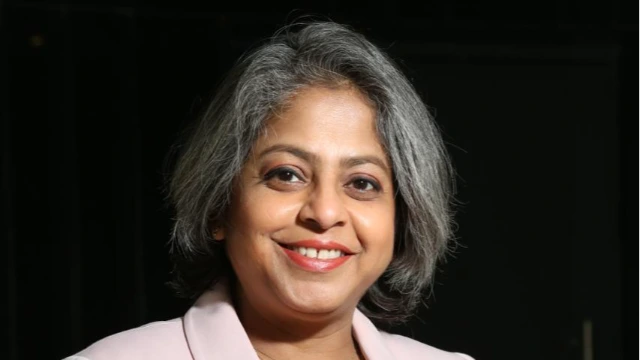
 Shyamala Ramanan
The festive season is often marked by a flurry of launches, with jewellery brands unveiling collections that capture the spirit of celebration. Joining the festive buzz, Mia by Tanishq has unveiled its Lightscapes collection, drawing inspiration from the myriad expressions of light during the festive season. Inspired by traditional illuminations, festive motifs and the interplay of light and sparkle, the collection brings together contemporary designs in gold, natural diamonds and coloured gemstones.
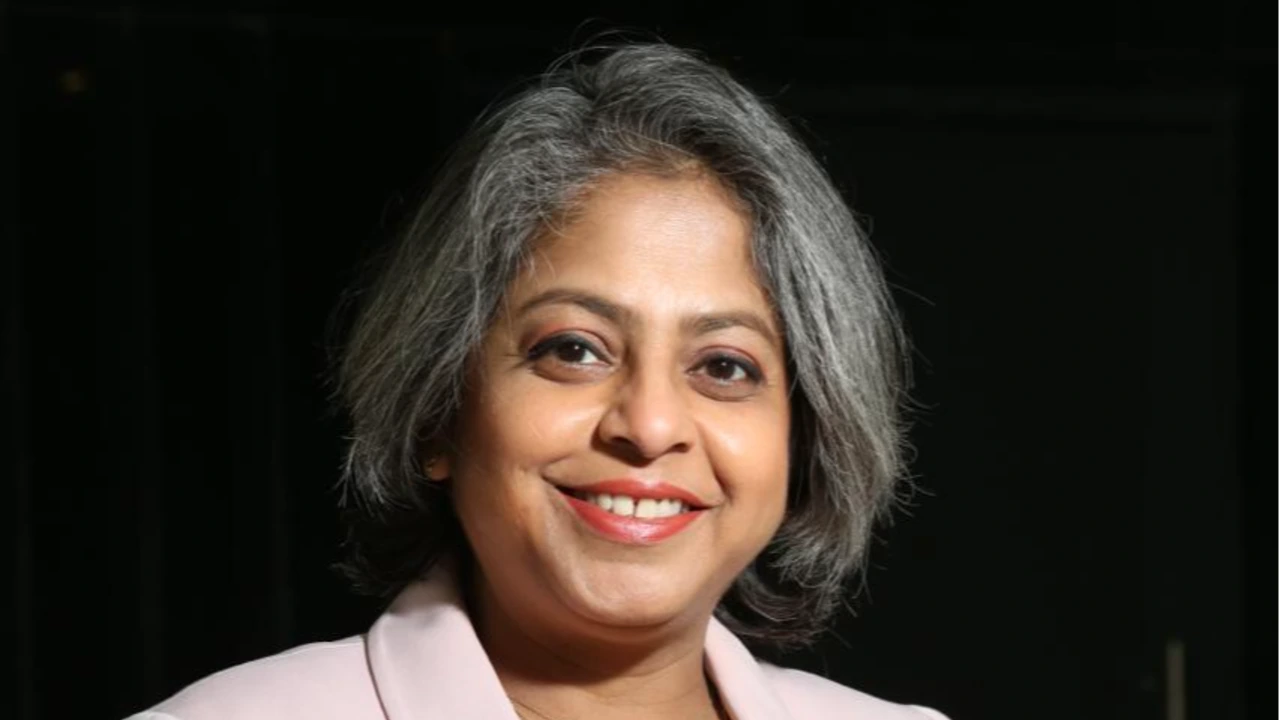
To know more about the collection, festive jewellery trends and evolving customers' preferences, we caught up with Shyamala Ramanan, business head, Mia by Tanishq.
Edited excerpts:
What was the central inspiration behind Mia's Lightscapes collection? What was the design thinking that shaped it, and how does it reflect the evolving jewellery needs of the modern woman?
At the beginning of every year, we conduct a trend workshop to understand what our consumers are moving towards. We look at the overall mahool and the emotions people are carrying with them. For instance, when we speak with Gen Z, we try to understand what is on their minds, what worries them, and what makes them happy.
One of the key insights that emerged this year was that, in an increasingly uncertain world, the need to feel fulfilled within oneself and to feel one's inner light is what gives people strength. That became the thought we carried forward, and we decided to make this the Year of Light.
Our summer collection was all about Sunkissed, and we were encouraged by the response it received. This time, we wanted to take the festivities into account. What makes this period particularly interesting is the presence of light everywhere. Streets and homes are lit up; there are kandeels, festive lights, Christmas carols, candles, star-shaped lights, and so much more. In a way, this is a season of light, so we decided to draw inspiration from lights of different kinds. We drew inspiration from diverse light sources and festive motifs to create our collection.
The reason people keep coming back to Mia is that they like building a wardrobe of Mia jewellery because each piece, while belonging to the Mia family and having the codes of Mia's design language, is quite different from the others, therefore giving them a wider assortment.
What are the key jewellery trends shaping consumer purchases this festive season? How are preferences evolving in terms of designs, formats, gold purity and price points?
One trend that we have seen growing, and which is not something that has emerged just recently, is the shift towards lightweight jewellery. Covid somehow changed people's mindset about the role jewellery plays in a consumer's life. Today, she wants to wear it and flaunt it. She's had enough of just keeping it locked away in a locker.
The other thing is that Mia has a very strong brand proposition. We stand for the independent, self-expressive woman, and I think women connect with us because of that mindset. When they want to feel confident and express themselves in their own independent way, they walk into a Mia store and pick up our jewellery. So, one of the trends we're seeing is around lightweight jewellery, wearability, versatility, and the ability to wear the jewellery the way you want to.
And when you see all these things coming together, what really emerges is self-expression. It's a word that's used very often, and probably every brand talks about being self-expressive. But I think there are very few brands that actually have it woven into their DNA. And I would say Mia is one of the original brands that has championed this idea of self-expression.
We've been around for about 15 years, and I think we really started the whole game rolling around lightweight jewellery that women could buy for themselves. We recognised that women wanted precious jewellery that they could actually wear every day, rather than simply buy and keep in a locker. That's the genesis of Mia and a DNA that we own. We are, after all, an everyday jewellery brand, which is why our tagline is Precious Every Day. It's about women who want to celebrate and value themselves every single day.
The other trend is the shift in consumer perception towards 14-karat gold. When I joined Mia six years ago, I had to work quite hard to make 14-karat gold acceptable to consumers. People were comfortable with 18-karat gold jewellery with diamonds, but 14-karat was a different story. We had to work hard to establish 14-karat gold amongst consumers. There were early adopters who understood that it had the same essential properties.
But what's really interesting is what we've seen over the last 12 months. I think, partly because of the way gold prices have risen, people are coming to the stores and asking for 9-karat gold. Something that initially was not even within the realm of consideration for most consumers is now widely accepted. I think the acceptance of 9-karat gold has grown tremendously. And that's another interesting trend we're seeing. People are no longer buying jewellery purely from an investment perspective. They're buying it simply because they want to adorn themselves with it.
Mia's philosophy of 'Precious Every Day' challenges the traditional perception of fine jewellery as something reserved for special occasions. How does this philosophy translate into the brand's product development and consumer engagement strategy?
I think it really starts with the product. We have a very defined product range. Almost 80% of our range is priced below INR 1 lakh. That makes us an immensely affordable jewellery brand. And even within that segment, a large part of the collection is priced below INR 50,000, which, honestly, is less than what someone might spend on a phone today. So, the idea is to make jewellery affordable. But we don't stop at affordability; we also make it practical.
For instance, earrings are one of our strongest portfolios, naturally, because they are something you can change every day when you're wearing precious jewellery every day. We've actually introduced some thoughtful functional details. For example, we have a gold screw mechanism with a silicone element around it, which works as a simple push-in closure and holds the earring firmly in place. So, when you're on the go, you're not fumbling around with an earring back or struggling to fasten it. It's just a quick push, and you're ready to go.
Even our chains are beautifully thought through. There's a little blob of gold that sits right on top of the clasp, making it easier to handle. So, even if you're fastening it yourself, using just one hand, you can insert the clasp quite easily. These may seem like very small details, but we've thought through them carefully because they make the jewellery genuinely convenient to wear. Similarly, we use bolo locks in our bracelets, which make them very convenient for an individual to wear.
Since are constantly in tune with emerging trends and understand what's happening in the market, we also design with an understanding of what our consumers expect from us. We have an elaborate process of consumer interaction, listening to our customers and connecting with them. This helps us understand where things are headed. We believe we are a work-in-progress brand, just like our customers.
That's why we have a clearly defined DNA that gives Mia its identity, but we are not restricted to designing just one kind of product. A woman's preferences and mindset keep changing, and we want to evolve with her. We need to remain relevant to her as she moves forward. That's why trends are important to us, consumer understanding is critical, and all of this feeds into our design process. We have designs that are absolutely avant-garde, but we also take traditional jewellery categories and reinterpret them in a contemporary way.
How are younger consumers redefining jewellery consumption? What differences are you seeing in their design preferences, spending patterns and purchase motivations compared to previous generations?
I think a lot of it comes down to personal identity. We have a range of everyday classics, but we also have trend-led jewellery that's based on what's currently popular. For example, the evil eye is something that has outlived its initial fad. It started a couple of years ago, but it continues to grow strong.
We have several such categories of jewellery. There are charms, alphabet pendants, different motifs and birthstone pendants. These are some of the things that I think younger consumers are gravitating towards.
Interestingly, what is exciting to see is that the younger generation is also looking for symbolism in jewellery. For instance, we introduced some beautiful Lord Ganesha pendants. Ganesha lends himself to so many different interpretations, and, if I may say so, he is the most forgiving one. That collection did extremely well. Encouraged by that response, we went on to launch an entire series for Durga Puja, centred around the idea of Shakti.
It's really about interpreting your thoughts and beliefs, adapting them and making them your own through jewellery, and then expressing them through what you wear. That's something I think we do particularly well at Mia, and that's what we're seeing the younger generation do as well. They're not necessarily obsessed with whether something is 18-karat or 22-karat gold. What they want is a beautiful design in the precious jewellery space. And I think, with our 9-karat and 14-karat offerings, we give them a fairly wide selection to choose from.
We are seeing some differences in shopping behaviour as well. Earlier, people would come to us saying that they had discovered us online. That continues to happen, but we're now also seeing a shift towards online purchases. What really surprises us is that we're present on quick-commerce platforms as well. And typically, jewellery shopping is something that takes hours. You need time to browse, explore and make a decision. But here, decisions are not just being made in minutes; the product is also being delivered to your doorstep in minutes. So, that's definitely an interesting shift we're seeing.
More men are also looking at everyday jewellery brands like Mia, and they're not necessarily waiting for a specific occasion to make a purchase. As relationships evolve, jewellery has increasingly become an expression of love. And that love is no longer limited to Valentine's Day or just to your better half or partner. It could be for your parent, your mother, your sister or anyone else in the family.
So, I think these are some of the shifts we're seeing: more jewellery being purchased and more frequent purchases because our price points are relatively accessible. Consumers can actually buy multiple pieces rather than investing in just one.
In one of your recent interviews, you also mentioned that quick commerce is beginning to gain traction for jewellery, particularly for smaller purchases. Do you see this channel evolving into a meaningful sales and discovery channel for contemporary fine jewellery? And which categories do you think could potentially benefit from it?
I'm not sure quick commerce is going to become a discovery channel for jewellery in India. For me, the website is the discovery medium. When somebody comes looking for jewellery on a quick-commerce platform, I think the purchase is usually very specific. You're short on time, you know what you want to pick up, and you want to complete the purchase quickly. And when a branded player like us is present on the platform, it offers a certain reassurance to consumers who already know the brand. They know they're going to get a reasonably good product.
Because, let's face it, if you want jewellery delivered in 10 minutes, chances are you've forgotten an anniversary or a birthday! Otherwise, I can't really imagine someone having a sudden moment of, "I need a new piece of jewellery right now."
From a consumer's perspective, it's relatively easy to think: okay, this is a branded player, it's available on a reasonably well-known platform, I need something in 10 or 15 minutes, and now I can get it. It's also available at the price point I'm comfortable with. I think all of this gives customers a lot more confidence.
In terms of discovering the brand, I think a lot of consumers now discover us online. We also have an extensive digital marketing presence, along with a lot of on-ground activations, which encourage customers to learn more about the brand.
While most people are familiar with Tanishq, I think Mia by Tanishq is still something that consumers are gradually beginning to understand as an independent brand in its own right. While we are a sub-brand of Tanishq, what we stand for and how our design language is unique are things that consumers discover when they visit our website or walk into one of our stores.
I don't see us going all out on quick commerce with our entire portfolio. It will continue to be a limited offering, within a defined price range and perhaps even limited categories. Our offerings are currently limited, largely to earrings. We may also include some pendants, because pendants and chains are relatively easy to gift.
With Mia's growing retail footprint across exclusive stores and Tanishq outlets, is demand still largely concentrated in metros, or are you witnessing increasing traction from Tier 2 and Tier 3 markets?
We're seeing traction from everywhere. I think that's one of the beautiful things the internet has done. There isn't really a clear distinction between tier one and tier two markets anymore. Perhaps the only difference is the size of the town and its population. Our brand proposition is also very strong. It's built around self-love, self-expression and the idea of celebrating yourself. I think women everywhere today are evolving in their own being, and Mia resonates with that. Tier two and three markets are booming for us. More stores and bigger stores are coming up there.
Do you see any differences in consumer preferences and purchasing behaviour between metro and tier one and two markets?
We definitely do. For instance, when consumers are buying diamonds for the first time, they tend to look for slightly more classic styles and conventional designs. They might initially come in looking for 18-karat gold, but as they understand the differences and explore the options available, they gradually become more open to experimenting with 14-karat gold. They also tend to look for diamonds that are set in a particular way, with a certain proportion of diamonds and gold in the design. However, after that first purchase, when they come back to us, we see them exploring more modern and contemporary designs, if you know what I mean.
I would say that metro markets do tend to see a greater uptake of high-fashion designs. But having said that, some of our more experimental designs have sold extremely well in markets where we would never have expected that kind of response. Consumer preferences are gradually coming together across markets. There could also be a certain amount of bias in how we distribute products. We might traditionally place our more high-fashion pieces in metro stores. But when we experiment and introduce these designs in smaller markets, we often find that consumers respond very positively.
At the same time, Tier 2 and Tier 3 consumers do continue to look for gold jewellery as well. So, we make sure that our product mix in stores in such markets has a relatively higher proportion of gold jewellery, because that's what those consumers are also looking for. Whereas in metro markets, we tend to see a stronger preference for diamond jewellery.
What is the marketing mix for Mia by Tanishq?
We follow a mix of approaches. Digital is obviously the go-to platform for us, but since we are now also doing a lot of experiential marketing, we make sure that whatever we do is amplified digitally. Today it's not just about one medium. We have to reach people across different platforms, as consumers are consuming content everywhere. That's why we follow a very cross-channel strategy.
Our influencer strategy has also been quite significant. We've been working with a lot of regional influencers and tapping into different languages, which is something relatively new for us. When you're trying to reach audiences across different regions, you want to connect with people who are rooted in their local cultures and can make the brand more relatable and authentic. We also do a little bit of traditional mediums such as outdoor advertising and print.