
 Subscribe
 Nimitha Reddy
Perfection used to be earned. Today, it comes with every prompt on ChatGPT, Gemini and Claude. Something strange is happening inside the world’s marketing dashboards. Engagement is falling on content that is by every technical measure flawless. The copy is crisp, visuals are polished and SEO is immaculate. And nobody cares. Meanwhile, when a founder films a shaky, self-conscious one-take video from a messy home office, while stammering twice and laughing at themselves once, the engagement is off the charts; comments flood in, DMs start, and deals follow.
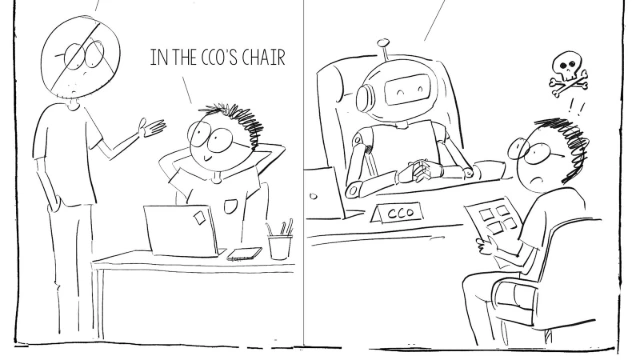
Welcome to the age of the cringe premium, where perfection has plateaued. We are living through the fastest democratisation of creative quality in history. The same LLMs, the same image generators, the same AI video tools are at every brand’s disposal. From Fortune 500 companies to individual consultants with a laptop and credit card. The result is not a creative renaissance. It is the great flattening.
When everyone can produce professional-grade content at a fraction of the cost, professional-grade content stops being the differentiator. It becomes the floor. The noise. And quite frankly average. Consumers scrolling through feeds have developed an almost preternatural ability to detect the frictionless cadence of AI-generated content, the uncanny perfection of AI-generated images, and the smooth rhythm of an AI-generated video. They feel it before they name it and they keep scrolling.
In a world where perfection is infinite, it signals mediocrity. It is the absence of what makes marketing relevant - the element that’s distinctly human.
The ROI of imperfection
Here’s the bitter pill, or the counterintuitive truth that should reshape every marketing strategy. Imperfection is becoming a scarce resource and scarcity always commands a premium. A handwritten note costs more than an email because time and effort are a deliberate inconvenience. That cost is also a signal. It says, “I chose you specifically. I slowed down.” The same logic now applies to digital marketing content.
Brands that publish a genuinely unpolished founder story, a product video shot with an iPhone and natural light, a comma splice and a joke that only half the audience will get, that brand is spending social capital in a way AI cannot replicate. It is making a credible signal of humanity.
The numbers mirror the demand. Unfettered user-generated content consistently outperforms studio-produced equivalents in conversion metrics. [Source: https://www.powerreviews.com/how-ugc-impacts-conversion-2023/] Raw testimonials bear polished case studies. Imperfect, spontaneous social content earns more authentic engagement than campaign posts that spent three weeks in production. The ROI is not despite the imperfection. It is because of it.
Friction as a feature
This does not mean brands must deliberately do things badly. The cringe premium is not a license for laziness. It is a strategic recalibration of what effort is applied where. The most sophisticated brands in the next decade will be those that understand the difference between optimised and human and know when to choose each intentionally.
Use AI to handle operational volume like SEO pages, product descriptions, scheduling and the A/B variants. Free up time for human creative energy for work only a person can do: tell a story that is embarrassingly specific, the take that might alienate someone, the moment of visibility that makes a leader real and relatable.
Think about what brands you actually trust. Somewhere in your relationship with them, there was a moment of recognised humanity. A CEO who said the wrong thing and owned it. A campaign that was a little too weird. A reply from a customer service account that made you laugh unexpectedly. These moments are not accidents. Increasingly, they will be the go-to strategy.
Buying is emotional and always will be
Neuroscience has been telling us for decades what marketers have too often ignored. Purchasing decisions are made emotionally and justified rationally. People do not buy the best product. They buy the one they feel something about. And feeling requires a person on the other side.
In a world saturated with AI-perfect content, the emotional response is increasingly triggered through recognition. Audiences see a stumble, a self-correction, an opinion that feels unmanaged, and they feel safe. They think: this is real. They lean in, they share and they buy. This is why the cringe premium is not just a content trend. It’s a shift in what brand equity means when AI can simulate competence infinitely. Competence is table stakes. But character, or the idiosyncratic, specific, occasionally uncomfortable character is the new marketing moat.
So what’s next?
For digital marketing leaders, this demands a shift in internal conversation. We’ve spent years building teams, workflows, and performance frameworks optimised for quality and consistency. Now we must create deliberate space for the unoptimised and resist the instinct to sand off every rough edge before hitting the push button.
The brands that will win in an age of AI aren’t the ones with the most sophisticated dashboards. They are those who master the art of imperfection. The ones that understand that the most powerful thing they can put in front of a consumer is something a machine can never fake: being human, visibly present, imperfect and meaning it. Imperfection in today’s world is the proof of excellence.
The author is operations head, Synergos, a digital marketing agency based in Bengaluru.