
 Subscribe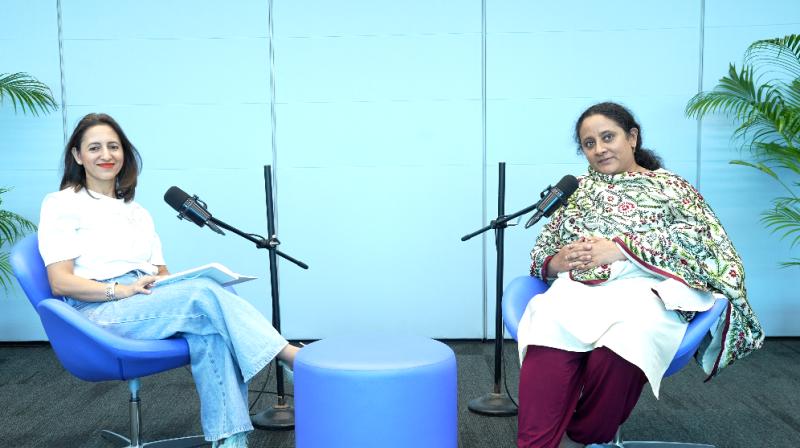
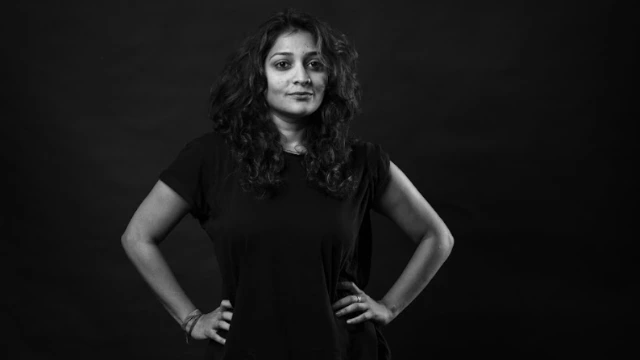
 Shweta Dalal and Manasi Narasimhan
In the latest episode of Marketing Manifest Stations, host Manasi Narsimhan, head - brand and communications, Accelerate Indian philanthropy and SCALE, sat down with Shweta Dalal, director – marketing, Nivea where Dalal highlighted the importance of blending qualitative and quantitative research, contextual consumer engagement, and digital data to uncover true consumer needs.
With nearly two decades in beauty, spanning L’Oréal, Hindustan Unilever, and now Nivea, Dalal’s journey sits at the intersection of consumer insighting, product innovation, and brand growth.
“It’s not just about listening to what consumers say, it’s about listening to what they don’t say. When you uncover that layer, that’s when the real joy of marketing begins,” Dalal shared.
Operating in a high-involvement category like skincare, Dalal acknowledged that consumers don’t always articulate their truth. This makes insight mining both complex and critical.
Her approach is rooted in combining qualitative depth with quantitative validation. “You can’t rely on just one method,” she explained. “You build hypotheses through conversations, ethnography, and real-world observation, and then validate them through data. What you see on the surface is never the full story. You have to ‘peel the onion’ because the real signals lie beneath what consumers explicitly tell you.”
She also highlighted the importance of cultural nuance. Words like ‘glow’ carry different meanings across languages and regions - nuances that, if leveraged well, can significantly deepen brand resonance, according to Dalal. She views digital not just as a channel, but as a diagnostic tool that captures unfiltered consumer behaviour.
“What a consumer searches at 2 a.m.—that’s the truth. There’s no filter, no desire to please anyone. It’s pure intent,” she asserted.
From reviews on Reddit threads to time spent on content and basket behaviour, digital signals are enabling the brand to move from assumptions to precision.
Crucially, Dalal noted that digital has redefined the marketing funnel itself. “It’s no longer a linear funnel of awareness to purchase. It’s a flywheel. Discovery, validation, purchase, repeat - they’re all happening simultaneously.”
Dalal mapped the evolution of skincare into a broader cultural and scientific shift. Today’s consumer is ingredient-literate, science-aware, and increasingly seeking personalised solutions. “Skincare today is a culture. When someone says K-beauty, you already associate it with glow. Ayurveda signals safety and natural efficacy. These are not just products, they’re entire worlds consumers buy into,” she noted.
In a category flooded with indie brands and digital-first disruptors, she is candid about the challenge: brand loyalty is at an all-time low. “Consumers today want to try everything. It’s less about loyalty and more about discovery.”
For a legacy brand like Nivea, the answer lies in consistency, credibility, and cultural relevance. While trust and product efficacy remain non-negotiables, staying embedded in contemporary culture is equally critical.
This thinking led to an unconventional move: showing up at Lollapalooza India. The campaign centred on self-expression, inviting consumers to co-create content and engage with the brand on their own terms. “If you force your way into their world, they’ll push you away. But if you become part of their culture, they engage with you,” she explained.
Elaborating on the century-old brand’s strategy to stay ahead of the curve, including participating in cultural events like Lollapalooza, Dalal said, “While it may not necessarily give us short-term sales, what we truly believe is it has helped us engage with the consumers at the right moment, and that for us, helps us bring a lasting impression. This will help us drive brand equity and also differentiate us versus everybody else in the market.”
Beyond consumers, she underscored that marketing is fundamentally about people - teams, partners, and collaborators.
Stressing the significance of empathy, active listening, and collaboration with teams to build trust and maintain brand relevance, she said, “No idea is a bad idea. The best ideas often come from the most unexpected places. Our job is to create an environment where people feel safe to share.”
Dalal’s advice to aspiring young marketers is to embrace discomfort. “For me, the joy of marketing is to be uncomfortable. If you're someone who can make peace with being uncomfortable, you're in the right field. It's this discomfort that drives you forward. So don’t be afraid of challenging the status quo.”
“That's the first thing I would say to anybody who's starting up a career anywhere, not just marketing,” she signed off.
Watch the entire conversation here:
Tune into the full conversation on Spotify: