
 Subscribe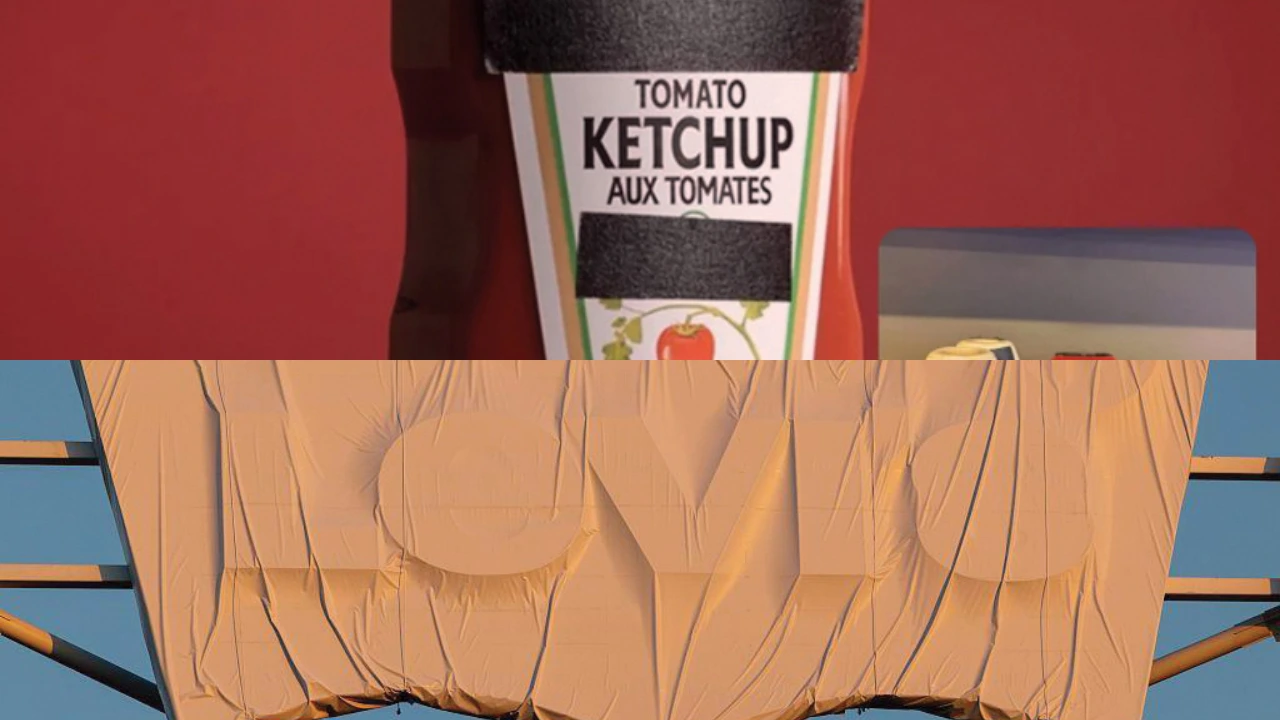
 Heinz and Levis' campaign
How did the official and ‘unofficial’ sponsors of the tournament reach out to its audience base? With help from our data partners, Boomlet, we tap into the numbers behind the World Cup.
The 2026 edition of the FIFA Men’s World Cup was the biggest ever, with an expansion from the usual 32-team edition to 48.
While there were several changes in the marketing of the tournament, one that stuck was how FIFA partnered with creators to allow them pitchside access.
Thirty creators were given credentials once reserved for the press, like training grounds, pitchside, mixed zones, and press conferences.
“This summer hasn’t just been a dream come true. It’s also been the biggest content moment we’ve seen on TikTok,” said Rollo Goldstaub, global head – sport, TikTok.
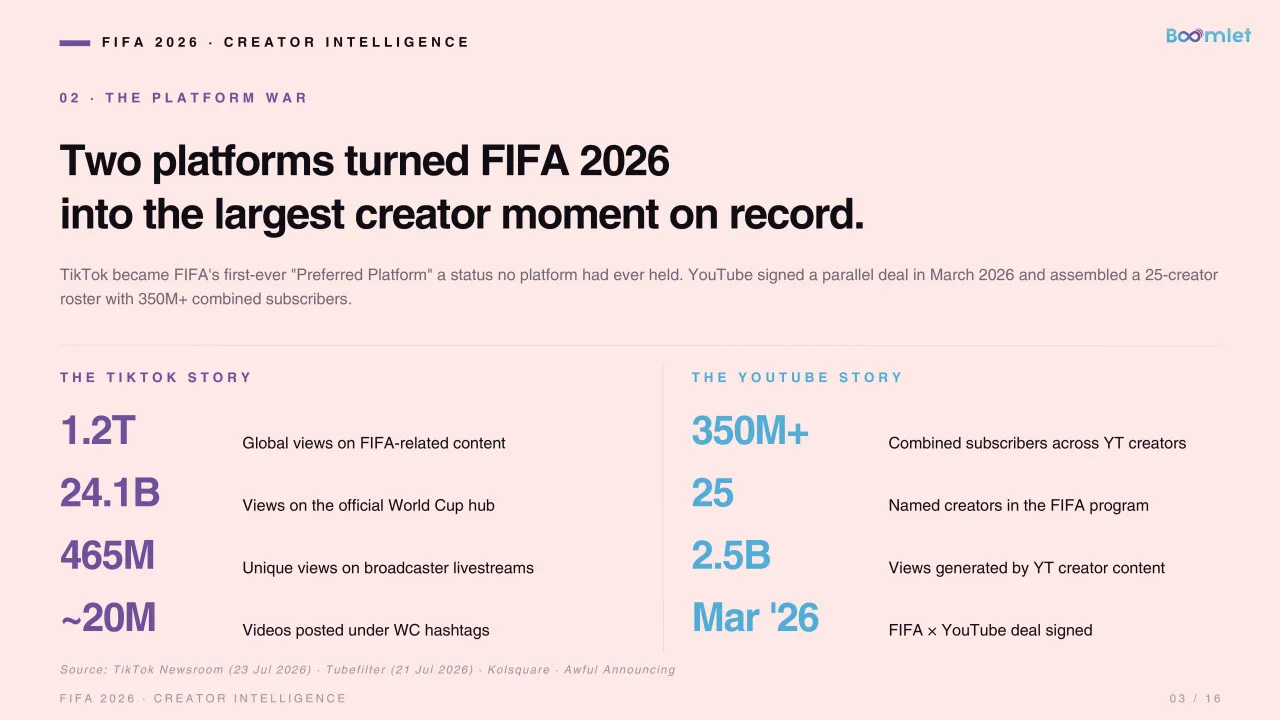
TikTok, which is banned from operating in India, became FIFA’s first-ever ‘Preferred Platform’ a status no platform had ever held. YouTube signed a parallel deal in March 2026 and assembled a 25-creator roster with more than 350 million combined subscribers.
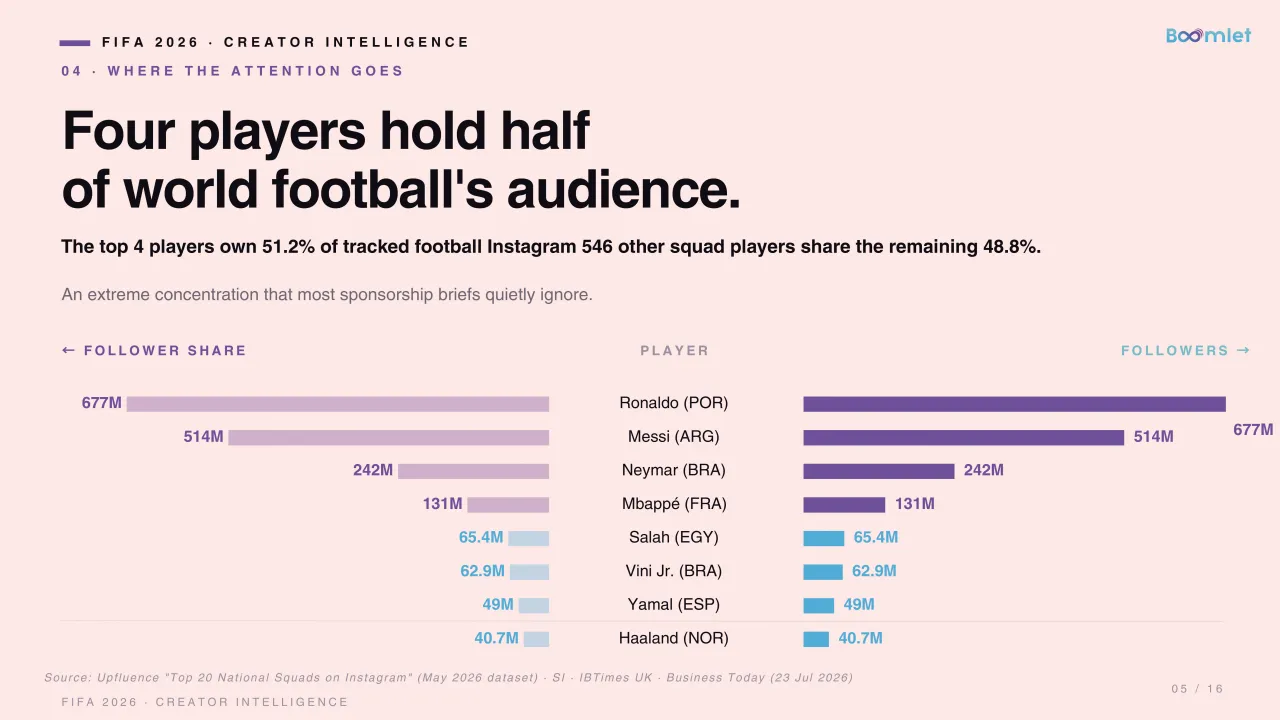
While creators’ content rose to prominence, four players hold half of world football’s audience on Instagram. Cristiano Ronaldo leads that list with 677 million followers, followed by Lionel Messi, Neymar Jr, and Kylian Mbappé. Mohamed Salah is fifth on the list.
Big performances in the tournament were rewarded with a gain in the follower count. Erling Haaland gained the most followers in absolute terms. Mexico’s 16-year-old Gilberto Mora saw the largest % jump, going from 1.1M to 7.7M. Lamine Yamal accelerated toward the Messi–Ronaldo stratosphere.
CreatorIQ tracked owned-media EMV (earned media value) across the first 21 days of the tournament. #FIFA and #WorldCup did the heavy lifting; player-name hashtags stacked on top, driven almost entirely by creator persona.
Per-campaign brand data
Unilever had its largest sports partnership in history as more than 35 brands from the FMCG major used a combination of athletes as well as macro, nano, and micro influencers to create content which ended up reaching more than 19,000 postal codes in India.
Nike’s ‘Rip The Script’ was engineered around one six-minute hero film. It had a further 185 ‘discrete content pieces’. Twelve teams were kitted by Nike, and it received 31 organic player Insta tags.
Visa, on the other hand, had a ‘tap in’ campaign trained on social-first storytelling.
Some of the most resonant activations of the tournament came from brands that never paid FIFA a rupee, turning the tournament’s own ‘Clean Stadium’ restrictions into raw material for creator content.
Levi’s was one of them. It had the naming rights for the stadium in Santa Clara, California. Since it couldn’t use its branding during the tournament, it hid it with a clever piece of innovation. But that piece got viral, as did Heinz’s ‘clean stadium hack’, which covered its bottle labels inside the press room by releasing a FIFA-friendly ketchup look.
This showed how some of the most resonant activations of the tournament came from brands that never paid FIFA a rupee, turning the tournament’s own ‘clean stadium’ restrictions into raw material for creator content.
Data partner: Boomlet