

 Subscribe
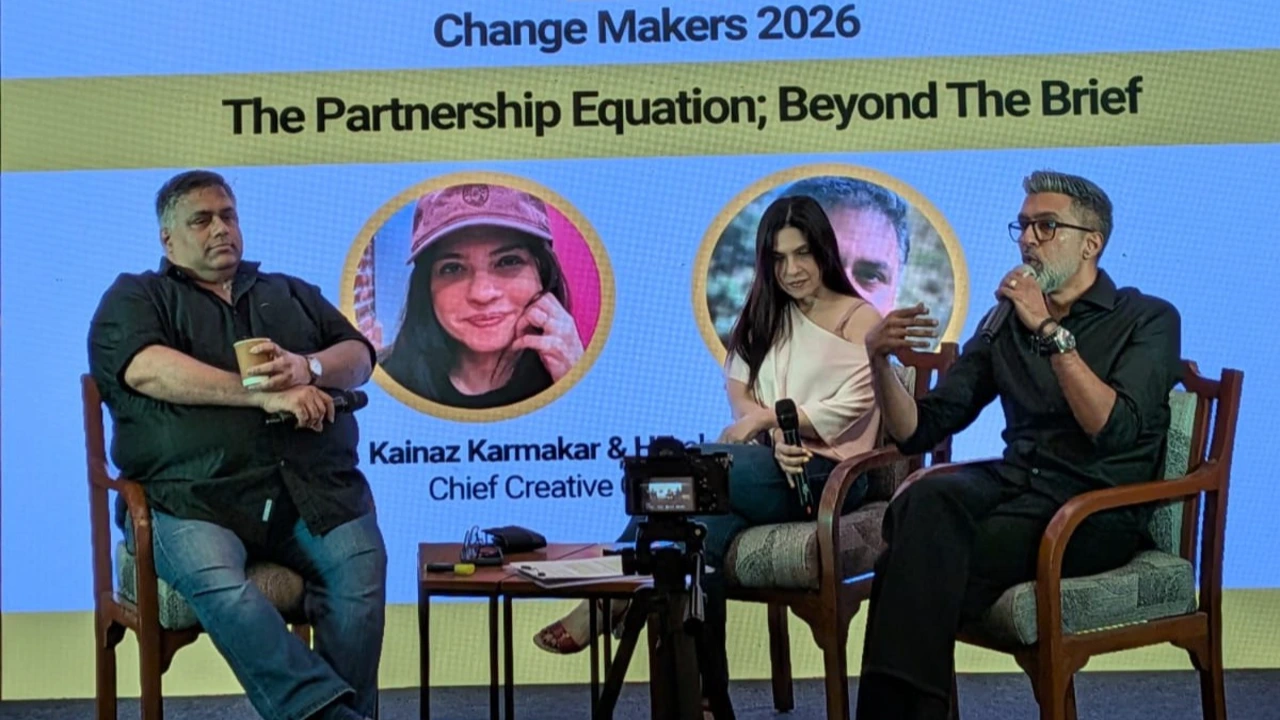
 From left: Harshad Rajadhyaksha, Kainaz Karmakar and Khalil Bachooali
A creative idea risks being diluted, reimagined or abandoned, at every stage. What determines whether it survives is not just the strength of the original thought, but the conviction of the people responsible for bringing it to life.
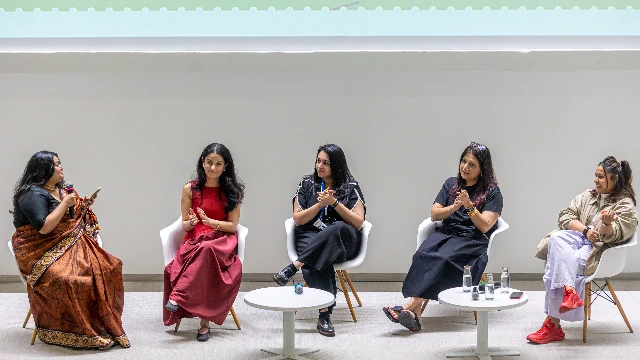
That was among the central themes of The Partnership Equation: Beyond the Brief, a fireside conversation between Kainaz Karmakar and Harshad Rajadhyaksha, chief creative officers, Ogilvy India, and Khalil Bachooali, producer, Offroad Films, at the Association of Advertising Producers (ASAP) Changemakers 2026 in Mumbai on November 25.
The conversation examined the evolving relationship between creative agencies and production houses, the continuing relevance of traditional production partners, and what makes a valuable collaborator in an industry where the demands on creativity, execution and effectiveness are constantly changing. But rather than approaching the relationship as a question of briefs, budgets and deliverables, the discussion repeatedly returned to something less tangible: trust.
For Karmakar, that ability to protect an idea begins with the person leading the creative function. Offering a three-part definition for the part, she stated: “Being a CCO, has three things you need to be. You need to be an artist, you need to be a therapist, and you need to be a gangster.”
She explained each role in the context of the pressures that come with leading creative teams. “You need to be an artist because, obviously, there is no idea without creativity. You need to know how to write the idea, and when the idea comes to you, you need to know how to evaluate it. You need to be a therapist because there is so much rejection in the industry that we work in. If you are not able to pull your team out of it, and motivate them again and again to come up with their best work, it's not going to happen.”
She then added, “You need to be a gangster because there are so many obstacles in the way of a great idea, and you really need to sometimes shoot them down.”
It was an apt starting point for a discussion about creative partnerships. The idea may originate within an agency, but its journey depends on several people who must believe in it enough to defend it, interpret it and take responsibility for the decisions that shape its final expression.
Protecting the idea
Rejection, said Rajadhyaksha, is often the result of several layers of client evaluation. “When you present your work, they don't intend to be that brutal. But there's a whole lineup of clients, sometimes ranging from six to nine people in a room by the time they come to this senior-most person who has a say on what is wrong with your work.”
Recalling an especially intense presentation, he spoke about a senior member of the client's team who later approached him in the corridor and asked how he dealt with such feedback.
“I told him: Everybody's got an opinion. Fifteen people just sit, observe your baby, and point out 300 ways in which it could have been a better-looking baby."
“However old we get in this business, we can temper our reactions to it, and we can make our defences better. Maybe in year one, we couldn't probably keep 15 of our campaigns getting bombed. Now we can probably just better the odds and do it for our people too, but we'll never give up."
Citing the analogy of Game of Thrones, he said, "Until your idea becomes like these fire-breathing dragons, you have to do whatever it takes to protect them.”
Karmakar recalled an early lesson in dealing with rejection from Aggie, (Agnello Dias), whom she and Rajadhyaksha worked with for nearly a decade. “I get a lot of my value system from him. There would be a lot of rejection, and he would always tell me, ‘Kainaz, what you write for the first time will not come out. The second time will not come out. But the sixth attempt might get released. So what do you want that to be?’
“That really changed my point of view on rejection. The way I started looking at it was, okay, this is going to come out, so it better be good, even if it's a sixth attempt.”
But there are also instances when an idea finds support in the first shot without having to go through repeated rounds of persuasion. Asked by Bachooali whether they had experienced a client immediately backing an idea, Karmakar recalled the Red Label Hindu-Muslim film, later titled Neighbours.
“It was a very difficult film to make because you can't make it now for sure. But even then it was a difficult film to make for Unilever. I remember we had presented six scripts to Sudhir Siddhapati, our client. At the end of it, he asked Harshad and me, ‘What do you want to make?’ We said this one. At that time, we had titled it Muslim Woman. He said, ‘Done, let's make it.’”
For Karmakar, the experience was proof that there are clients willing to back an agency's conviction. “To be really honest, there are some very good clients in the industry.”
Her own approach to getting an idea made, she said, can be considerably less restrained. “I think because I speak less, people often think that I am probably timid, but I'm actually extremely stubborn as a human being. I'm like a dog with a bone. If I see that this is a good idea and it has to be made, I make people's lives miserable in the agency."
“I keep texting the account management person: What happened to this? Has the cost been approved? Are we doing the recce? Is the director on board? You won't know it, but I can be annoying when I spot a good idea and want it to go through. I'll get on a call with the director. I'll get on a call with a client. I will do whatever it takes. But then I have to be that excited by it.”
Rajadhyaksha described Ogilvy's approach to clients as having just two categories: “At Ogilvy, the buckets were very simply only two: the ones you have converted to believe in your conviction and the ones yet to be converted. Those are the only two buckets because we never give up trying to convert those clients who don't see eye to eye.
“How do you convince a room where they are finally going to put the money that your vision, which is right now completely in space and air, is going to make a difference to them? The best way for them to do it is to see what kind of work you've done before. That becomes the cornerstone of conviction.”
“And the other ones who are not yet converted, you just have to keep at them like waves crashing against a rock. We have been on conversion missions where nothing has yielded results for close to five or six years. But in the sixth year or fourth year, something has given way, and that's become one of our best accounts. That's what the culture of Ogilvy has taught us: don't give up. One day they will be amongst your best friends,” Rajadhyaksha recalled.
The role of instinct and research
The speakers also discussed the pressure to create work that cuts through an increasingly crowded media environment.
Pointing to how the competition for consumer attention has changed since she and Rajadhyaksha began their careers, Karmakar said, “When we started off, television was the only thing. There was nothing. The internet was just coming in. So what was your competition? Your competition was every other ad that ran on TV. You're not competing with other ads anymore. You're competing with everything that the thumb can scroll, every cat video, every recipe video. You're competing with all of that for the consumer's attention."
“So you don't have an option but to be entertaining, to be salient, to have cut-through. Clients are also asking for that. Agencies are also asking for that. The real trick is the gap between intention and action. Are enough people putting their money where their intention is? I'm not 100% sure about that. That could definitely be more. But the intention to make great work is there because you don't have a choice. Nobody's going to watch you otherwise. There's so much to watch,” she added.
On the subject of research, Rajadhyaksha clarified that he was not opposed to it, but questioned whether conventional research settings always captured genuine consumer responses.
“Research is not a bad thing because it gives you a measure of having a third person's point of view or a finger on the pulse, which you may never know. But rather than go into a contained room with a screen, where you shove a microphone and a camera in somebody's face and ask 17 intelligent questions, that can sometimes be very alarming.
“Suddenly, somebody realises that they are being watched. They might not be comfortable saying the first thing that comes to mind because they think it might sound stupid. They say something they think is valid. So that is hardly a measure of getting the true answer of what consumers think."
He's not against research, he stressed. "What does it really feel like when people don't have any barriers suppressing what they want to say? When they are not compelled to face intelligent scrutiny, that's when research can work. It can be invaluable.”
He cited The Shower, a Unilever sustainability film on the responsible use of water, as an example of creative instinct prevailing despite unfavourable research findings. Released in 2018 or 2019, the film was shot in a desert in Rajasthan. Its premise was that when a shower opened, villagers rushed to fill their vessels rather than take a bath.
“We knew we had a powerful story. The client was Harman (Dhillon), who is very senior today. The methodology demanded that the film be researched. We kept telling them that this was something we believed in, but it went into research."
“We thought, okay, now we have to open up another reserve of energy to start this uphill climb again and convince them because this would be a great film. And the biggest supporter in that room was Harman. She went on record and convinced the whole room, including her teams, saying, 'Guys, I'm taking responsibility. Let's move without the research results. Let's keep it aside.’”
The duo recalled how the team had narrated the film to Harman over a speakerphone before production. And she loved it.
"That's a great example of how you don't let research override common sense. You believe in your gut,” emphasised Rajadhyaksha.
Trusting the director, finding new talent
The conversation also addressed the industry's preference for established directors, particularly on high-stakes campaigns. Rajadhyaksha acknowledged that A-listers had earned their reputations through consistent work.
“When you keep creating stuff which moves people, gets noticed and remains in people's memories time and again, obviously you are doing a few things right. So I don't think there's anything wrong if the client has the wherewithal or the budgets too. Sometimes there are extremely competitive landscapes for clients, and there are discussions even before the campaign is done that whatever we do, this is the highest-stakes thing we have done in the past three years. We have to go to the topmost names. So there's a sense of consensus and security.”
However, he said agencies also needed to widen their pool of collaborators. In other cases, the agency had chosen not to work with well-known directors whose interpretations were too far removed from the original thought.
The agency's relationship with a director, Karmakar said, also depends on knowing when to accept a different creative interpretation and when to hold on to the original idea.
“When our director partners want to change something in the film, add something or tweak something, they feel very easy telling us. Most of the time we accept it because what is on paper and what is in film, converting what is on paper to a film, is a very different thing. So we trust them in the process, and we usually accept it."
“But sometimes, if it is going to change the core of what you believe your idea is, and that is not okay with you, then I think it is better to say that upfront and work with somebody who shares your vision, because you have given birth to that baby.”
She made a larger point that creative partnerships need not always begin with an established director or a large campaign. Sometimes, the right opportunity is a smaller assignment that allows a production partner to demonstrate what they can bring to the table.
As she put it, “Work attracts work. You want somebody to work with you? Create the work that will make them come to you.”
When Ogilvy was working on a Colgate film series with director Juneston Mathana, the team recommended Amit Mishra for the project. He was entrusted with three films, including Raised by Swedes and The Boy Who Learned to Smile, a story involving Pratik Smita Patil and his relationship with his mother's legacy.
The films became some of the team's favourite pieces of work that year, according to Karmakar.
“He was not established, but we discovered in him someone who is so articulate. He really understands cinema and shoots beautifully. He's my discovery of 2026,” she stated.
The partnership, therefore, is not just about delivering what the brief demands. It is about understanding what the idea needs, knowing when to challenge it and having the conviction to protect it when necessary.
And in an industry increasingly shaped by technology, changing production models and an expanding pool of creative talent, that ability to collaborate meaningfully may be what distinguishes a valuable production partner from an interchangeable vendor.