
 Subscribe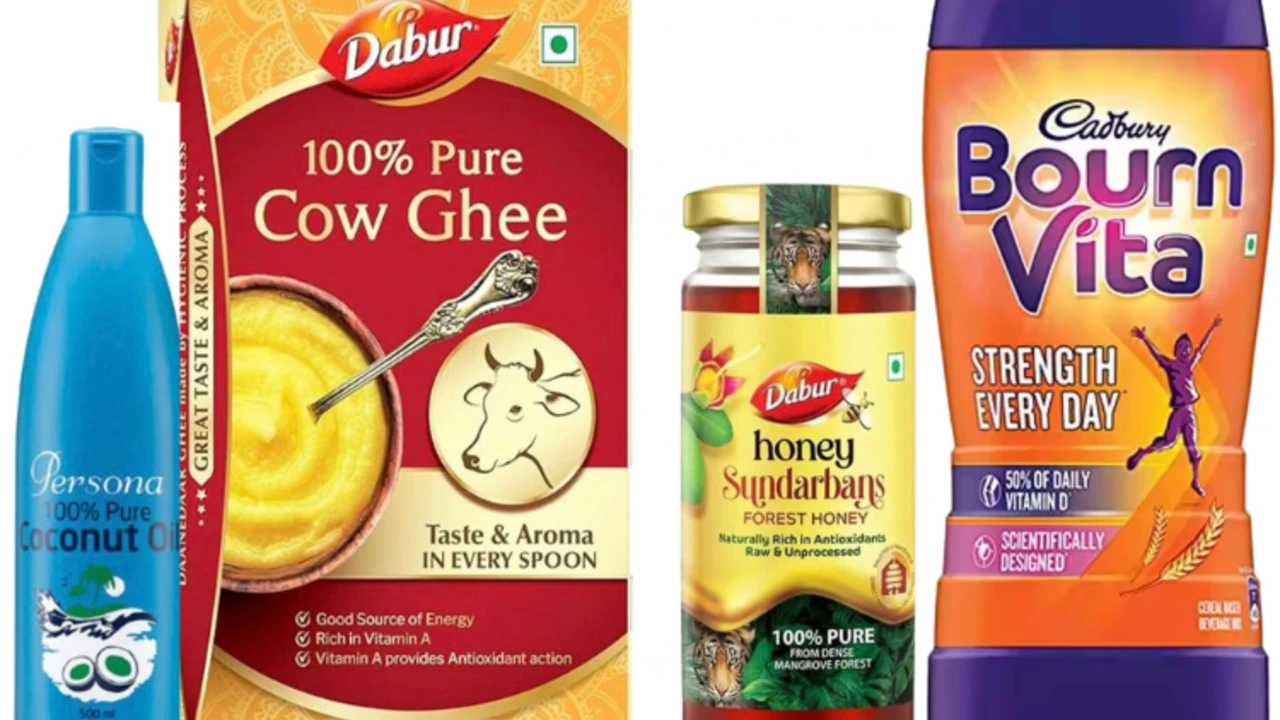
 India's misleading ads problem: 100% claim, 0% accountability?
Advertising is, by definition, persuasion. Brands simplify, dramatise and differentiate to win attention and, ultimately, a share of the consumer’s wallet. But somewhere between persuasive storytelling and factual representation lies a fine, critical line: the claim must not mislead the consumer.
Yet India continues to see established brands crossing, or appearing to cross, that line, often only to face regulatory scrutiny after their claims have already reached millions.
Just last month, FMCG major Dabur was directed by the Food Safety and Standards Authority of India (FSSAI) to stop selling food products carrying claims of ‘100% pure’, ‘100% natural’, ‘100% purity’ and ‘100% organic’. Mondelez India was asked to withdraw Bournvita labels and advertising flagged over misleading health and nutrient comparisons. Amway India removed ‘100%’ from its ‘100% Pure Coconut Oil’ packaging and promotions after FSSAI termed the claim misleading.
These are far from isolated cases. FSSAI reportedly issued more than 150 notices to food businesses over misleading advertisements, product claims and labelling violations in just the past month, with names including Nestlé India, PepsiCo, Coca-Cola India, Abbott India, Red Bull India, Danone India, Ferrero India and Kenvue.
Which brings us to an uncomfortable proposition: does Indian advertising effectively operate on an ‘innocent until pulled up’ model?
By the time a regulator, consumer body or court intervenes, has the marketing objective already been achieved?
The ‘claim first, substantiate later’ strategy
In the hyper-competitive battle for consumer mindshare, the rush to market often leaves compliance trailing in the dust. The traditional balance between creative ambition and legal caution appears to have tilted severely toward speed.
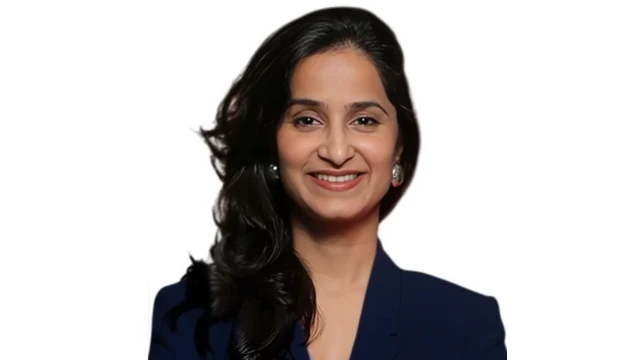
“We see an increasing number of brands driven by a ‘speed-first, compliance-later’ approach, especially in digital advertising,” said Manisha Kapoor, CEO and secretary general of the Advertising Standards Council of India (ASCI).
ASCI’s Annual Complaints Report 2025-26 found that 98% of the ads scrutinised needed some changes, highlighting the need for brands to check claims and comply with them much earlier in the advertising process. “Claims should be properly supported before they reach consumers, rather than being checked only after someone raises concerns,” noted Kapoor.
This pattern of launching first and fixing later suggests that legal teams are frequently relegated to damage control rather than acting as a check on creative overreach.
“I would not go so far as to say that ‘claim first, substantiate later’ is a formal marketing strategy, but there is certainly a commercial incentive for brands to take that risk,” stated Sonam Chandwani, managing partner, KS Legal & Associates.
She pointed out that once an advertisement is out, it has already done its job. Even if it is subsequently withdrawn, the brand has obtained visibility, consumer attention, and often sales.
“In my view, legal teams should have a real veto where a claim cannot be properly substantiated. The problem arises when legal is brought in after the creative and commercial teams have already decided what they want to say, and the lawyer is then expected to find a way of making it legally defensible,” said Chandwani.
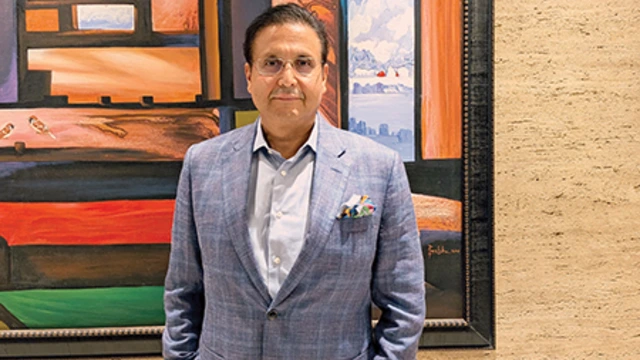
Harish Bijoor, business and brand-strategy specialist and founder of Harish Bijoor Consults Inc., offered a candid assessment of the industry’s mindset. “Brands in India have sadly not stuck to the straight path when making claims in advertising.”
He pinned the blame on advertisers’ habit of making unsubstantiated claims. “The idea is that you venture in adventurously with a line, and hope that nobody objects, and hope that you can get away with it for a long, long time. I do believe that attitude has led a whole host of marketers. This is totally wrong,” he stressed.
Even when internal checks exist, corporate self-interest often shapes how science and law are interpreted.
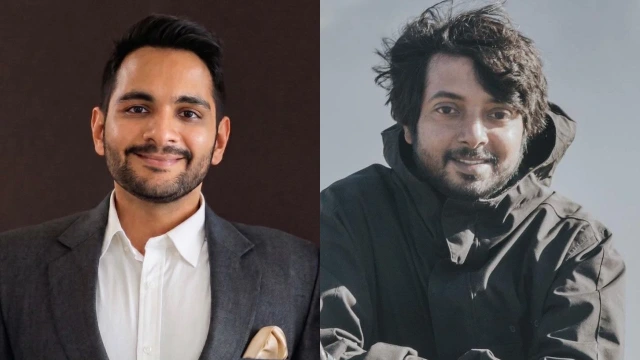
Revant Himatsingka, the consumer activist popularly known as Food Pharmer, pointed out that while there will always be a legal and compliance component, when one works for a company or a brand there is a vested interest: “Having a legal body also allows knowing the science and art of law, the intricacies—knowing what loopholes you have available to protect you ultimately against any kind of regulatory or consumer pushback. Historically, we’ve seen these teams not come in until the very end for damage control, but obviously their role becomes more important if things reach that level.”
Is the penalty just a cost of doing business?
If brands continuously test boundaries, it begs the question: are current penalties simply too small or too slow to deter bad behaviour?
“The penalty issue is important because deterrence works only when the consequences outweigh the commercial advantage of taking the risk,” Chandwani explained. “The Consumer Protection Act, 2019 gives the CCPA powers to act against misleading advertisements and impose penalties.”
However, she pointed out, the real question is whether enforcement is ‘fast and commercially significant enough.’
“If a campaign reaches millions of people today and the consequence comes much later, the brand may already have obtained the benefit. A penalty which is treated as a cost of doing business will not change behaviour.”
Bijoor agreed, stating that the lack of systemic fear allows brands to profit off questionable claims for extended periods. “The key issue in the country is that one could make a claim, and if asked to take the claim off, one could take it off, but you might have run it about six to eight months, if not two years or five years, with that line, and nothing wrong happens except maybe a penalty, which is not too big.”
The fear of undoing what one has done must be addressed and instilled in the marketer in India, he believes.
However, regulator figures present a more nuanced view of post-publication action.
Kapoor highlighted that advertisers do comply once called out, though she cautioned against relying solely on post-facto corrections. “Deterrence cannot be viewed only through the size or speed of a penalty. The larger concern is whether relying on action after an advertisement has appeared is sufficient to protect consumers.”
ASCI’s latest annual complaints data shows that 61% of ads formally reviewed were not contested and were promptly withdrawn or modified once flagged, while overall voluntary compliance stood at 86%. This indicates that advertisers do respond when concerns are raised, but it also reinforces the importance of preventing problematic advertising from reaching consumers in the first place, explained Kapoor.
From the consumer perspective, Himatsingka voiced that systemic speed is hindered by scale. “It’s not that the existing regulatory bodies don’t have eyes and ears and the ability to take charge immediately. Things do happen slowly at that level, unfortunately. And India is probably slower than globally,” he said.
He pointed out that it maybe ‘unrealistic’ to expect the regulatory body to be everywhere. “But because the media is paying attention to these kinds of things, it’s a good thing. It goes to show that we’re at this cusp where people expect and demand better,” he added.
Where does accountability sit?
The modern marketing ecosystem involving brand managers, creative agencies, celebrity endorsers and digital distribution networks has many checkpoints, yet questionable claims still make it through, and pinning down blame often turns into a game of passing the buck.
While accountability is increasingly shared across the advertising ecosystem, the advertiser is where the buck finally stops, according to Kapoor. “This is because the advertiser approves the creative, as well as the targeting and media placements. The brand has responsibility for the claims associated with its product, while agencies and endorsers also have responsibilities based on their role in developing or communicating the advertisement.”
Bijoor narrowed the internal blame directly to leadership: “Every brand has a custodian, and the first key custodian is the brand manager and the final custodian within an enterprise is the CEO of the organisation. I do believe these two entities are very important, because everything rests on the way they interpret and venture into the market with the claim.”
On the other hand, Chandwani maintained that secondary players cannot claim total immunity. “An advertising agency cannot knowingly create a misleading proposition and then say it was only following the client’s brief. Similarly, a celebrity or influencer should not assume that being paid to endorse something automatically absolves them of responsibility,” she stated.
The widening regulatory spotlight, evidenced by recent warnings from the FSSAI to endorsers over unverified health claims, signals a shift. Endorsers can no longer act as passive megaphones.
“Celebrities and influencers should undertake complete due diligence on the claims they endorse. This is also required by the Consumer Protection Act 2019,” stressed Kapoor. “In FY 2025-26, ASCI processed 1,609 advertisements for influencer violations, of which 97.3% required modification. The annual complaints report also identified the lack of due diligence on claims as a continuing concern.”
Echoing the sentiment, Himatsingka opined that self-preservation alone should drive endorsers to do their homework. “It’s also in the best interests of celebrities, if one looks at it from a ‘selfish lens,’ to do their due diligence to ensure that they’re not misleading the public.” The primary goal, of course, should be doing right by the consumer but they’re also doing endorsements for their own reputation. “They have influence, and therefore they need to be responsible and tactful with how they use their platform,” he voiced.
Chandwani highlighted that while ‘endorsers aren’t lab technicians,’ basic questioning is mandatory: “I do not think every celebrity can be expected to independently conduct scientific research into every product they endorse, but where a claim concerns health, disease, weight loss, efficacy or safety, there should at least be a basic obligation to ask for substantiation before making the representation.”
‘The brand gave me the script’ should not become a complete defence where the claim is obviously capable of verification, she underlined.
Finally, there is the digital delivery ecosystem itself - the ad-tech platforms that profit from spreading unverified claims at scale.
Noting that platforms also have an important role in creating effective checks around onboarding, verification, detection and removal, Kapoor said, “The scale and speed of digital advertising make platform-level responsibility increasingly important,”
The ASCI report additionally found that 97.3% of the ads scrutinised appeared on digital media, with 82% of these being sponsored ads on social media platforms, while Meta accounted for 79.84% of the digital violations recorded.
Chandwani asserted that targeted ad distribution changes the legal equation. “Meta, Google and similar platforms may not be responsible for verifying every factual assertion made by every advertiser, but once their systems are being used to target particular consumers and amplify paid content, it is reasonable to expect stronger safeguards, particularly for high risk sectors such as health, finance and food.”
Himatsingka capped it off plainly: “Once you have an endorsement, once you’ve agreed to display a particular ad or claim, then you’ve earned that responsibility. It’s not possible to agree to host something but then say that you’re not liable.”
Perhaps, then, the real accountability test is not whether a brand can defend a claim after it has been challenged, but whether it was prepared to substantiate it before it asked consumers to believe it.
Where that responsibility sits, and whether the advertising ecosystem is ready to accept it before the regulator comes knocking, is a larger conversation.
This article appears in the September issue of Manifest. To read the whole feature, purchase the issue by clicking here.