
 Subscribe

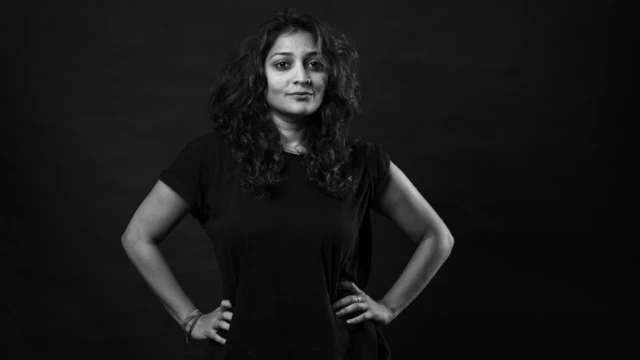
 Shagorika Heryani
We have spent the last twenty years worshipping at the altar of convenience. Tech founders built billion-dollar empires on a single, intoxicating promise: you will never have to wait or work for anything again.
Ten-minute grocery deliveries. Algorithmic matching. Agents that do the work for you.
And now AI has arrived to finish the job. It promises to eliminate the friction of thinking, writing, designing and choosing. Want a song? Generated in a minute. Need an image? Prompted in two. Want a brand strategy? An absolutely dull, flattened version, delivered in under five.
But there is another problem. We are not just making consumption and creation frictionless. We are making culture and taste easier to reproduce, and harder to distinguish.
We look alike, dress alike and eat in the same Airbnb-aesthetic cafés, with their sculptural lighting, raw concrete and ube lattes. We scroll through endless variations of the same look, voice and idea of desirability. We are becoming stereotypes of ourselves, reproducing the same taste as everyone else.
We were promised an era of total freedom. Instead, we got something much worse: the profound, soul-crushing boredom of flattened taste and culture, hyper-scaled by AI.
The response will not be a rejection of technology. Far from it. Most of us will happily hand over administrative drudgery and repetitive cognitive work to AI. Nobody wants to spend a Wednesday morning formatting a presentation.
My conviction is that the emerging counterculture will embrace what technology has spent years trying to eliminate: the detour, the imperfect result, the time it takes to get good at something, and the pleasure of being in a room with people who are interested in the same obscure thing you are.
When everything becomes easier to consume, the experience of doing becomes more valuable.
We are seeing the appeal of what I would call self-directed friction. Why are people paying to get their hands dirty in pottery studios, run 21 kilometres at dawn or spend hours hand-grinding coffee beans?
Self-directed friction is not masochism. The Ikea effect offers a clue. We tend to value things more when we have had a hand in making them. If you have ever built an Ikea shelf, you know the feeling: the slightly wonky result can inspire a degree of pride disproportionate to its aesthetic merit. You put something into it, and that changes your relationship with it.
Extend that feeling to experiences and skills. What happens when the reward is becoming good at something, developing your own taste, or having a reason to show up week after week alongside people who share your interests?
This is where the counterculture gets interesting. It has less to do with nostalgia for a pre-digital age than with three deeply human motivations: agency, identity and belonging.
Take Pint of View, which began in Bengaluru in 2025, inspired by the US-based Lectures on Tap. It turns bars into classrooms, hosting talks on subjects from financial wellness to astrophysics and carpet-collecting. Within a year, it has expanded to over a dozen cities. Much of this information is available online for free, yet people pay to spend a weekend afternoon thinking alongside others.
The product, if we must call it that, is curiosity shared with others for the pleasure of learning. And the more people return, the more that experience can become a community, complete with familiar faces, shared references and discovery.
The clearest global expression of this shift is the run-club boom. Strava’s Year in Sport data found that participation in running clubs grew 59% globally over two years and in 2025, the number of running clubs on the platform nearly quadrupled, reaching one million.
More than half of Gen Z runners surveyed said they joined run clubs to meet new people, while 58% said they had made new friends through one. People may arrive for fitness, but return for the friendships, the routine and the feeling of belonging to a group that would notice if they didn't turn up.
The clearest business case comes from an unlikely place: Games Workshop, a British maker of toy soldiers, whose model is built on participation. Its customers assemble and paint the models, learn rules, meet other players and return to stores that function as clubs. Games Workshop sells the pleasure of becoming competent at something, belonging to a shared universe, and spending time with people who care about the same strange, intricate world. In the year to May 2026 it reported record revenue and an operating margin of about 40 per cent.
In each case, the shift is from displaying an identity to practising one.
For brands, the opportunity is to stop treating all friction as bad friction. The better question is: Which moments in our category deserve convenience, and which deserve commitment?
A frictionless transaction can create a customer. A recurring, participatory experience can create a member, someone invested in the brand's world, its rituals and point of view.
Not every brand needs to launch a run club or open a café. But every brand should identify the practice it can credibly bring people together around. A food brand can host supper clubs exploring regional cuisines. A financial brand can create the unglamorous but meaningful ritual of people learning to manage money together.
The test is simple: Would people return if they were not being sold anything that evening?
If the answer is yes, the brand may have helped create something with a life beyond its marketing calendar: a practice people care about and a culture they help sustain.
The future will not belong only to the brands that make life effortless. It will belong to the brands that give people something worth returning to: a skill to develop, a room to enter, a ritual to share, and a version of themselves that cannot be generated in under five minutes.
The author is founder of Athina, a brand and cultural intelligence platform.