

 Subscribe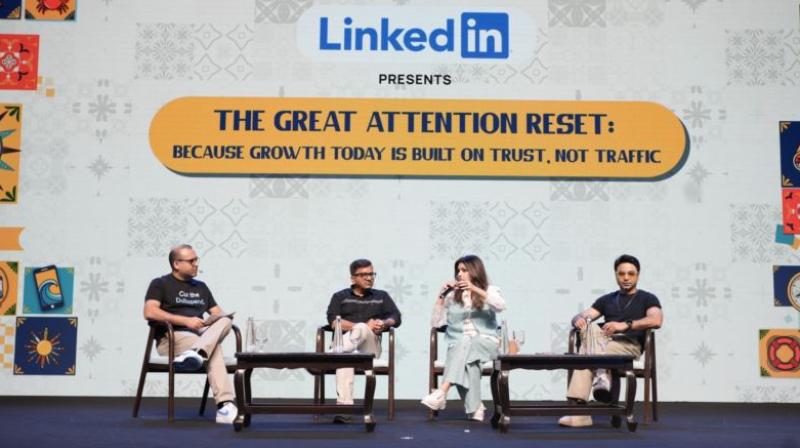
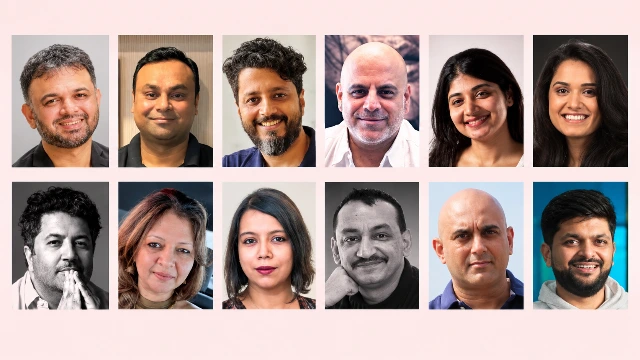
 From left to right: Devajit Roy, Punit Dharamsi, Tuhina Pandey, and Jahid Ahmed
The final day of the festival, kicked off with a session on, 'The client who also became the agency - when brand owners take creative into their own hands'. Moderated by Rohit Ohri, founder, Ohriginal, the panel comprised Raj Kamble, founder and CCO, Famous Innovations, Gaurav Ramdev - CMO - India and South Asia, Visa, Ajay Kakar, head – corporate branding, Adani Group, Chandan Mendiratta, chief brand officer, Zepto and Harsh Deep Chhabra, global head – media, Godrej Consumer Products.
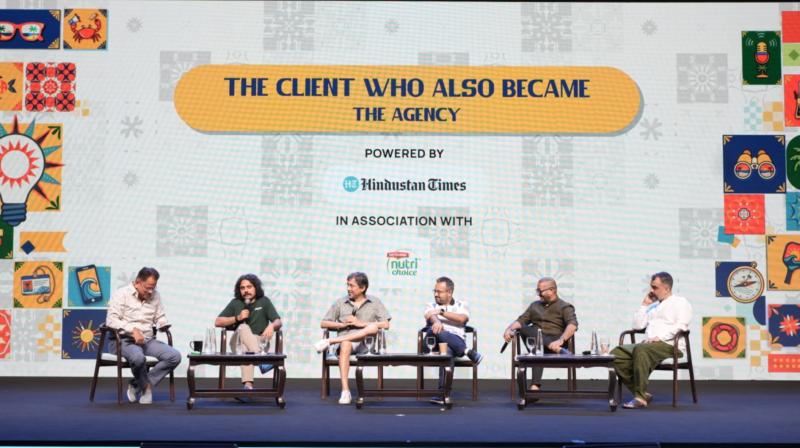 From left: Rohit Ohri, Chandan Mendiratta, Ajay Kakar, Gaurav Ramdev, Raj Kamble, and Harsh Deep Chhabra
On the evolving role of in-house teams, Chhabra said, “At Godrej Consumer Products, we scaled from being among the top 20 advertisers to one of India’s top four advertisers, while increasing campaigns from around 10 to nearly 30 a month. In-housing became critical because business data, growth KPIs and strategic insights are deeply integrated internally. For us, the focus is not on awards, but marketplace growth, brand visibility and shareholder value. Marketing efforts must stay closely aligned with business outcomes, sales impact and teams that understand the company’s growth priorities deeply.”
Speaking about why brands are increasingly building internal creative capabilities, Ramdev said, “In-housing today is driven by the need for speed, agility and cultural relevance. Brands now need to react to culture and consumer behaviour in real time, while balancing long-term strategic campaigns with fast-moving daily content. The challenge is maintaining consistency at scale while adapting locally and responding quickly to trends. The future operating model will ultimately be a hybrid between traditional agencies and agile in-house systems.”
Reflecting on the agency versus in-house debate, Kamble said, “The biggest difference between agencies and in-house teams is culture. Agencies bring outside perspective, debate, challenge and creative friction, while many brands build in-house teams primarily for cost efficiency and tighter control. Agencies lose relevance when they fail to stay deeply connected to a client’s daily business realities, but creative excellence thrives when brands and agencies work as true partners rather than competitors. Strong agency culture is built on disagreement, experimentation and bold thinking.”
Explaining Zepto’s approach to in-house creativity, Mendiratta shared, “Zepto’s in-house model is built for agility and real-time cultural relevance. Social media comments and consumer behaviour directly inspire campaigns within minutes because brand culture cannot be outsourced and needs internal ownership. We operate like a content creator brand, celebrating multiple cultural moments and micro-occasions to stay relevant daily. Through our in-house setup, we created nearly 30 films in around three and a half months while maintaining consistency across design, PR, communication and branding.”
Discussing the future relationship between agencies and brands, Kakar added, “The relationship between brands and agencies should function like a strong partnership built on mutual value. Brands move work in-house when agencies fail to meet expectations around speed, relevance or execution. The industry also needs to focus more on conversations and audience relevance rather than only impressions and reach. Agencies and brands must collaborate more transparently instead of operating competitively, because if agencies fail to evolve with new tools, technologies and business expectations, clients will eventually adopt those capabilities internally. The future depends on understanding each other’s roles better and building complementary strengths.”
The next session on 'The great attention reset: Because growth today is built on trust, not traffic'. The panellist Punit Dharamsi, executive vice president, association of Mutual Funds in India (AMFI), Tuhina Pandey – director, APAC communications and chief marketing officer, India and South Asia, IBM, Jahid Ahmed - senior vice president and head of digital, HDFC Bank. The session was moderated by Helen Girdlestone, head of managed agency development, ANZ & India, LinkedIn.
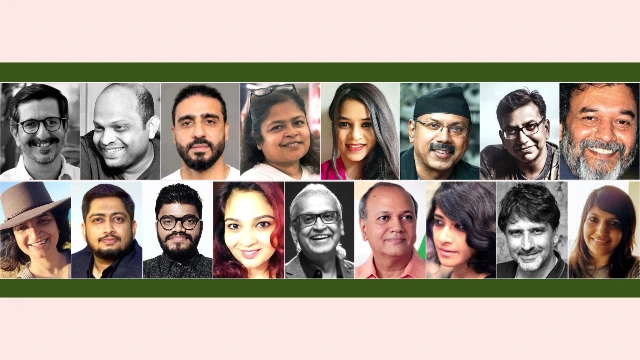
Next in line was the panel, 'From platform-defined to brand-aligned: A reset in measurement'. Aditi Mishra, chief executive officer, Lodestar, Dhiraj Gupta, co-founder and chief technology officer, mFilterIt, Neha Markanda, chief business Officer, ShareChat, Shahad Anand, business head, Mediakart. Ashish Sehgal, chief executive officer, Times TV Network and CGO. Times Media & Entertainment.
Speaking about AMFI’s communication strategy, Dharamsi said, “Financial communication works best during key life moments like first jobs, marriage, childbirth, retirement and tax planning. Our focus has been on consistent, contextual messaging that encourages young earners to begin SIPs early, while using explainers, calculators and relatable storytelling to simplify mutual funds. Continuous education and trust-building have helped improve investor confidence and reduce panic during volatile markets.”
On the changing nature of content and influence, Pandey added, “In today’s attention economy, relevance matters more than reach. Content needs to resonate differently across CMOs, CFOs, CEOs and other stakeholders, while AI is also changing how relevance is measured. Short-form content creates hooks, long-form content influences decisions, but ultimately the credibility of the storyteller is as important as the story itself.”
Discussing the future of financial marketing, Ahmed shared, “Attention today is built on trust, safety, relevance and frictionless experiences. Consumers are tuning out direct selling and responding better to educational and advisory-led communication, while creator-led education and first-party data are helping brands improve relevance and build long-term trust. Helping consumers make smarter financial decisions ultimately drives stronger business growth.”
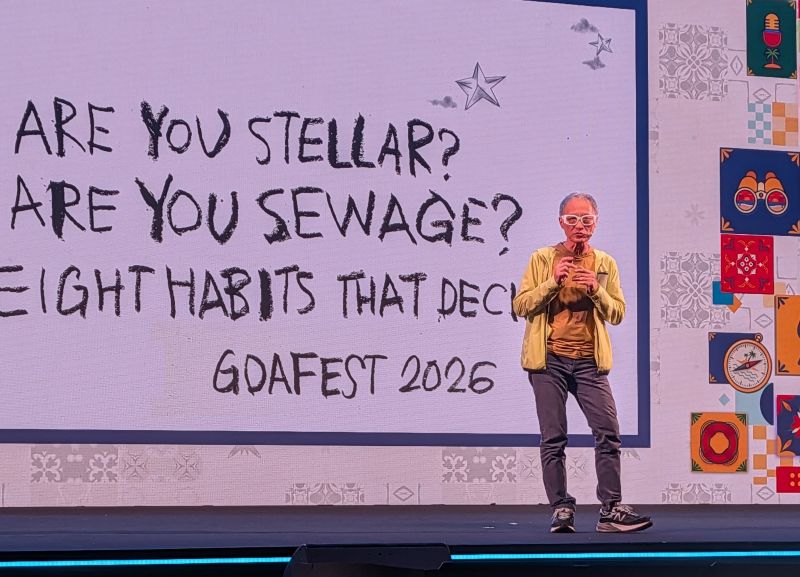
Eugene Cheong, creative director, and author, discussed the importance of courage in advertising, while praising how Indian advertising has gained prominence across Asia Pacific in the last decade.
He had a word of caution though.
“China and Japan are sort of struggling right now. The creative momentum India has can be lost to complacency, scale and AI disruption,” stated Cheong.
On the AI topic, Cheong labelled it the Ozempic of the advertising industry.
“Forrester estimates that the workforce has reduced by 8%, a drop of 40,000 people in a single year.”
Talking about processes at networks, Cheong, added, “Processes have made us forget who we are. We are dangerous people who can help make change. Mediocrity is suffocating the industry.”
He also listed eight habits for creatives to use in their daily lives: Courage, Idealism, Curiosity, Playfulness, Free-spiritedness, Intuition, Authenticity, and Persistence.