

 Subscribe
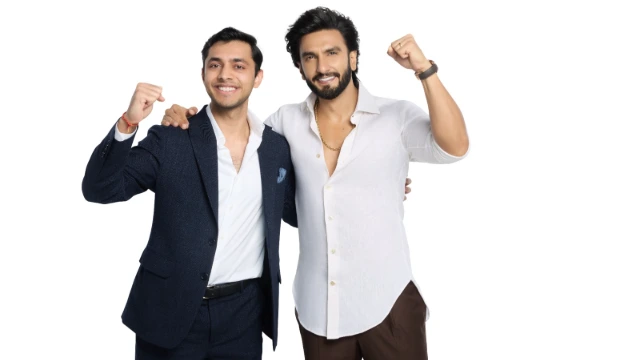
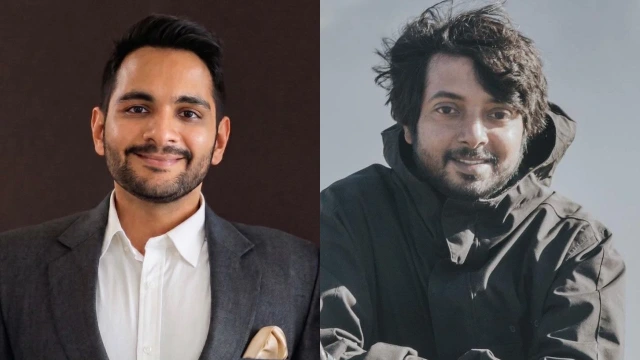
 Luke Dewars (left) and Rohit Dhamija
A familiar tension runs through the independent agency story: the very things that make a smaller shop attractive can become harder to preserve as the business grows. Intimacy with clients can give way to layers, creative freedom can meet tighter timelines, and founders who once touched every piece of work eventually have to build teams that can operate without them.
For Goodness of Design & Digital, that tension is now becoming more immediate. Founded by Rohit Dhamija in 2019, the agency began with branding and packaging before expanding into digital communication, advertising, and content production. Luke Dewars later joined as co-founder, bringing a digital advertising background to Dhamija's more traditional advertising and design experience.
The two describe the agency as a bridge between traditional and digital advertising. But the more interesting question is what happens when that bridge has to carry bigger clients, faster timelines, AI-enabled production and a growing team. At Goodness, the answer seems to begin with people.
Manifest spoke with Rohit Dhamija, founder, CEO and creative director, Goodness of Design & Digital, and Luke Dewars, co-founder and CCO, Goodness of Design & Digital, on the agency's evolution, independent agency culture, creative judgement, AI and its next phase of growth.
Building the bridge
For Dhamija, the agency's starting point was a gap he saw between traditional advertising and what was happening digitally.
"From a business point of view and the creative side point of view, we felt that there is a gap between what is happening digitally and what is happening on the traditional side of advertising, which will be ATL, BTL," Dhamija said. "So I think, as I always say, we position ourselves as the bridge between the two."
That combination was also reflected in the founders themselves. "Me being from a very traditional way of advertising, and then Luke being not only from the traditional advertising background but also working with ScoopWhoop for so long, gave him a digital edge," Dhamija added.
Dewars had already worked with Dhamija before joining the agency. "Rohit was my boss for many years, and so I learned a lot with him. I actually got my first set of awards through him," he expressed.
Their early thinking was also less about chasing the biggest possible accounts and more about finding brands that could benefit from a smaller agency's involvement.
"We have the opportunity here as a smaller agency not to just scale with the idea of getting the biggest brand, but to get smaller brands that don't require a network agency," Dewars shared. "There's an entire market there that's looking for a good agency."
That intimacy, he argued, can change the nature of the relationship. Dewars said, "It's not very often that you get one of your co-founders to sit with you three nights in a row and speak about how they want this new logo, the architecture that he's made to filter through all of the touchpoints that they have."
People are at the heart of the agency
Ask Dhamija what he sees as the advantage of being independent, and his answer isn't speed, flexibility or fewer layers. It's people.
"Work-life balance is important, which leads to a better state of mind, better work, and I think it starts from there," he said.
Dhamija is careful not to frame the observation as a criticism of other agencies. Instead, it is about the culture he wanted to create himself.
"So in the end, it ends up with people. How you treat people makes all the difference, at least from my point of view," Dhamija added.
Dewars sees the same thing from inside the team. "It's great to go to an agency where you see a bunch of people that really want to work there," he said.
There is also a willingness to challenge the founders. "We aren't really the smartest in the team. We are just the oldest," Dewars expressed. "A lot of our team is straightforward.”
For him, that bluntness is part of what makes the agency's working culture useful. "There's going to be a very honest answer at the end of your meeting."
Fewer options, more conviction
The agency works on the philosophy of ‘not sharing options’.
"If we don't have two good ideas, we will not have two good ideas. If we have one good idea, we will take one good idea. I am not in the business of options," Dhamija voiced.
Dhamija believes it is a simple proposition, but one that runs against a common agency habit of presenting multiple routes. "Why do I need to work on five ideas if I know this idea will work?"
From packaging to brand worlds
For an agency that began with branding and packaging, the work remains an important window into how Goodness thinks. Dhamija points to Aurumveda as a project that particularly reflects his approach to design.
The brief was straightforward on paper: packaging for an Aurumveda brand. But a conversation with the founder, Dr Anam Aftab, changed how Dhamija approached it.
Aurum, he explained, means gold and comes from Aurumveda, with gold serving as the medium through which the product enters the body. But it was the founder's story that shifted the creative thinking.
"Aftab started this brand because somebody in her family wasn't feeling well, and the love for her, for that person, made her get into Aurumveda. And she has 18 years of experience dealing with this topic. She started learning, researching and eventually started the brand."
That conversation changed the brief for Dhamija. "Everything, whatever I had made in terms of my design thought, everything went out of the window, and I had only one idea."
The idea was to make the packaging feel less like packaging.
"The idea was, it's not a bottle, it is a book," he says. "It's basically, it's a little book. It's her 18 years of knowledge which has gone into that, into that brand."
The packaging opens like a book, with the first page functioning as a dedication before revealing the bottle inside. For Dhamija, it was a way of connecting the physical design back to the founder's journey.
"I felt it was a nice way of closing the loop in her journey, you know, from being a teacher to becoming a doctor to being an entrepreneur or a founder."
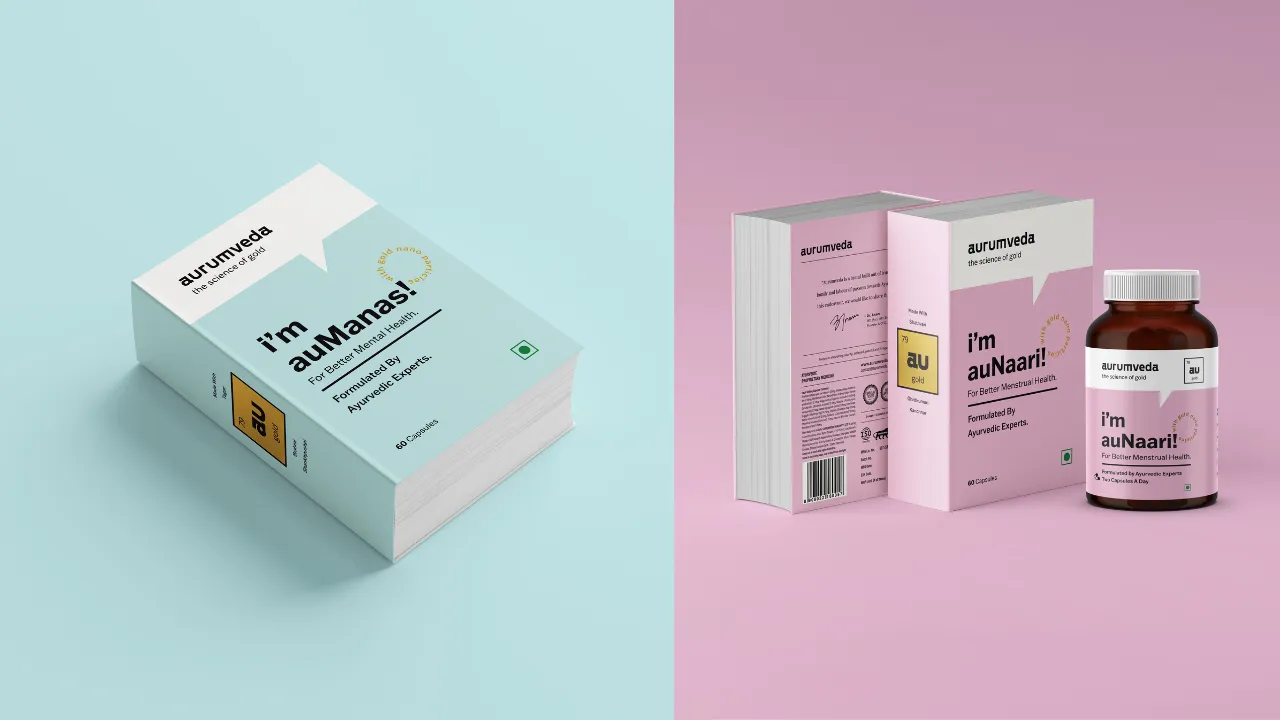
Work for Aurumveda
The same emphasis on the relationship between the brief, the client and the idea comes through in the agency's work for Brij, which both founders identify as one of the projects that best represents Goodness.
"One major factor of us being successful was the faith of the founder in us, letting us do what they hired us for," Dhamija expressed. "Once you have that synergy, a lot of things, you can find solutions to. But if you're on a different page, that solution will never be aligned."
For Dewars, Brij was also unusual because of how closely the founders were involved in the brief. "There were a lot of times when I would get my brief not from anyone on the agency side, it was Rohit and the founder," he said.
That involvement gave Dhamija the space to develop what Dewars describes as a dynamic architecture for the brand's identity. "The product is so unusual," he shared, adding that the agency found itself working on something quite different from the more conventional consumer brands it had previously encountered.


Work for Brij
Bang offered another example of the same approach. Dewars recalls that there wasn't necessarily a formal written brief at the beginning, but there was enough clarity between the client and agency about what needed to be done.
"Rohit was clear about what he wanted to do. Only went with one option, and the client immediately liked it because they were so clear between each other about what they wanted."
That feeds into one of Dhamija's more straightforward beliefs about creative presentations.
"If we don't have two good ideas, we will not take two good ideas. If we have one good idea, we will take one good idea," he shared. "I am not in the business of options."
The principle is less about making a virtue of having fewer routes and more about the confidence to commit to an idea when the agency believes it works.


Work for Nourish Organics
Bigger clients, faster timelines
Working with larger clients inevitably changes the pressure. Dhamija pointed to the agency's experience with Godrej as an example of how the team adapted rather than simply worked longer.
"We had seven days to work with them for q-commerce. We were taking those seven days to do it. As we learned, in one and a half months, we were finishing the same work in two days with better quality output," he said.
For Dewars, the challenge is not speed by itself. "The idea is that while you have the pace, you shouldn't lose the quality,” he added.
AI is increasingly part of that equation because it can compress parts of the production process and give teams more time to evaluate the work itself.
"We're able to save a lot more time to actually judge the work," Dewars expressed. "Even though the pressure with the larger clients has actually gone up, I think we're still getting the space to look at whether the work is really good or not."
AI as an aid, not an author
Neither founder frames AI as a replacement for creative thinking.
Dewars recalls a senior creative director telling him that work which once took nights could now be prepared in minutes. "He's like, 'I can go and chill with my son,'" he shared.
But the bigger shift, for Dewars, is understanding what AI should and should not be asked to do.
"If one relies on AI at this time of evolution to give an original thought, they are doing it the wrong way," he remarked. "At the same time, if you are looking at AI as only a research engine, you are doing it the wrong way."
The useful middle ground is treating it as an aid.
Dhamija is even more direct when it comes to his views on AI: "I strongly feel AI should be used as a tool. In the end, it comes back to people, people, people.”
For Dhamija, the biggest benefit may simply be time. "If I have a presentation tomorrow, I may not have to burn the midnight oil. It is my thought; I just need to put it right, and after the presentation, then I get into detailing."
From agency 2.0 to agency 3.0
The next challenge is not simply acquiring more clients. It is building an agency that can function beyond its founders.
Dewar describes conversations with Dhamija around what they call the ‘hybrid individual’: people who retain a core discipline but understand enough of the wider process to contribute across it.
"Our team knows how to look at what the end product is meant to be," he said. "Whether you are a junior writer or not, you aren't sitting outside of a shoot. You are very much within it."
The ambition is broader than that. "We do want to make sure that in another four to five years, people believe that if they want to learn anything to do with the field of communication, we are the people to go to,” Dhamija expressed.
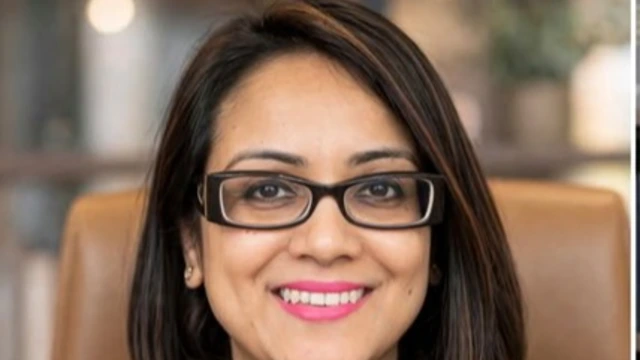
The agency's recent appointment of Vishakha Khattri as business head also points to that next stage, with her mandate covering business growth, client partnerships and expansion.
For Dhamija, however, the end goal remains less about scale for its own sake.
"I would like people to know us for just being a good place," he says. "You should enjoy the space you are in. You shouldn't regret it."
Dewars finishes the thought: "Good work comes to good places."