

 Subscribe
 Bo Beiskjaer
Could you tell us a bit about UNICEF’s journey with the IAA India Chapter? How was this partnership conceived?
The partnership began with a simple but powerful question: if advertising shapes what society sees as normal, could it also help shape a more equal and inclusive future for children?
Around 2019, UNICEF started engaging with leaders from the advertising and marketing industry on the issue of gender stereotyping. We had long understood that the messages children see every day influence their aspirations, attitudes and beliefs. What we needed was an industry partner that shared our conviction that advertising could be a force for positive social change. We found that partner in the IAA India Chapter.
What is remarkable is that the partnership did not begin as a traditional development collaboration. It started with conversations, curiosity and a shared willingness to challenge deeply entrenched norms. UNICEF commissioned a landmark study on gender bias in Indian advertising with the Geena Davis Institute, which gave the industry something valuable: evidence. The findings showed how often women and girls were being portrayed through limiting stereotypes and how these representations could shape social expectations over time.
What happened next was particularly inspiring. Rather than treating the findings as criticism, industry leaders embraced them as an opportunity for change and that was thanks to IAA. The advertising community came together to co-create what eventually became the Voice of Change movement, an initiative that encourages more equitable and empowering portrayals of women and girls in media and advertising.
One example that stays with me is the growing recognition among advertising leaders that a 30-second commercial can have an impact far beyond selling a product. It can influence how a young girl sees her future, what careers she believes are possible for her, or how a young boy understands gender roles. When industry leaders begin to see themselves not only as marketers, but also as storytellers who shape culture, real transformation becomes possible.
Today, we are seeing conversations on gender representation move from the margins to boardrooms, creative agencies, classrooms and industry forums. We are also seeing stronger engagement with bodies such as the Advertising Standards Council of India and wider industry networks. For UNICEF, that is the true success of this partnership. It is not just about changing advertisements. It is about influencing the ecosystem that creates them.
At its heart, the UNICEF-IAA journey is a reminder that when evidence, industry leadership and a shared commitment to children’s rights come together, it is possible to shift social norms at scale. The most rewarding aspect is that what began as a partnership has evolved into an industry-owned movement, creating the conditions for lasting change well beyond any single campaign.
The Midline Study shows that the needle has moved, but there is still a long way to go. Where do you think the advertising industry is still falling short when representing women and girls?
The encouraging finding from the study is that change is possible. We are seeing more women portrayed as decision-makers, professionals and individuals with agency. The industry deserves credit for embracing the evidence and beginning to challenge longstanding stereotypes. However, the study also reminds us that meaningful change is a journey, not a destination.
Where the industry and all of us have miles to go, is not necessarily in visibility, but in the quality and diversity of representation. Women and girls are appearing more frequently in advertising, but they are still often portrayed within relatively narrow boundaries. We continue to see an overemphasis on traditional caregiving roles, beauty standards, or portrayals that do not fully reflect the diversity of women’s experiences, aspirations and leadership in today’s India.
For adolescent girls in particular, representation matters enormously. Advertising helps shape perceptions of who belongs where and who can dream what dream. When girls repeatedly see themselves depicted in limited roles, it can subtly reinforce limitations on their own ambitions. Conversely, when they see women as scientists, entrepreneurs, athletes, innovators or leaders, it expands what feels possible.
Another area where there is room for growth is moving beyond individual advertisements to a more consistent shift in storytelling. A single progressive campaign is impactful, but lasting change happens when more equitable representation becomes embedded in creative processes, casting decisions, brand strategies and industry culture. Audiences are increasingly expecting authenticity, and they are quick to recognise when representation feels superficial rather than meaningful.
Importantly, this conversation is not only about women. It is about the social norms that shape opportunities for girls and boys alike. Advertising has tremendous power to challenge outdated notions of gender and promote healthier, more equal relationships. When the industry embraces that responsibility, its influence extends far beyond the marketplace and into society itself.
What gives me optimism is that we are no longer having a conversation about whether representation matters. The industry has accepted that it does. The conversation now is about how to deepen and sustain that progress. That is a very important shift, and one that gives us confidence for the future.
Much of the conversation around representation tends to focus on what appears in advertising. How important is it to look at who is making the decisions across agencies and brands when trying to change representation?
Representation in advertising is often judged by what audiences see on their screens, but meaningful and sustainable change begins much earlier, in the rooms where creative, marketing and investment decisions are made. If we want to change the stories being told, we also need to look at who is telling them.
Diverse leadership and decision-making teams bring different lived experiences, perspectives and insights. When women and other underrepresented voices are present in creative, strategic and leadership roles, it becomes easier to challenge stereotypes, identify unconscious bias and develop more authentic portrayals that resonate with a broader audience.
The impact extends beyond individual campaigns. Research and industry experience consistently show that when leadership teams are more diverse, organisations are more likely to spot emerging social trends, understand changing audience expectations and create content that reflects the realities of modern society. Diverse teams are often better positioned to recognise blind spots that homogeneous groups may overlook.
At UNICEF, we see representation as both an outcome and a process. It is important that girls and women are portrayed in ways that reflect their aspirations, agency and potential. But it is equally important that the systems creating those portrayals are inclusive. If leadership teams, creative departments and marketing functions do not reflect the diversity of the audiences they serve, stereotypes can be unintentionally reinforced, even when intentions are positive.
This is why initiatives like Voice of Change are so important. They encourage the industry not only to examine the content being produced, but also to reflect on the cultures, leadership structures and decision-making processes that shape that content. Through our partnership with IAA, we have seen senior industry leaders champion this agenda and create space for conversations about both representation on screen and representation behind the scenes.
We need more equitable representation in the advertisements people see every day, and more diverse voices helping shape those advertisements from the outset. When the decision-makers around the table are diverse, the stories that emerge are often richer, more authentic and more capable of driving positive social change.
The study gives the industry data to measure progress, but changing representation ultimately requires changes in creative thinking. What is one assumption or creative habit that you would most like the advertising industry to unlearn?
If there is one assumption I would like the advertising industry to unlearn, it is the belief that stereotypes are what sell. For decades, many creative decisions have been guided by the idea that audiences are most comfortable with familiar gender roles and traditional portrayals. But the evidence increasingly tells us a different story.
Consumers today, especially young people, expect authenticity. They want to see the real world reflected in the stories they engage with. Yet advertising sometimes falls back on women as caregivers, men as decision-makers, girls concerned with appearance, boys associated with leadership or adventure. These portrayals may seem harmless in isolation, but repeated millions of times, they reinforce narrow expectations about who children can be and what they can aspire to.
The creative habit I would most like to see challenged is asking, ‘What has worked before?’ rather than ‘What future are we helping create?’ Great advertising has always had the power to shape culture, not just reflect it. The most memorable campaigns are often those that challenge conventions rather than repeat them.
One of the encouraging findings from our work with the industry is that change does not require sacrificing creativity or commercial success. In fact, some of the most compelling campaigns today are those that portray women, men, girls and boys in more nuanced, authentic and aspirational ways. They resonate because they reflect the complexity of real lives.
Ultimately, the opportunity for the industry is to move from representation as a compliance issue to representation as a creative advantage. Every advertisement is a story, and every story contributes to how a generation sees itself and its possibilities. If we can unlearn the idea that stereotypes are necessary for effectiveness, we open the door to far richer, more innovative and more impactful storytelling.
Advertising has become much more conscious of diversity and inclusion, but there is also a risk that representation becomes a box to tick rather than a genuine creative or cultural shift. How do we distinguish between the two? Or would you be okay with the former too, given that it helps create some conversation?
I think we need to be careful not to let the perfect become the enemy of the good. Sometimes change begins because organisations feel external pressure or because diversity and inclusion become business expectations. That may initially look like box-ticking. But the more important question is whether it stops there.
Representation becomes performative when diversity is only visible on the surface. For example, when an advertisement includes a diverse cast but continues to rely on stereotypes, excludes diverse voices from the creative process, or treats inclusion as a one-off campaign rather than a sustained commitment. In those cases, representation risks becoming symbolic rather than meaningful.
By contrast, genuine change is visible when inclusion influences the story itself. Are women shown as decision-makers rather than only caregivers? Are girls portrayed as leaders, innovators and athletes? Are fathers represented as active caregivers? Are characters from different backgrounds depicted with agency and authenticity rather than as token additions?
At UNICEF, we encourage looking beyond who is present in an advertisement and asking a deeper question: how are they being portrayed? Representation is not simply about visibility. It is about dignity, agency and the messages that audiences, especially children and adolescents, take away about what is possible for them.
That said, I would not dismiss all efforts that begin as compliance or box-ticking. In many industries, awareness often precedes conviction. Sometimes the first step is taken because there is public scrutiny, consumer demand or industry expectation. But as organisations start measuring impact, listening to audiences and seeing the value of more inclusive storytelling, that can evolve into genuine culture change.
The Voice of Change journey has shown us that progress often happens in stages. Organisations may begin by questioning one stereotype or reviewing one campaign. Over time, that can lead to broader conversations about creative processes, leadership, organisational culture and societal impact. What matters is whether there is a willingness to learn, improve and move beyond tokenism.
Ultimately, the benchmark is simple: if representation can be removed without changing the story, it may be tokenistic. If diverse perspectives are so deeply embedded that they shape the narrative, the characters and the values being communicated, then we are seeing real progress. And that is where advertising moves from merely reflecting society to helping shape a more equitable one.
Through the roadshows and roundtables, what is the one message you would drive home for brands and agencies?
Every piece of communication shapes a child’s understanding of what is possible. Advertising does not just sell products. It sells ideas, norms, aspirations and expectations.
The conversation through these roundtables and roadshows is so critical. Children and adolescents are exposed to thousands of messages through advertising, entertainment and digital media. The stories they see influence how they perceive themselves, their opportunities and their roles in society. When girls consistently see themselves portrayed in limited or stereotypical ways, it can narrow aspirations. Conversely, when they see women as leaders, entrepreneurs, scientists, athletes or decision-makers, it can expand what they believe is possible for themselves.
What makes brands and agencies uniquely important is their scale and reach. Few institutions have the ability to influence social norms at the speed and scale that the communications industry can. A single campaign can reach millions of people and help normalise more equitable behaviours and attitudes. UNICEF’s partnership with IAA is built on this very premise: that the advertising and marketing industry is not just a mirror of society but can be a powerful catalyst for positive change.
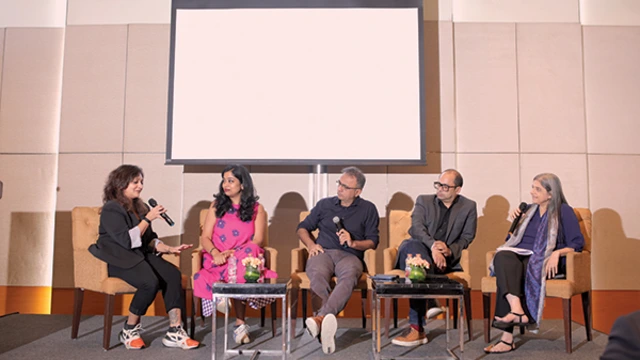
The roadshows and roundtables are critical because they move the conversation from awareness to action. They create spaces where marketers, agencies, content creators and business leaders can engage with evidence, reflect on existing practices and learn from one another. They also help build collective ownership of the challenge and the solution. Through initiatives such as Voice of Change, we have seen that lasting progress is most powerful when it is championed by the industry itself rather than imposed from outside.