
 Subscribe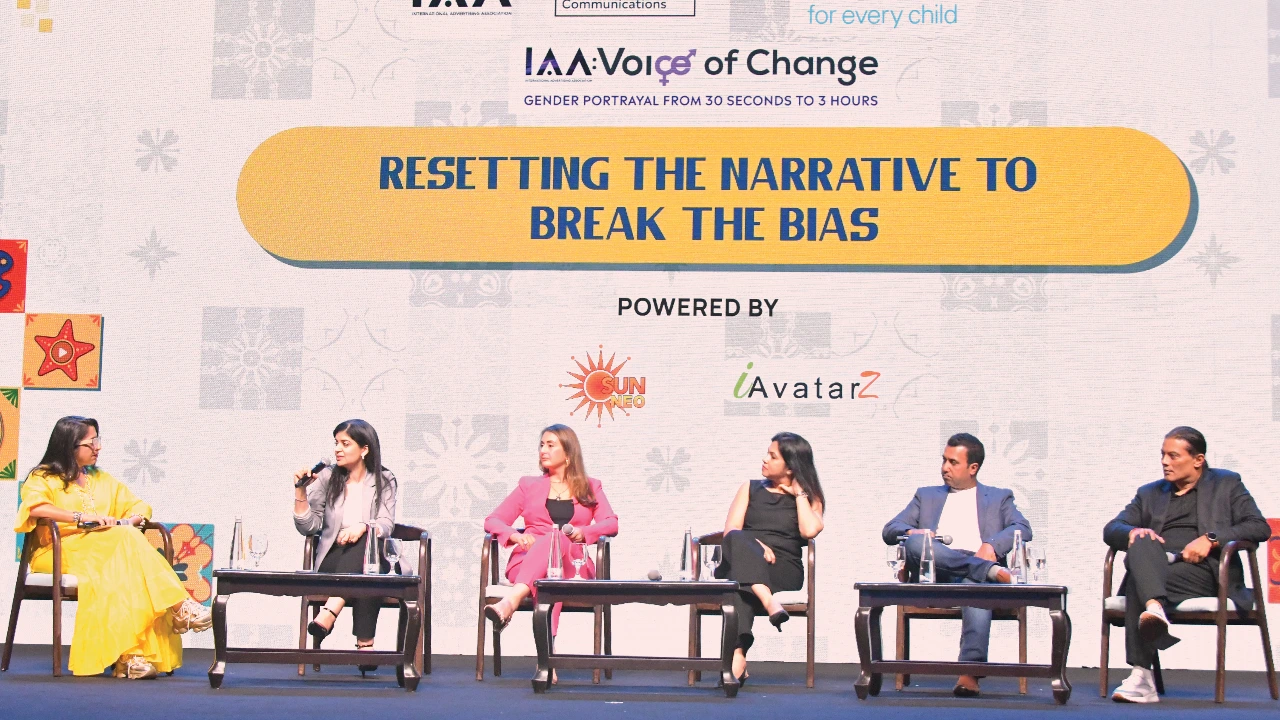
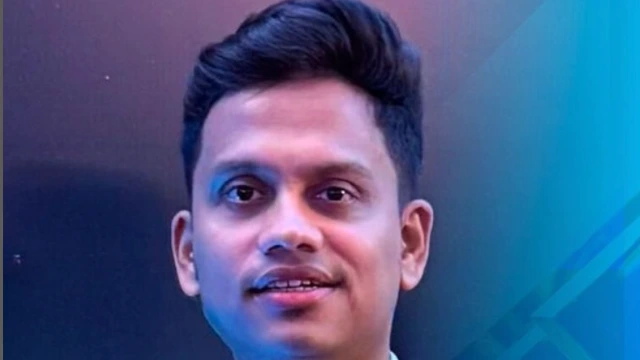
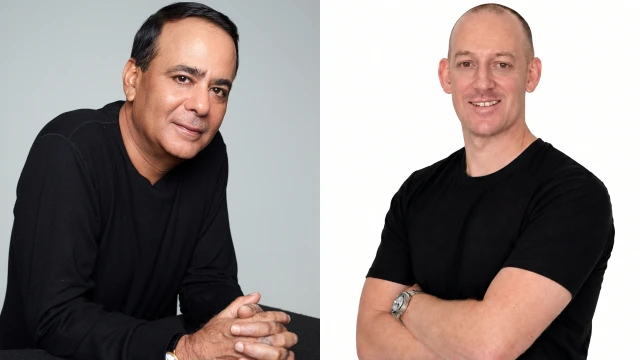
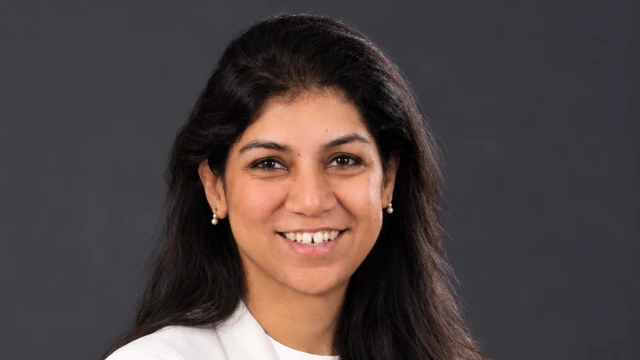
 From left: Megha Tata, Veetika Deoras, Preeti Jhangiani, Riya Joseph, Prasun Kumar, and Amitesh Rao
The conversation around gender representation in advertising has evolved far beyond the predictable debates about ‘women’s empowerment.’ At the latest edition of the IAA Voice of Change discussions held on day two of Goafest, marketers, agency leaders and brand custodians gathered to confront a more layered question: is advertising truly resetting narratives, or merely repackaging stereotypes with progressive aesthetics?
Moderated by Megha Tata, strategic advisor and independent director, the panel comprised Amitesh Rao, CEO, South Asia, Leo, and VP, The Advertising Club; Preeti Jhangiani, co-founder, Pro Panja League; Prasun Kumar, chief marketing officer and business head, MagicBricks; Riya Joseph, general manager, media, Britannia Industries; and Veetika Deoras, senior VP, marketing and brands, IHCL.
Setting the context, Tata reflected on how the IAA’s Voice of Change initiative began nearly six years ago with a fundamental concern: how advertising shapes the country’s social imagination.
“We believe that the advertising and marketing industry plays a very integral role in shaping the narrative in the social fabric of our country,” she said, explaining how the initiative, backed by UNICEF and the Geena Davis Institute, studied 1,000 of the most viewed television and digital ads to analyse gender representation.
“The result was not so pretty,” she admitted.
That study eventually triggered workshops and conversations with agencies and marketers aimed at encouraging more conscious storytelling - not just around women, but around how society itself gets represented.
Tata was also quick to underline that the conversation was never intended as ‘male bashing’ or a women-only issue.
“Both genders have an equally important role to play in changing the narrative,” she noted.
Asked to define ‘conscious creativity,’ the panellists approached the idea from sharply different but complementary lenses.
For Deoras, conscious creativity begins with accountability.
“It is basically about being conscious on two fronts,” she said. “One is, are we able to make a positive impact in any direction, and second is, are we ensuring that there is no negative impact?”
She pointed to the immense cultural influence marketers wield through visibility and advertising spends, arguing that even ‘teeny weeny little bit of a positive impact’ matters when scaled across audiences and behaviours.
Jhangiani, meanwhile, reasoned that conscious creativity is ultimately about honesty in representation.
“Are we depicting what is actually true, or what has been the narrative for years before?” she asked.
Reflecting on how women have historically been framed in advertising and cinema, she pointed out that women were often reduced to supporting roles - ‘the loving mother, the caring wife, the sacrificing sister’ - with their identities existing only in relation to others.
“But as women, we all are so much more than that,” she emphasised.
Jhangiani spoke about her own multiple identities as an actor, entrepreneur, federation president, mother and wife, arguing that advertising still frequently underrepresents the complexity of a modern woman’s realities. “For me, conscious marketing should be depicting the reality,” she said.
Joseph took the conversation toward cultural relevance and inclusion within creative processes themselves.
“As a marketer or as an advertiser, are we culturally relevant?” she asked, questioning whether brands continue to operate with ‘age-old thinking’ around family structures and gender roles.
For her, inclusive storytelling starts much earlier than the final advertisement - it begins inside brainstorming rooms.
“Do we have diversity in the room?” she questioned, underscoring the importance of representation across gender, geography and lived experiences while developing campaigns.
Kumar expanded the conversation beyond gender alone, arguing that bias in advertising exists across multiple social dimensions.
“To me, conscious creativity is all about honesty,” he said. “It’s about being honest to your core; it’s about being honest to your category, to your objective, and not really letting any artificial biases seep in.”
He pointed to several forms of bias that continue to shape narratives, from metro-versus-small-town stereotypes to generational assumptions, contending that brands must remain truthful to the stories they intend to tell without external prejudice distorting them.
“It’s easy to say, difficult to execute,” he admitted.
According to Rao, advertising’s responsibility extends beyond merely mirroring society.
“We’ve often heard that advertising is a mirror of popular culture,” he said. “But I like to think of it as not being a passive mirror of popular culture.”
For him, the industry’s most transformational work emerges when creativity operates “at the bleeding edge of culture,” shaping social narratives instead of simply reflecting existing norms.
“The best work - the work that does the best for the business - is the work that is at the bleeding edge,” he asserted.
Rao maintained that conscious creativity must balance ‘cultural responsibility’ with ‘commercial effectiveness.’
“We exist because we are building businesses and brands,” he noted, adding that true consciousness emerges only when both business objectives and cultural impact coexist.
The conversation then shifted from theory to examples of how brands are attempting to change representation narratives.
Speaking about IHCL and Taj Hotels, Deoras highlighted the hospitality brand’s long-running ‘She is the Taj’ campaign, which celebrated feminine strength long before such conversations became mainstream in advertising.
“We actually spoke about very strong feminine qualities much before a lot of these conversations started happening,” she said.
The campaign’s newer iteration, she explained, spotlighted women in unconventional professional spaces while reinforcing the brand’s continued commitment to representation.
“It’s important to keep doing that, because the visibility we can garner and the eyeballs we can garner through our efforts are a huge responsibility on us,” she said.
Tata then posed a tough question to Rao: has the advertising industry genuinely progressed, or is much of the change still tokenistic?
He acknowledged that while momentum is visible, the journey remains incomplete.
“There is certainly an increased consciousness and awareness,” he observed, adding that both agencies and clients are now more proactive about avoiding stereotypes and representing women as ‘human beings’ rather than archetypes.
But he also cautioned against stopping at symbolic representation.
“I think there has been movement when it comes to the simple, symbolic nature of how women are represented, but it has to be more fundamental than that,” he stated.
According to Rao, real progress will only happen when brands incorporate women’s perspectives into product innovation, strategic thinking and business models - not just casting decisions or ad narratives.
“If you build that into the strategic thinking, into the business model, then it is by default that you will show them in the ad,” he said.
Joseph illustrated that shift through Britannia campaigns that deliberately challenged traditional assumptions.
She cited Britannia Marie - often stereotyped as a ‘housewife brand’ - partnering with Paralympic gold medallist Avani Lekhara as ambassador.
“That was representation, not just as a woman, but also from a Paralympic person’s perspective,” she said.
She also highlighted a Good Day digital campaign where a father quietly celebrates his son becoming taller than him - a subtle attempt to challenge rigid expectations around masculinity and emotional expression.
“Most fathers feel happy, but they don’t show it, right? Because that’s not what society tells dads,” she remarked.
Still, Joseph maintained that social change itself is gradual. “Nothing is going to change overnight.”
Jhangiani, on the other hand, dismissed the notion that society is barely changing or changing ‘too slowly.’ “I disagree with that statement completely,” she said.
Drawing from her experiences with Pro Panja League, she argued that audiences across small towns and rural India are already embracing stronger, more layered portrayals of women.
“The stories are changing,” she said, citing examples of women athletes, entrepreneurs and professionals emerging from Haryana, Mizoram, Kerala and smaller regions across India.
She referenced a campaign by Royal Enfield featuring female athlete Yogesh Chaudhary - a mother, gym owner and arm-wrestling athlete - which became one of the league’s most successful storytelling pieces.
Therefore, to say that the narrative is not changing or that the audiences are not responding to it would not be absolutely accurate, she contended.
According to Jhangiani, the real challenge lies in decision-making within creative systems themselves.
“Who is making the actual decision when we are making these ads? It has to start from the scripting level, not later, when the Twitter backlash happens. There needs to be that one person who says that difficult line: ‘No, this is not right.’ ”
And perhaps that was the core takeaway from the session: the future of conscious creativity may not depend on louder messaging or symbolic feminism alone, but on whether brands, agencies and marketers are willing to interrogate the assumptions embedded deep inside the storytelling process itself.
Coverage from the roadshow first appeared in the June issue of Manifest.