
 Subscribe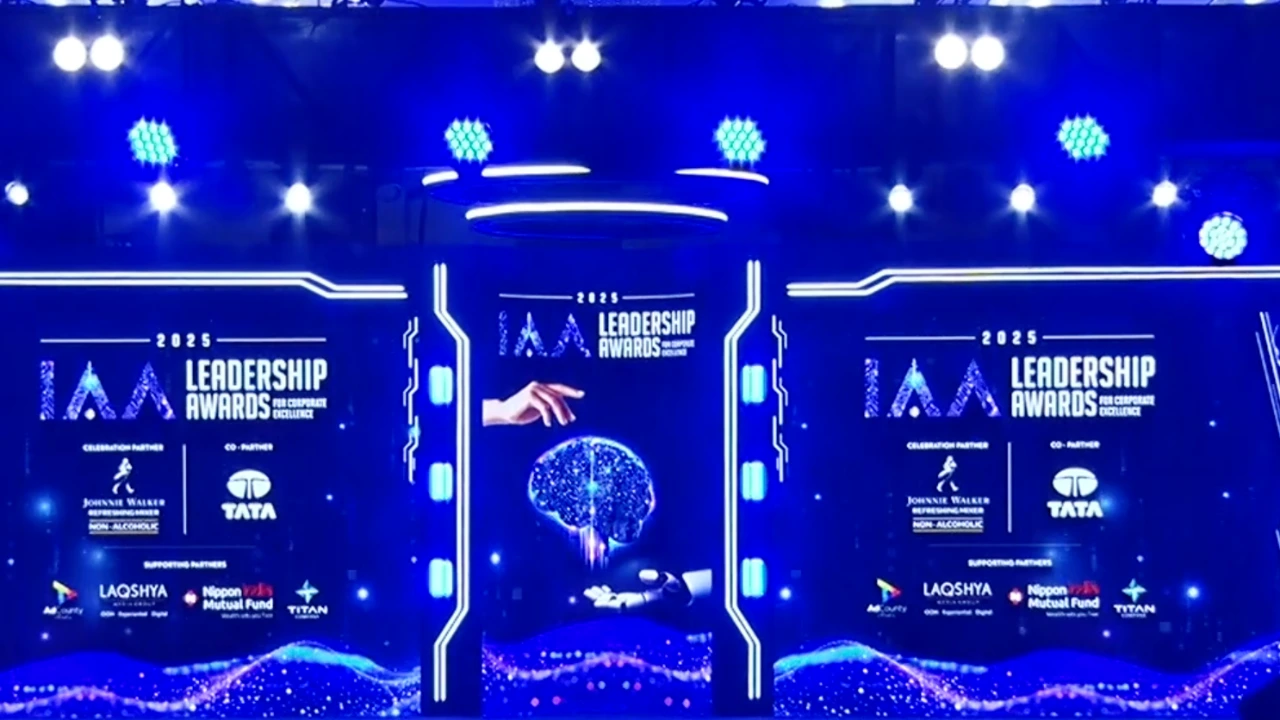
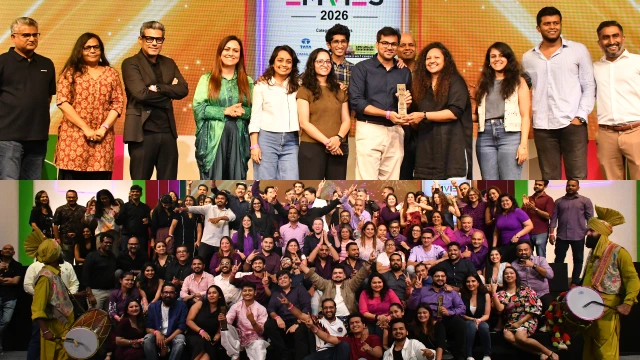
 A picture from the IAA Leadership Awards 2025
The theme for the 2026 edition of the Leadership Awards is the 'Power of Balance'. Ahead of the event, which will be held in Mumbai on 7 August, we caught up with Nandini Dias, chairperson, IAA Leadership Awards, to learn more about how the awards have evolved, while Ramesh Narayan, founder, Canco Advertising, and former president, IAA India Chapter, responds to some claims about the 'Hall of Fame' awardee.
Edited excerpts:
How have the Leadership Awards evolved over the last 13 years? What has been the biggest change?
Nandini Dias (ND): Over 13 years it has evolved considerably.
Our understanding of leadership itself has evolved. Leadership is no longer defined only by financial performance, growth or scale. We increasingly look at innovation, transformation, resilience, purpose, responsible leadership and the ability to create lasting impact.
Second, we have strengthened the independence and diversity of the jury. We now have an all-CEO jury, with leaders from different sectors, many of whom have experience across multiple industries. Each brings expertise relevant to a particular category, but also a broader business perspective. For example, this year we had CEOs from FMCG, retail, fintech, social media and knowledge platforms, Infrastructure and supply chain solutions companies, a large manufacturing company. They don't simply accept the data — they question it, challenge it and debate what it really tells us.
Third, the depth and relevance of the evidence has increased. We have progressively expanded the business and performance parameters we examine. And these are not one-size-fits-all. The starting point for each category is: what are the critical drivers of leadership in this particular business? We then identify and assess the evidence against those drivers.
So, over the years, the awards have become more nuanced in what we define as leadership, more independent in how we judge it, and more rigorous in the evidence we use to support that judgement.
What has the evolution of the winners and the categories told you about how leadership in Indian business has changed over the past decade?
ND: The evolution of the winners and the categories is almost a reflection of the evolution of the Indian economy itself.
When we started, many of the leaders we recognised came from sectors such as FMCG, automobiles, telecom, consumer durables and banking. Then, as India's digital economy accelerated, we saw leadership emerging from e-commerce, fintech, edtech, OTT and digital-first businesses.
Today, we are seeing strong leadership in areas such as quick commerce, healthcare, mutual funds, BFSI and mobility, including EVs, while the established sectors continue to produce outstanding leaders.
But I think the more interesting change is in what leadership within these businesses looks like.
The leaders of today have to operate with much greater speed and uncertainty. They have to use technology without losing the human connection, scale without losing agility, and deliver today's numbers while preparing the organisation for tomorrow.
So, when I look at the evolution of the winners, I see a movement from leadership being primarily about building and scaling a successful business to building an organisation that can continually adapt, reinvent itself and remain relevant.
In that sense, the Leadership Awards have become a rather interesting marker of India's changing business landscape — not just in terms of which sectors are growing, but in terms of what it takes to lead in those sectors.
The theme for this year's Leadership Awards is 'The Power of Balance'. What does balance mean in the context of leadership?
ND: For me, balance doesn't mean finding a comfortable middle ground. It means having the judgement to understand competing priorities and the courage to make the right choice.
Todays leaders are not just navigating change: they are constantly balancing it. They are constantly balancing things that can appear to be in conflict — growth and responsibility, speed and stability, technology and human judgement, short-term performance and long-term value, global ambition and local realities.
The easy thing is to choose one. The difficult thing is to recognise that sometimes you need both. In fact, it often requires greater courage and sharper judgement.
And neither balance should certainly not be confused with compromise. Sometimes achieving the right balance requires a very bold decision. A leader may have to deliver strong results today while protecting the organisation's relevance for tomorrow. They may need to embrace technology aggressively while ensuring that the human element doesn't get lost.
So, for me, The Power of Balance is really about judgement — knowing what to prioritise, what not to compromise on and when to make a decisive call.
And I think that is increasingly what leadership is about today: not choosing between two imperatives, but having the wisdom to manage both.
These awards cannot be entered by paying a fee. What qualities are you seeing in this year's leaders that make them stand apart from those who may simply be delivering strong business numbers?
ND: Strong numbers are certainly an important part of leadership, but numbers alone don't tell us the whole story. One thing that is quite distinctive about our process is that when we look at business performance, we don't want historical size or legacy to automatically give a company an advantage. A large company will naturally have a large base. So, while we look at the longer-term performance and the legacy of the organisation, we deliberately over-index on the most recent year's performance. We want to recognise what the leadership team has actually achieved in the year under consideration. That can sometimes produce very interesting outcomes.
For example, last year, in the banking category, it wasn't the largest bank that emerged as the winner. It was a bank that stood out on measures such as having the lowest NPAs, strong percentage growth in lending income and strong net profit growth.
That is important because it demonstrates what we are trying to do. We are not simply rewarding size or accumulated success; we are looking for evidence of leadership and momentum.
All the quantitative data and the qualitative comes from a reliable third party data base. For example for automobile category we look at SIAM or FADA data. For UPI category, we look at NPCI data.
And then we go beyond numbers. We look at innovation, transformation, resilience, brand strength, the ability to respond to disruption, the quality of the organisation being built, and increasingly, purpose and responsible leadership.
I often think of it this way: performance tells you what a leader has achieved; leadership tells you what they have built and how they have achieved it.
A company may have a very good year because of market conditions. But a great leader creates sustained momentum, makes difficult choices, builds an organisation that can adapt and leaves it stronger than it was before.
That is why the fact that these awards cannot be entered is important. We proactively look across the industry. No company can simply put itself forward and say, 'Look at what we have achieved.'
We start with the evidence, but then an independent CEO jury applies its own experience, judgement and perspective.
Ultimately, we are looking for performance with resilience, ambition with responsibility, and success that has the potential to endure.
And perhaps that brings us right back to this year's theme — The Power of Balance.
This year, there has been some press about some of the winners being 'picked by insiders and rewarding insiders', with a reference of the Hall of Fame awardee. What's your take on this?
Ramesh Narayan: Induction into the IAA Hall of Fame is one of the two biggest awards of the IAA Leadership Awards. The other being the Business Leader of the Year.
The award is decided by a consensus among the collegium of past presidents.
The track record of the awardee as a marcom professional, the contribution made to the industry at large and the larger societal good he or she has impacted, are factors that determine the awardee.