

 Subscribe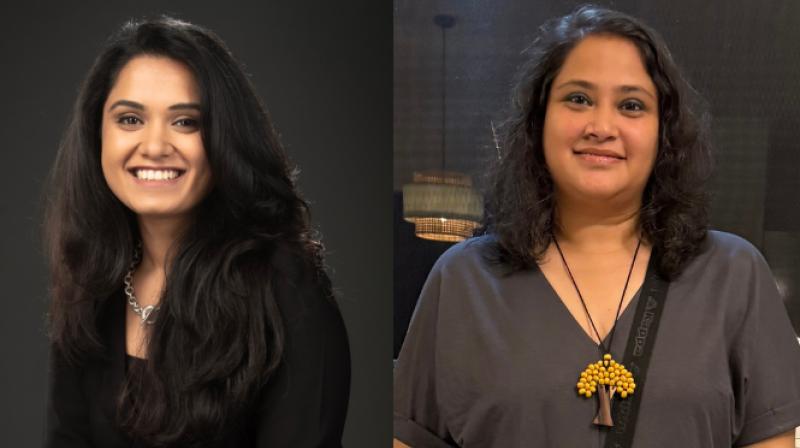
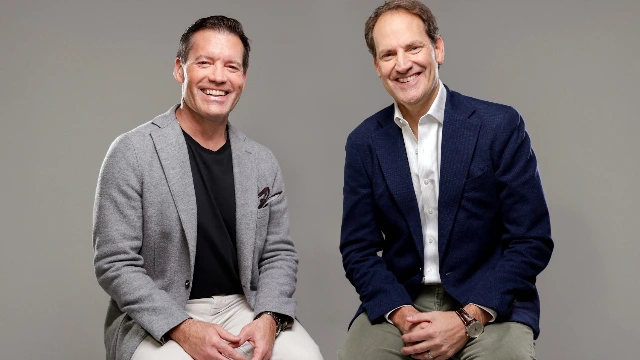
 Mithila Saraf and Farah Kapadia
The advertising industry may have moved from denial to discussion, from token hiring to better representation, when it comes to gender equity. Yet women leaders across agencies believe that the real shift must go deeper — from optics to operating model.
In the third part of our conversations with industry stakeholders and insiders we have Mithila Saraf, CEO, Famous Innovations and Farah Kapadia, chief people officer, Kulfi Collective weighing in on 'the equity illusion in advertising.'
Read on…
Have you personally experienced any gender bias in your profession? Did you open up about it then and if so, how was it dealt with at the organisational level?
Mithila Saraf: When people think about gender bias, they often imagine something overt or systemic — a conscious discouragement of one gender over another. And that’s why I’ve even heard senior creative leaders say that gender bias doesn’t exist in advertising at all, that no one would ever choose someone for a job based on whether they’re a man or a woman. In many ways, that’s true. Advertising is one of the few industries that genuinely believes creativity can come from anywhere.
But gender bias in our industry rarely shows up in such obvious ways. It shows up subtly — in offhand comments, in casual jokes, in who gets included in informal spaces where ideas are shaped. When men can step out for a beer and crack an idea, and others aren’t naturally part of that culture, exclusion can happen unconsciously.
Culturally and systemically, the responsibility is to create environments that don’t exclude any gender — even unintentionally or jokingly. My own experiences have been fewer, but some moments stay with you. I remember a colleague once commenting that a client went easy on me because I’m a woman. It stayed with me because I had genuinely worked hard to earn that client’s trust — and I had seen that same client be equally demanding, regardless of who was across the table. When I was younger - about 15 years ago - the advertising industry at large still had occasional offhand comments or casual jokes around gender. That has reduced significantly over time. These aren’t dramatic incidents, but they matter. Because subtle bias shapes confidence, credibility, and who is seen as deserving — often without anyone realising its happening. It has reinforced my belief that personal environments matter immensely. And if each of us can consciously create that kind of equitable space — even for 5, 10, 20, or 100 women around us — then that, in itself, is us doing our job.
Farah Kapadia: Yes, in subtle ways. Sometimes your point isn’t taken as seriously, or you feel unheard in a room full of men. Early in my career, I didn’t have the confidence to call it out, I wish I had.
I’ve also experienced moments where HR roles weren’t viewed as strategic enough, but rather as purely support functions. That perception can influence how seriously your voice is heard. Over time, I’ve seen that change, especially in organisations that understand people strategy as business strategy.
Where, according to you, does gender disparity continue to show up today — hiring, pay, promotions, or visibility & attribution?
Saraf: A key challenge in discussing gender equity in Indian advertising is the lack of industry-specific data on what’s happening within agencies. The limited evidence shows a clear pattern: women enter in large numbers but drop sharply from creative and strategic leadership, mirroring corporate India, where women hold only 17–20% of C-suite roles despite near parity at the entry level. The gap has only widened post-Covid, and senior advertising roles - especially for married women and mothers - are increasingly rare. By its very nature, advertising remains an intense, time-demanding industry, and without systemic support, it continues to make it difficult for women to sustain long-term leadership trajectories.
Kapadia: In my current workplace, I don’t see it strongly and that’s a result of intentional culture-building and policy design. That said, in the larger industry, visibility and attribution in key creative and strategic discussions can still be uneven. The progress is real, but consistency across organisations is still evolving. I think representation isn’t just about the numbers, it’s about the influence, so that’s where we need to fix disparity most effectively.
Why do you think women drop off at mid-senior leadership levels despite strong entry-level representation? Do life stages like maternity still impact one’s growth trajectory or client allocation, or is one able to return to the same role or growth track post-maternity?
Kapadia: Women enter the workforce in strong numbers, but mid-senior levels often coincide with intense life and caregiving phases. At that stage, flexibility may reduce and biases can become more subtle. I do think this is more of a system design issue than a capability issue. The good news is that many companies are now becoming more flexible and performance-focused, which is helping more women stay and grow into leadership roles.
In my case, I was never treated differently during or after maternity leave. I was able to return to the same role and growth path. But I’ve also seen situations where assumptions are made too quickly, work gets reassigned the moment someone is pregnant, based on the belief that they won’t be able to give their best. A lot depends on leadership mindset. When leaders are fair and thoughtful, continuity is absolutely possible. Equity at this stage is less about policy and more about intent.
Have you seen any changes pertaining to gender equity from the time that you started out in your career?
Kapadia: Yes, absolutely. When I started out, most leadership teams were predominantly male, and senior roles with higher compensation were almost always held by men. Today, I do see a meaningful shift. There are more women across levels, including in leadership, and conversations around pay parity and representation are far more open.
Saraf: One of the biggest challenges in discussing gender equity in advertising in India is the lack of published, industry-specific data on what’s happening inside agencies. Most available research focuses on the portrayal of gender in advertising, not on internal realities like leadership representation, pay parity, or career progression. That said, the limited evidence we do have — from academic research on the Indian advertising industry and broader corporate India data — points to a consistent pattern. Studies show that while women enter the industry in large numbers, their representation drops sharply in creative and strategic leadership roles. This mirrors corporate India more broadly, where women hold only about 17–20% of C-suite roles, despite near parity at entry levels. This gap appears to have widened post-Covid. As conversations around work–life balance, health, and family priorities intensified, the resulting pressures — like most structural pressures — fell disproportionately on women. Today, it is increasingly rare to find women in senior advertising roles, particularly women who are married or mothers.
By its very nature, advertising remains an intense, time-demanding industry, and without systemic support, it continues to make it difficult for women to sustain long-term leadership trajectories. Which is why this conversation matters more now than ever. Change doesn’t only come from industry-wide reports or policies — it comes from the environments we choose to build every day in our own companies and brands.
This article appears in the March issue of Manifest. To read the whole feature, purchase the issue by clicking here.