
 Subscribe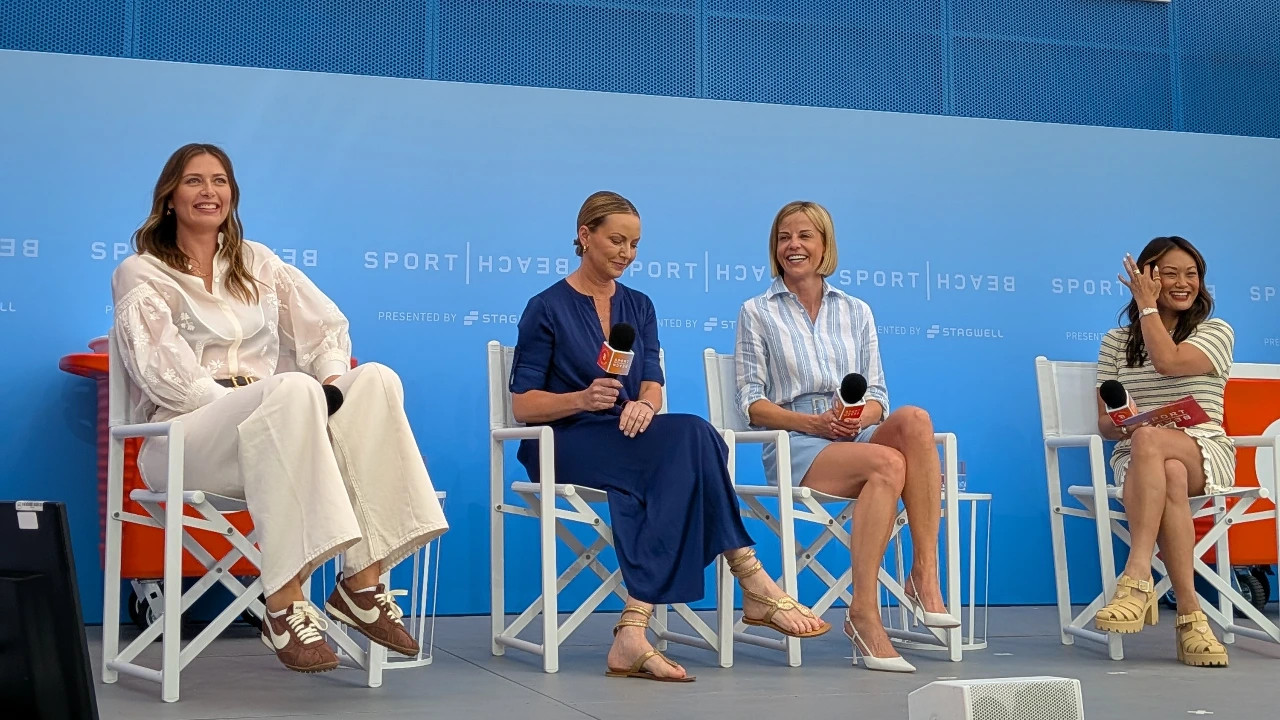
 From left: Maria Sharapova, Jessica Stacey, Susie Wolff, Marissa Dacay
At the Sports Beach at the Cannes Lions International Festival of Creativity, a panel titled ‘building a career, a brand, and a platform as a woman in sports’, brought together five-time tennis Grand Slam winner Maria Sharapova; Susie Wolff, managing director, F1 Academy; and Jessica Stacey, SVP, external communications, experiential and marketing partnerships, Sephora US. Moderated by Marissa Dacay, global VP, enterprise marketing, Adobe, the discussion explored how female athletes are navigating performance, personal branding and leadership in an era where audiences expect far more than results.
One statistic set the tone: 94% of women in C-suite positions have played competitive sport, showing how sport teaches resilience, confidence and the ability to make bold decisions before feeling fully ready.
For Sharapova, that lesson has shaped her entire life.
The five-time Grand Slam champion reflected on her ‘Pretty Tough’ podcast, explaining that while the public often saw the fierce competitor with the trademark fist pump, there was always another side to the story.
"It’s not a straight line to the top with many confusing moments along the way."
Today, Sharapova is using her podcast to have conversations with high-achieving women across industries, many of whom have experienced difficult and unconventional journeys to success, one of which is Wolff.
Wolff’s journey in motorsport began as a racing driver. She stated she was often the only woman in the room back then, and that remained even during her days as an executive. But that has changed now, post the pandemic.
"There is more conversation around women achieving and how tough it is to succeed," she noted.
Formula 1's explosion in popularity has undoubtedly helped. Wolff pointed to the sport's rapid return during the pandemic and the impact of Netflix's Drive to Survive in attracting new audiences, particularly women.
"It's great to have new female fans, but they want authenticity and credibility at the core."
That credibility is what F1 Academy is trying to build: not simply creating visibility for women in motorsport, but creating a genuine pathway into the sport.
Brands, meanwhile, are beginning to recognise the opportunity.
Stacey revealed that Sephora's growing investment in women's sport was driven not only by audience demand but by conversations with clients who increasingly wanted to understand how the company was supporting female athletes.
"There are so many fantastic female athletes with incredible personalities and stories," she said.
According to Stacey, successful partnerships are built on three principles: Aligning with organisational values, creating unique experiences that expand audience reach, and delivering compelling experiences for both athletes and fans.
The latter is becoming increasingly important as fans seek deeper connections with athletes.
"Fans want to know more than what's happening in the sport," she observed.
That shift has also changed what audiences expect female athletes to share.
Sharapova believes athletes today are far more willing to tell their stories than they were a decade ago.
"The community is raising the bar," she said, suggesting that vulnerability and openness are no longer seen as weaknesses but strengths.
Yet despite the progress, Wolff argued that female athletes continue to face double standards.
“A male athlete appearing on a magazine cover rarely attracts scrutiny. If Charles Leclerc is on the cover of a magazine, it’s normal. But if (Alba) Larsen does so, it raises question marks. Female athletes often face questions about whether they are focusing enough on their sport. The core is the performance. But there is also a story about who the athlete is," said Wolff.
That story, she added, can inspire young women far beyond sport, whether they aspire to become drivers, executives or entrepreneurs.
Wolff spoke about encouraging women involved in F1 Academy campaigns to be themselves rather than conforming to outdated expectations around appearance or femininity.
The conversation concluded with Sharapova warning against distractions because of the increasing number of platforms and commercial opportunities.
"Performance and victories get that voice," she said.