
 Subscribe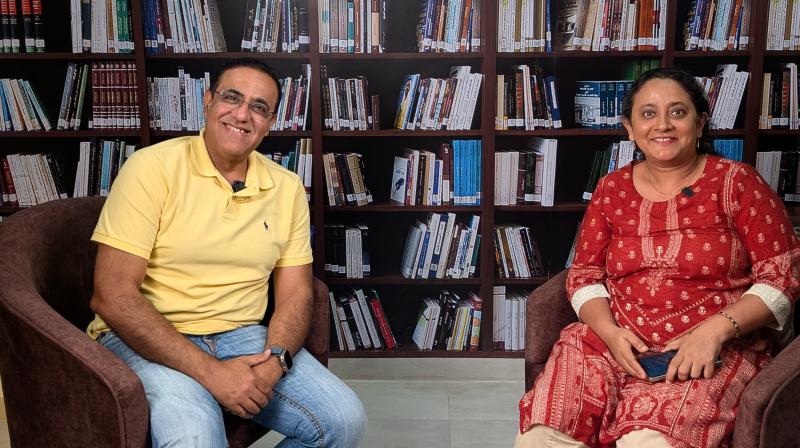
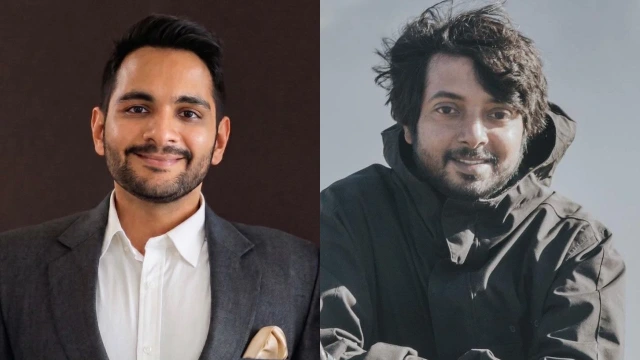
 Vivek Krishnani (left) and Manasi Narasimhan
In the latest episode of Marketing Manifest Stations, host Manasi Narsimhan, head - brand and communications, Accelerate Indian Philanthropy and SCALE, chats with Vivek Krishnani, CEO of Epic Studios, the movie business of The Epic Company, on the evolving dynamics of movie marketing.
A seasoned marketer with nearly three decades across advertising, television, radio, kids’ programming, and films, Krishnani has been part of defining moments such as launching Star Plus in Hindi and bringing Kaun Banega Crorepati to Indian audiences.
For Krishnani, the pull towards entertainment was always intentional. “I always wanted to be in the entertainment business, because I believe that entertainment has the ability to impact people,” he says. That clarity led him to turn down a banking job early on. “If I had gotten the banking job, my balance sheet would have been good, but with this creative role, my emotional P&L is a little bit better,” he quips.
That instinct continues to shape his approach to marketing films, a category he believes operates very differently from others. At its core are two fundamentals: clarity of audience and strength of idea. “What is really important is to know who the target audience is, and what is that innovation that will make you stand apart from any other communication in the movie business?”
Unlike most products, however, films demand effort. “The whole concept of watching a movie is actually a job – one has to leave one's house and go to the theatre. So, if I have to motivate somebody to take that trouble, marketing has to do its job well,” says Krishnani.
That challenge has intensified in the post-OTT era. While streaming brought convenience, the pandemic fundamentally reset audience expectations. “Covid exposed people to content from across the world, and educated them on what good content can be,” he pointed out.
The result is a clear divide in consumption. “When you look at films that are working in cinemas, they have to be event films, tent pole films, or extremely high-concept films.” Anything less risks being deferred for a home viewing.
Even multiplex audiences, once key to niche cinema, have become harder to convert. Krishnani calls them “the most disloyal audience,” given the explosion of content choices. This has forced filmmakers to rethink theatrical storytelling, often returning to culturally rooted narratives with wider mass appeal.
Mapping cinema’s evolution from the 70’s social narrative era and the 80’s ‘angry young man’ era to the 90’s 'lover boy phase,' he pointed to how stories have always mirrored societal mood. And now, the market is seeing a resurgence of mythology and patriotism-flavoured content, Krishnani stated.
While data and AI are increasingly shaping decisions, from script scoring to audience testing, Krishnani is clear about their limits. “You can never take away human insight; it’s not that you can depend 100% on AI. The data will tell you what the trend was, but instinct will take you forward.”
That instinct is rooted in insight-led storytelling. Films like 'Piku' worked because they tapped into relatable relationships, while 'Pad Man' broke taboos by addressing menstrual health openly. In both cases, the marketing campaigns amplified a core human truth rather than manufacturing one.
The nature of marketing itself has also evolved. “Earlier, marketing used to shout at audiences. Nowadays, one has to engage with the audience, have a conversation with them,” he said, highlighting the shift towards participation and engagement.
Yet, despite all the tools available today, one factor remains unmatched. “The most important marketing tool is word-of-mouth. Nothing can beat that. If one has managed to generate great word of mouth, then nothing can stop that film.”
For those looking to enter the industry, his advice is straightforward: be clear about your role, understand your audience, and stay prepared. “When opportunity meets preparedness, that is called luck,” he stated, capturing both the risk and allure of the industry.
Ultimately, referring to himself as a ‘spiritual gambler,’ Krishnani noted that unpredictability defines the business. “Movies are like religion. Every Friday is a gamble."
Because, in a business where success resets every week, “relevance is not owned, it is only rented for that Friday,” Krishnani signed off.
Watch the entire conversation here:
Tune into the conversation on Spotify: