

 Subscribe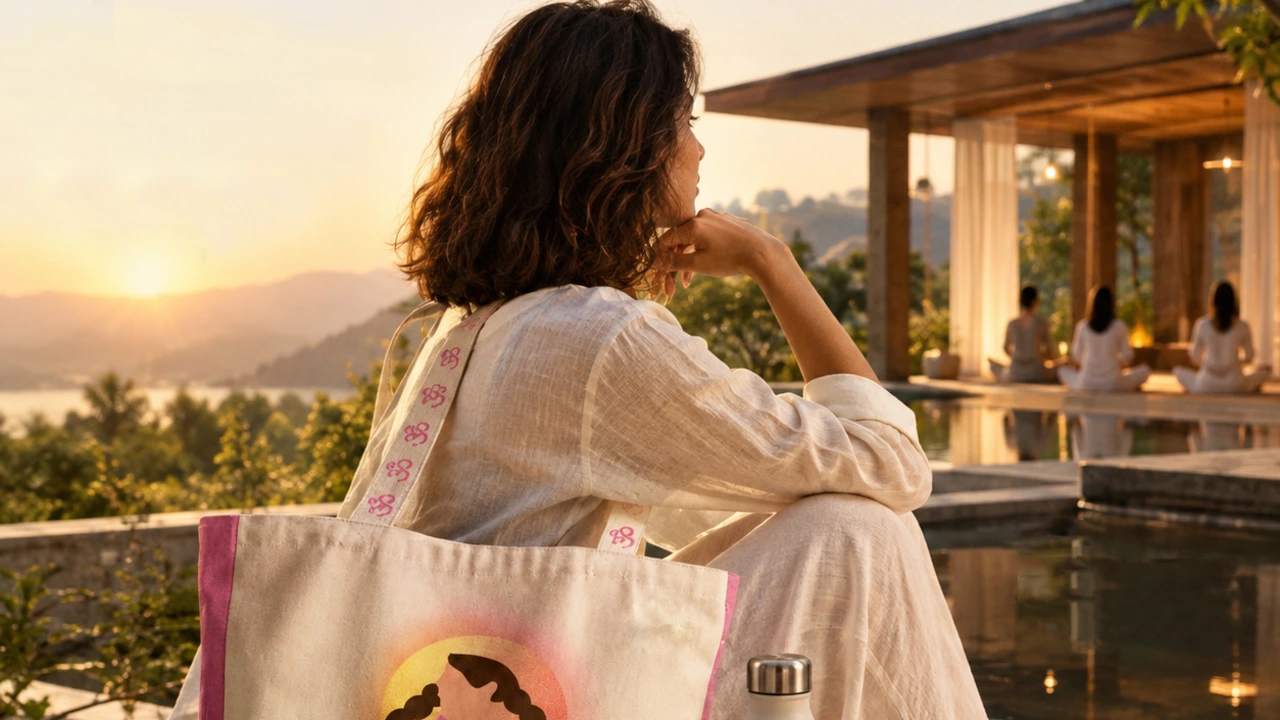
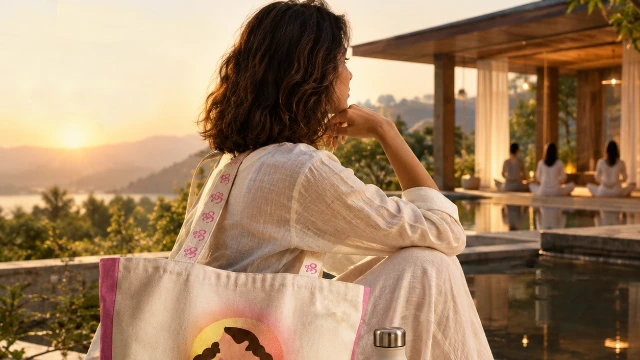
 Picture courtesy: Falguni Shah
India has always been spiritual. But something rather interesting is happening now.
Not the old-fashioned kind — a guru's face on a product or incense in saffron packaging. Something much more sophisticated is taking shape.
Some of India's largest spiritual organisations are building ecosystems that look increasingly like contemporary lifestyle brands: destinations, hospitality, apps, wellness, retail, food, experiences, communities, content and carefully orchestrated brand worlds.
The ashram is no longer necessarily an ashram. It can be a destination. A retreat. A wellness centre. A cultural experience. A lifestyle.
And increasingly, a brand.
Let's start with Shrimad Rajchandra Mission Dharampur.
If your mental image of an ashram is a quiet compound with dormitories, a prayer hall and a few trees, Dharampur will challenge it. The campus is an experience ecosystem, with food, retail, sport, events, learning and community.
Less traditional ashram, more thoughtfully masterplanned destination. And then there is the communication. The Mission's 2026 Paryushan Mahaparva programme in Mumbai is being presented as a large-scale, highly produced experience — an eight-day programme at the NSCI Dome with spiritual programming, performances and a dedicated Jinmandir.
Watch the promotional language and visual treatment and the line between religious gathering and contemporary cultural event begins to blur.
That is not accidental. It is experience design.
I also find it interesting that the Mission has been exploring the need for a more strategically defined brand and, at one point, looking at brand strategy and design partners. That tells me something important. Spiritual institutions are beginning to recognise that having a powerful philosophy is not the same as having a powerful brand.
The philosophy may be centuries old. But how do you make a 25-year-old urban Indian connect with it?mThat is a branding project.
Then there is Isha Foundation.
Isha has perhaps been one of the most successful examples of translating an ancient spiritual proposition into a contemporary global brand.
The genius is partly in the vocabulary.
Inner Engineering.
Not religion. Not ritual. Not even meditation.
Engineering.
The word changes the frame. It takes something deeply internal and gives it a modern, almost technological proposition: you can work on yourself.
That is exceptionally powerful positioning.
Isha has also built a recognisable brand universe around Sadhguru, content, books, digital platforms, programmes, architecture, music, merchandise, food, yoga, volunteering and the Isha Yoga Center.
Its programmes don't simply ask people to attend a spiritual gathering. They offer structured journeys with names, stages, prerequisites and experiences. Even Sadhanapada is an extended immersive programme with its own application process, accommodation and daily living environment.
Again, fascinating from a brand perspective. The product isn't spirituality. The product is transformation. And that is a very different proposition.
And then there is Art of Living, the one I know closest.
This is where my perspective becomes slightly different because I have experienced this ecosystem from within.
What strikes me is how far Art of Living has moved beyond simply teaching the Sudarshan Kriya. It has built an entire ecosystem around the idea of living better.
Courses. Advanced programmes. Meditation and yoga. International centres. Wellness. Ayurveda. Panchakarma. Hospitality. Retail. Food. Products. And a global community.
The Bliss app brings meditation, breathwork, wisdom, courses, events and habit-building into a digital interface, effectively taking spiritual practice out of the ashram and putting it into your pocket.
And the physical ecosystem is equally interesting. Its wellness and Panchakarma offerings extend into highly curated hospitality.
At Meera Vanam, for instance, the experience includes premium suites, specialised wellness services and Sattvic dining, while its more exclusive accommodation includes private villas, wellness concierges and chauffeur-driven cars.
Think about that. A spiritual organisation offering a luxury wellness experience with a wellness concierge. That is not the old definition of an ashram.
It is a very different way of experiencing spirituality.
From teaching to ecosystem
The most interesting commonality between these organisations isn't what they teach. It is how they translate what they teach into experiences.
The traditional model was: Guru
→
teaching
→
devotee.
The emerging model looks much more like: Guru
→
Philosophy
→
experience
→
community
→
content
→
products
→
places
→
digital
→
lifestyle.
And suddenly, the parallels with consumer brands become obvious.
Nike doesn't just sell shoes. Apple doesn't just sell devices. Marriott doesn't just sell rooms. These organisations are increasingly not just offering spiritual teachings.
They are building worlds people can enter.
Are we witnessing the commercialisation of spirituality?
Perhaps. But I think that is too simplistic.
Maybe spiritual organisations are simply learning to communicate in the language of contemporary experience.
Today's consumer is experience-led. Digital-first. Visually sophisticated. Time-poor. Wellness-conscious. And increasingly interested in mental and emotional wellbeing.
They don't necessarily want to renounce the world to find themselves. They want to find themselves while continuing to live in the world.
You can meditate in the morning and go into a board meeting at 10. Take a spiritual retreat and stay in a beautiful room. Attend a discourse and then have coffee. Discover a spiritual practice through an app rather than a family tradition.
Spirituality is becoming less about withdrawal from life and more about upgrading the experience of life. And that is a powerful cultural shift.
So what does branding have to do with it?
For years, spiritual branding relied heavily on a familiar visual vocabulary—Saffron. Gold. Lotus.
Om. Deities. Temple architecture. Sanskrit typography. Mandala.
Powerful codes. But increasingly predictable.
The next generation of spiritual brands may need something more sophisticated.
How do you make spirituality contemporary without making it superficial?
How do you make an ancient philosophy desirable without reducing it to an aesthetic?
How do you create premium experiences without commodifying the sacred?
How do you build a brand around a guru without making the entire brand dependent on personality?
And perhaps the biggest question:
How do you make someone curious about spirituality without making them feel they have to become 'spiritual' to belong?
That, to me, is where the real branding opportunity lies.
Brand the journey, not the spirituality.
This is where Shrimad Rajchandra Mission, Isha and Art of Living become fascinating case studies.
They have something most brands spend millions trying to manufacture: a genuine philosophy.
They have communities. Rituals. Stories. Symbols. Leaders. Destinations. Highly engaged audiences. And most importantly, they have a reason for existing that goes beyond selling something.
The brand challenge is therefore not simply what do we stand for? It how do we translate what we stand for into every possible touchpoint of someone's life? That is a very contemporary brand question.
Perhaps the biggest brand trend coming out of India isn't wellness. It is meaning. Wellness has already become a massive commercial category.
But underneath wellness is something deeper: meaning, belonging, calm, community, purpose and connection. And India has an extraordinary advantage here.
We don't have to invent a philosophy for this market. We have thousands of years of them. What we are seeing now is the meeting of that ancient intellectual and spiritual capital with contemporary brand thinking.
And that collision is going to produce some very interesting brands. The next generation of spiritual brands may not look like temples. They may look like destinations. Apps. Hotels. Cafés. Retail stores. Wellness centres. Communities. Content platforms. Or beautifully designed spaces where you go to experience something you cannot quite buy.
The irony is beautiful.
In a world where brands are desperately trying to manufacture authenticity, India has organisations sitting on centuries of authentic philosophy.
They are now learning how to communicate it.
And if they get the balance right — between sacredness and sophistication, tradition and modernity, philosophy and experience — they could create something the world hasn't quite seen before.
Not spirituality packaged for consumption. But spirituality designed for contemporary life.
And perhaps that is the real rise of spiritual branding in India.
This is an independent perspective on the evolution of spiritual organisations as contemporary experience ecosystems and is intended as a brand/cultural commentary, rather than an endorsement of any organisation discussed. The author is founder, Brand&Space.