

 Subscribe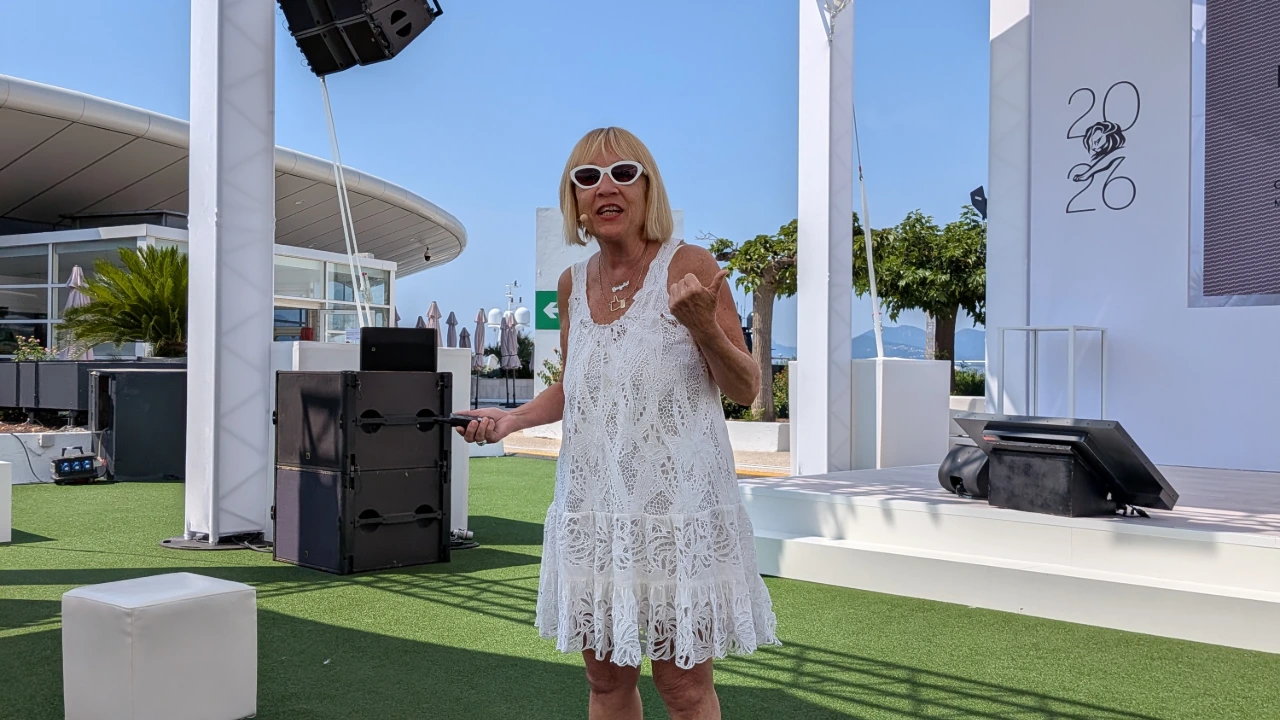
 Cindy Gallop
Cindy Gallop, founder, MakeLoveNotPorn, took the stage on day five of the Cannes Lions International Festival of Creativity to discuss her career journey and share advice for those just starting in the industry.
Gallop began by reflecting on an unconventional route into advertising. Having studied at Oxford, she had initially planned a career in theatre.
"I fell in love with theatre. I thought I'd be in that for the rest of my life," she said. "But I wasn't good enough.
She found herself designing posters and marketing theatre productions before deciding to make the leap into advertising.
"I moved out and sold out to move to advertising," she joked.
"I wrote a series of letters to several agencies in the UK, but I didn't have the advertising experience they were looking for. I resorted to a graduate training position – at an agency that no longer exists. A fair amount of agencies I worked at don't exist any more!"
For those entering the industry today, Gallop urged them not to look for the dream agency.
"Take the first job you're offered," she advised. "Get a job because it's harder than before. That gives you the experience to move to the agencies you'd wish to work at."
Her career was also shaped by rejection. In 1987, BBH was 'the hottest agency in town', she interviewed with it. She got through the ranks and was asked to meet Nigel Bogle as a mere formality.
"It was one of those meetings where I got off on the wrong foot and I didn't get offered the job."
Instead, she joined JWT, which she described as 'the gentleman's agency'. While the salary wasn't remarkable, the culture left an impression.
"It had an in-house travel agency," she recalled. "My planner and I wanted to stay at a luxury hotel and thought we'd share a room to help make sure we didn't think we had the budget to. The outraged response was, 'This is JWT. No one shares a room.' We got two rooms."
Just six months later she moved to GGT, an agency she described as creative and dynamic, having previously been rejected by them before they eventually came calling.
"There were virtually all men. They wanted to hire women, so they hired three, including me."
Working alongside legendary creative Dave Trott, she joked that she became "an honorary man", before reflecting more seriously on the realities women faced in advertising.
"I was lucky that I wasn't sexually harassed to an extent that I had to leave work," she said. "I always worked for men who gave me an opportunity to succeed. That's not the experience for every other woman in the industry."
Looking back, she admitted: "Sexism was all around me, but I didn't recognise it."
One of her biggest career lessons came during a salary review at GGT. Despite receiving glowing feedback, the pay rise fell GBP 1,000 short of what she had hoped for.
"I thought I had to negotiate. I felt sick with nausea," she admitted. "My voice felt different, but I asked for the number."
Management asked her to wait outside for five minutes before calling her back in and granting her request.
The experience transformed how she approached salary negotiations. When she later joined BBH as an account director, she prepared extensively for another review.
"I asked for a GBP 5,000 pay rise and thought I'd settle for GBP 3,000," she said. "They offered me 6,000. I was surprised and didn't react. They thought I was unhappy. They told me they'd review this offer again six months later."
Then came one more opportunity with BBH.She was to meet Bogel once again. She was wondering how that meeting would go.
When they met, he said, "Everyone wants you. I was the only one who didn't. So I have to offer you the job."
Her takeaway was simple: "Keep applying."
Gallop remained at BBH for 16 years.
"I spent 16 years at BBH because it had more integrity and principles, and that matters to me more than anything."
She recalled The Independent threatening the agency after appointing a new chief marketing officer who wanted to replace BBH.
"When Nigel came back from holiday, he said, 'Should we fire this client?' I said yes because I thought they'd fire us anyway. We didn't do it then, but he was prepared to. The client fired us two months later, anyway."
The experience reinforced the importance of working somewhere that stands behind its people.
"I knew BBH would be on my side if a client complained about me."
Her dream job was to run BBH's North America business in New York. She achieved this five years after that vision.
"Our vision was to be the best agency in the USA. If others heard it, they'd be laughing at us. Everything we did was about moving one step closer to that."
By 2003, that ambition had become reality when BBH New York was named Adweek's Eastern Agency of the Year.
Gallop credited collaboration as one of the reasons opportunities kept coming her way.
"When we were winning business in the early years, clients told me that other agencies often recommended me. I heard, 'your name keeps coming up.' So be collaborative and help others."
After leaving BBH in 2005 without another role lined up, she urged the youth to take ownership of their own careers.
"Place your future in your own hands. Networks are merging and they don't care about your interests more than you can about yourself," she said.
Gallop concluded with three practical pieces of advice for young professionals.
First, understand the commercial side of the business.
"One thing to turbocharge your career: go to your leadership and say, 'I understand how your company makes money and I have ways to increase it.' They'll listen to anything you have to say about that."
Secondly, she encouraged people to build businesses rather than simply chasing agency careers.
"I last spoke at Cannes 12 years ago. Don't go into advertising just for the heck of it. Take a long, hard look at yourself. See what you can bring to the table and then start that."
She argued there is enormous opportunity in building businesses around diverse perspectives before scaling or selling them.
"We've seen at Cannes that the tech companies are all over here. We are the business model of the internet."
Her final message was a rallying cry to the creative industry.
"Don't move to the tech side. Take back the power. Don't fall for the platforms and chase them."