

 Subscribe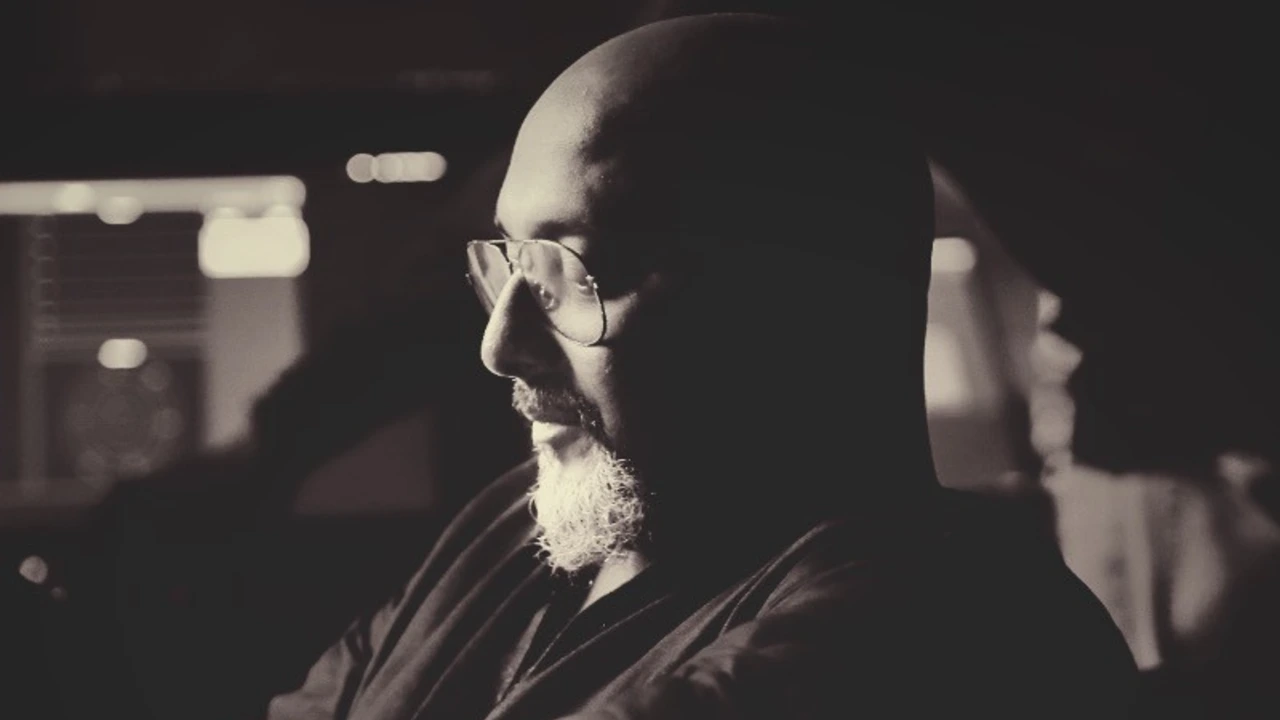
 Joshua Upputuru
Humans have never stayed loyal to a tool once a better one showed up. Every time technology has offered us a faster, cheaper, or better way to do our work, we've taken it quietly, steadily, and almost without exception. It's not a modern phenomenon and it's definitely not unique to AI. It's just what we do.
The people who get left behind aren't the ones who fail to see this pattern. They're the ones who mistake the old tool for the craft itself.
Kodak is the textbook case, but the irony is sharper than most people realise. In 1975, a young Kodak engineer named Steven Sasson built the world's first self-contained digital camera — a toaster-sized contraption of circuit boards, a Super-8 lens, and 16 nickel-cadmium batteries. It took 23 seconds to record a single 100x100 pixel photo onto a cassette tape. When Sasson showed it to Kodak's leadership, the reaction wasn't excitement. It was fear. Filmless photography threatened the very business that funded the room he was standing in. So the company patented the idea, shelved it, and kept selling film for another two decades.
By the time directors, cinematographers, and producers began shooting entire feature films on digital sensors instead of celluloid, the reasons were practical, not sentimental: no cost of raw film stock, instant playback instead of waiting for dailies, the freedom to shoot ten takes instead of two. Digital didn't win because it was trendy. It won because it made the work faster and better. Kodak wasn't leading that shift — it was fighting a slow retreat against it. In 2012, the company that gave the world the digital camera filed for bankruptcy.
That's not a story about a bad company. It's a story about a universal pattern: when a tool lets people work faster, cheaper, or better, humans switch to it — full stop. And once you notice that pattern in one industry, you start seeing it everywhere, especially in filmmaking, a craft that has been quietly upgraded by technology every couple of decades.
The orchestra pit that went quiet
For most of cinema's history, a film score meant a room full of session musicians, violinists, horn players, percussionists recording live to picture. Then came affordable synthesisers, samplers, and MIDI sequencing in the 1980s. Suddenly a single composer with a keyboard and a computer could sketch an entire score in an afternoon, hear it instantly, revise it in minutes, and pitch a director on three different moods before lunch. That speed was irresistible. Full orchestral sessions became a luxury reserved for the moments they truly earned, while composing itself got faster, cheaper, and far more iterative. The composers who thrived weren't the ones who resisted the synth, they were the ones who used it to move faster, then brought in live players exactly where a human performance still mattered.
When sound made silent film obsolete
Synchronised sound arrived in the late 1920s and changed the basic unit of storytelling in film. Directors no longer needed title cards to carry dialogue or live musicians in every theater to carry emotion, sound could do both, built directly into the print itself, consistent in every screening, in every city, forever. It was a straightforward upgrade in what a film could deliver. Actors and technicians who leaned into the new medium — learning to perform for a microphone instead of just a lens helped found the studio system that followed. The ones who couldn't make that leap were the exception, not the rule.
Stop-motion gives way to CGI
Ray Harryhausen's stop-motion creatures defined a generation of fantasy and adventure films, frame-by-frame animation built by hand over months. Computer-generated imagery offered something stop-motion couldn't: creatures that moved with the fluidity of life, shots that could be revised without rebuilding a physical model, and a production timeline that didn't depend on one animator's hands. When a T-Rex walked convincingly across a screen in 1993, audiences weren't just impressed, they were seeing what became possible once the tool stopped being the bottleneck. Artists who crossed into digital tools found the same eye for weight, timing, and personality was more valuable than ever, just aimed at a new medium.
The editing bay gets faster
Film editors used to work with razor blades, tape, and a Moviola or flatbed, physically cutting and splicing celluloid, holding entire sequences in memory because there was no "undo." Non-linear digital editing systems changed the math entirely: instant playback, unlimited versions, effortless experimentation, real-time collaboration across continents. Editing didn't become less skilled, it became faster and more exploratory, letting editors try ten cuts of a scene in the time it used to take to try one. The craft stayed the same. The iteration speed didn't.
Matte painters and the optical printer
Traditional visual effects were built by hand: glass matte paintings, miniatures, and optical printers combining film elements one frame at a time in a darkroom. Digital compositing software collapsed that entire pipeline into a computer, same eye for light and composition, but now with instant previews, unlimited revisions, and none of the one-shot pressure of working with physical film. Matte painters who moved to digital tools didn't just keep up, many became some of the most in-demand concept artists in the industry, because the tool finally moved at the speed of their imagination.
The thread running through all of it
In every one of these shifts, the switch happened for the same reason: the new tool did the job faster, cheaper, or better, and people are drawn to that like water finding the lowest point. Nobody organised a movement to save the optical printer or the Moviola. People just quietly moved toward whatever let them make better work, faster. The craft, storytelling, timing, composition, emotional instinct, never went anywhere. Only the tool underneath it changed.
Which brings us to AI
Digital cameras made filmmaking faster and more accessible. MIDI made composing faster and more iterative. CGI made the impossible affordable. Non-linear editing made experimentation nearly free. Every one of these shifts followed the same simple logic: give people a way to work faster, cheaper, or better, and they will take it, not because they stopped caring about craft, but because they never cared about the tool for its own sake.
AI is the next entry in that same lineage. Maya reshaped 3D animation. Houdini reshaped procedural effects. 3Ds max reshaped modelling pipelines for a generation of studios. None of those tools replaced the artist, they became the new baseline for what a small team could produce, and everyone who wanted to keep making great work simply learned them. AI belongs in exactly that category: a tool that will make the work faster, cheaper, and in many cases better, the same promise every tool before it has made and kept.
The lesson from Kodak, from the orchestra pit, from the editing bay, is remarkably consistent: we don't switch tools because we're told to. We switch because the new one lets us do better work. AI is just the latest reason to pick up the new tool.
The author is founder, Joshua Tree Films.