
 Subscribe
 Prianca J
There was a time when production houses held real creative authority. In the 80s and 90s, Indian advertising was crafted, not churned out; voices were distinct. A Prahlad Kakkar film felt like his. A Shyam Benegal campaign carried depth. Globally, companies like Propaganda Films and RSA Films proved that the same production wasn’t execution; it was authorship.
Then came the shift.
Digitisation brought speed, volume, and cost pressure. The 30-second film lost value. Budgets shrank, expectations didn’t. Production houses were asked to do more, with less, and still deliver excellence.
India’s golden era, Fevicol, Asian Paints, Cadbury, and Limca, was built on craft, time, and investment.
What followed wasn’t a fall, but a slow erosion, a hundred small compromises that quietly changed everything.
Money matters. Of course it does. But at what cost?
At the cost of a client's unawareness? At the cost of an agency not fully justifying its role? Or at the cost of the production house, the one that has always quietly existed at the bottom of the food chain, absorbing pressure from every direction, yet somehow expected to deliver magic on margins that barely cover the miracle?
Let's be honest about what the bottom of the food chain actually looks like.
It means being the last to be briefed and the first to be blamed. It means receiving a budget that's already been negotiated down twice before it reaches you, once in the boardroom, once across the agency table and being told to "make it work." It means your quote is treated as a starting point for reduction, never as a reflection of expertise. It means watching other stakeholders in the same project walk away with retainers, recognition, and relationships, while you walk away with a hard drive full of rushes and an invoice that takes ninety days to clear.
Here's the truth, and it deserves to be said plainly
A production house charges what it does not out of excess, but out of uncertainty. We are not backed by the comfort of fixed monthly salaries or the guaranteed inflow of a retainer. No account simply continues. No brand that simply stays. Every project we take on is approached with hope, not assurance of the next one.
We invest everything into each job, not because it's routine, but because for us, it never is. Every frame carries our reputation. Every decision on set, the casting call, the location scout, the lighting choice made at 2 AM is made knowing that this film may be the one someone remembers us by. Or doesn't. That tension doesn't leave when the camera stops rolling. It stays. It compounds. And it is invisible to everyone sitting in the review room with a laser pointer and an opinion about the grade.
What we spend isn't just money. It's a risk. It's relationships built over years with directors, DoPs, editors, sound designers, people we've brought into our world because we believe in a standard. When you ask us to cut costs, you're not asking us to trim a budget line. You're asking us to compromise that standard. And that's not something we can do quietly, because it shows. It always shows.
While these Annual Operating and Production Hygiene (AOPHs) have begun to take shape, has anyone paused to ask what we're really here for?
The AOPHs frameworks, designed in principle to bring structure and accountability, have in practice become instruments of control dressed up as collaboration. They define deliverables, cap costs, and set timelines. What they don't account for is the soul of the work. The inefficiency that is sometimes necessary. The extra half-day on location was needed because the light was wrong. The reshoot that no one will ever know happened, but that made the film what it became.
None of us came this far to manufacture ROIs. We came here to make films. The kind that makes brands unforgettable. The kind that people don't skip. The kind that, years later, someone references in a brief as the gold standard. That work doesn't come from a production house that's been squeezed into submission. It comes from one who's been trusted, respected, and paid what the craft is worth.
Do clients ever stop to consider what the agency's stake in this really is?
Agencies will continue to earn from their accounts. Regardless of the outcome of a single campaign. Regardless of whether the film lands or falls flat. Their relationship with the client is structural — built into quarterly reviews, annual contracts, and strategic partnerships that survive individual projects. Their ROI, in many ways, is already baked in.
The production house has no such safety net. We live and die by the work. If the film doesn't perform, we don't get called again. If the relationship sours on set, there's no account manager to smooth it over. We are exposed, completely, every single time.
And yet, when a production house is brought into a project, is it seen for what it truly offers? A fresh lens. A distinct point of view. A storytelling instinct that no internal team or agency content unit can replicate simply by hiring a cameraman and calling it a 'content studio'?
Or are we reduced to a line item expected to trim costs, compress schedules, and absorb scope changes in the name of efficiency? Because efficiency, as it's being applied to creative production, is one of the most dangerous ideas in this industry right now. Efficiency in manufacturing makes perfect sense. Efficiency in storytelling kills the very thing that makes the story worth telling.
We are not here to cut corners so someone else can meet a number.
We are not here to be the place where the budget goes to die gracefully. We are not here to smile through a briefing that arrives two weeks before air date, for a film that was conceived six months ago in a strategy session we were never invited to. We are not here to be handed a 'production-ready script' that was written by someone who has never stood on a set and told it will "definitely work" because the client already loves it.
We are here because someone, somewhere, decided that a brand needed to say something and needed it to feel like something. That's what we do. We make a feeling. And feeling takes time, intention, craft, and yes, money.
If this continues, it doesn't signal evolution. It signals the beginning of the end.
Not just for production houses. For the quality of work that this industry has spent decades building a reputation on. Because when you systematically devalue the people who make the thing, eventually the thing suffers. The films get flatter. The ideas get safer. The craft gets outsourced to whoever will do it cheapest. And one day, a client will sit in a review and ask, genuinely puzzled, why nothing feels as good as it used to.
And the answer will be simple. Because the people who knew how to make it feel that way were priced out of the room a long time ago.
This isn't a complaint. It's a warning. And a request to be seen, not just used.
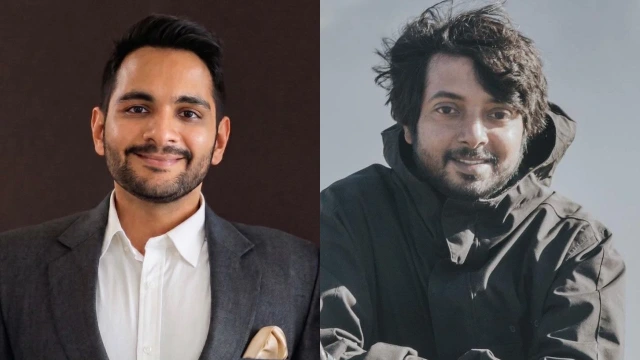
The author is founder and executive producer, Puff Productions.